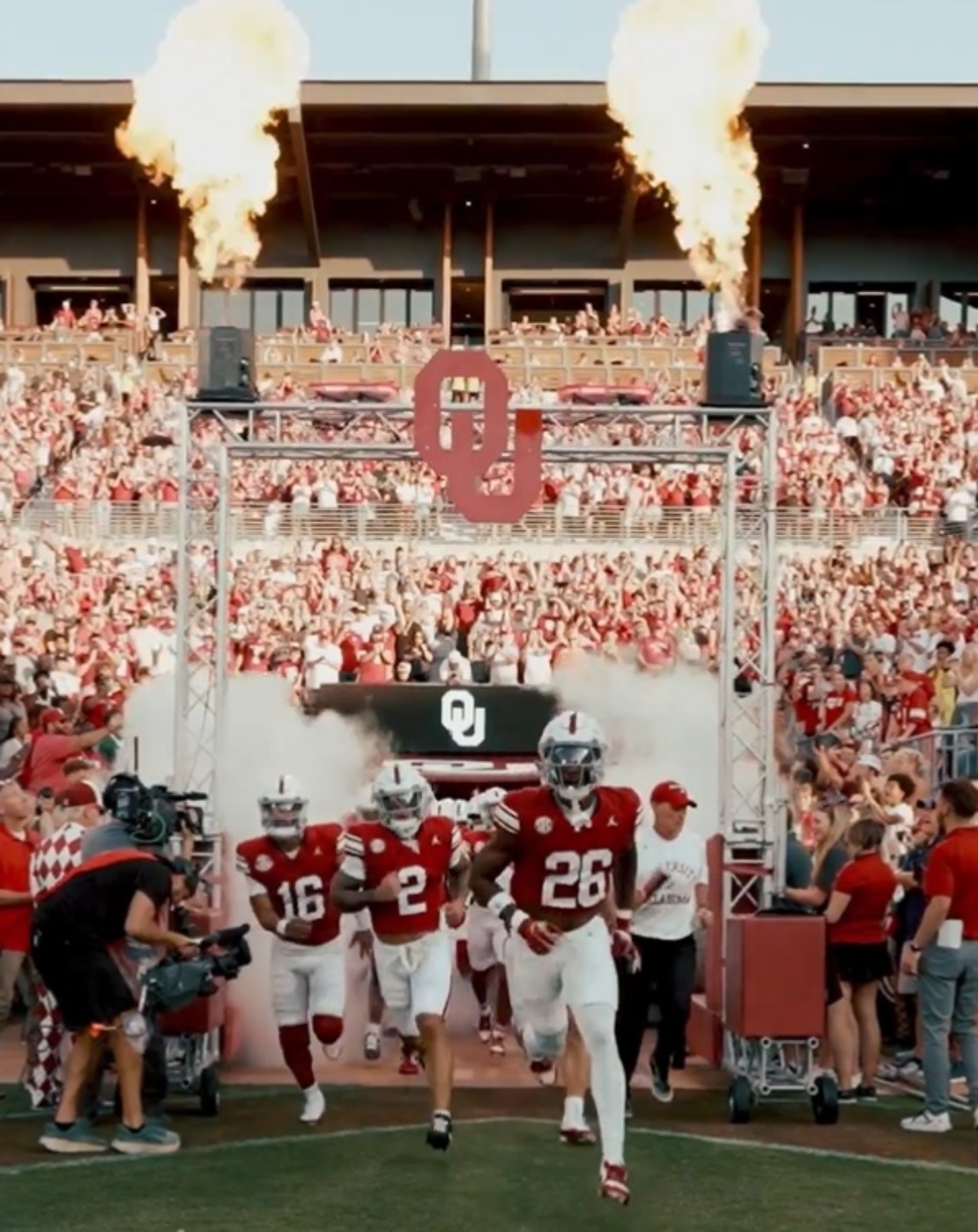
The Oklahoma Sooners enter the 2025 season in a very different position than where they left 2024. After finishing a disappointing 6–7 with one of the nation’s least effective offenses, Oklahoma was left out of the preseason Coaches Poll entirely. But in Monday’s AP Top 25, voters extended an olive branch—ranking the Sooners No. 18 in the nation. On paper, that makes them the seventh-highest-rated SEC team and marks their 26th straight year appearing in the preseason AP poll, the second-longest active streak in the country behind only Ohio State.
The ranking itself is flattering, but the bigger question is whether it’s justified. Oklahoma has undergone a massive overhaul in personnel and staff, and the result is a roster that looks promising but is largely unproven. The offensive side of the ball, in particular, is essentially a reconstruction project under new offensive coordinator Ben Arbuckle. Brent Venables—now firmly on one of the hottest seats in the sport—turned to the transfer portal and the hire of general manager Jim Nagy in an attempt to fast-track the rebuild.
The most significant changes came at the skill positions. Washington State transfer John Mateer takes over at quarterback, bringing a live arm and mobility but limited experience at the SEC level. His top backfield partner, Cal transfer Jaydn Ott, is one of the more dynamic running backs in the country and a potential game-changer—if the Sooners’ offensive line can give him space. That’s no small “if” considering no program nationally gave up more sacks (50) last season than Oklahoma. Fixing that protection breakdown has been a primary focus in fall camp, with Bill Benenbaugh still tinkering with rotations to find a starting five that can hold up against the SEC gauntlet.
And that gauntlet is why the AP voters’ optimism feels risky. Oklahoma’s schedule starts kindly—four of their first five opponents are unranked, with the only early challenge coming at home against No. 14 Michigan. That’s the stretch where the Sooners could build momentum and possibly climb even higher in the polls. But after Kent State in late September, reality comes calling with one of the most brutal closing slates in the country.
From October 11 to November 22, Oklahoma plays six ranked teams—five of them in the top 15. That stretch includes road trips to No. 13 South Carolina, No. 24 Tennessee, and No. 8 Alabama, plus the Red River Rivalry game with No. 1 Texas, and home games against No. 21 Ole Miss, and No. 9 LSU. The Sooners could realistically be favored in only one of those games, and even an improved roster could struggle to escape that run with a winning record.
This is where the No. 18 ranking starts to feel like it’s built more on projection than production. Yes, Venables upgraded the roster. Yes, Arbuckle’s offense should be a dramatic departure from the stagnant attack of 2024. But those changes haven’t yet been tested against SEC speed, physicality, and depth. Oklahoma hasn’t proven it can consistently protect its quarterback, has only beaten one elite opponent (Alabama) in the last year, and hasn’t shown it can string together wins in November when the schedule gets heavy.
There’s also the Venables factor. Through three seasons, he’s 22–17 overall and winless in bowl games (0–3). That’s not a résumé that screams “top-20 lock,” especially in a league as competitive as the SEC. The AP voters are clearly banking on this being the year it clicks—the year Venables’ defensive pedigree merges with a capable offense to produce something closer to the Oklahoma of the Lincoln Riley era. But until the Sooners prove they can win big games under Venables, the benefit of the doubt is more of a gamble than a guarantee.
To be fair, there are reasons for optimism beyond just the new faces. The defense, though inconsistent last season, returns several key contributors and now has more speed at linebacker and in the secondary. Transfer linebacker Kendal Daniels could become the emotional leader of the unit, and Venables’ system thrives when he has versatile playmakers. The offense, for all its issues last year, now has a legitimate one-two punch with Mateer and Ott, plus an influx of skill talent that should push the pace and stretch defenses. If the offensive line improves even to a middle-of-the-pack SEC level, Oklahoma’s scoring output could jump dramatically.
Still, the AP Top 25 is not about who could be good—it’s supposed to reward teams for a combination of proven quality and projected potential. In that light, No. 18 feels generous. This is a team that hasn’t beaten multiple ranked opponents since 2022, hasn’t finished in the top 15 since Riley left, and is coming off its worst offensive year in decades. A more cautious ranking in the low 20s—or even just outside the poll—would’ve reflected that uncertainty.
Of course, preseason rankings are just conversation starters. In the last 20 years, only one preseason No. 1 (Alabama in 2017) has gone on to win the national title, and teams in the teens have both risen to playoff contention and disappeared from the rankings entirely. For Oklahoma, No. 18 is both a compliment and a challenge: the AP voters are telling the Sooners, “We believe you’re better than last year—but now you have to prove it.”
The proving ground begins August 30 against Illinois State and ramps up quickly from there. If Oklahoma can handle Michigan in Week 2 and roll into mid-October with one loss or fewer, the No. 18 ranking will feel justified, maybe even too low. But if they stumble early or get exposed in that October–November stretch, the pollsters’ preseason faith will evaporate, and Venables’ seat will go from hot to molten.
Ultimately, the Sooners’ AP ranking is a bet on potential. It’s a nod to the program’s history, a tip of the cap to the roster overhaul, and a recognition of what Mateer, Ott, and Arbuckle could bring to an offense that desperately needs a spark. But it’s also a risky projection, because potential without production doesn’t win games—and in the SEC, it doesn’t even guarantee you’ll stay in the top 25.
For Venables and Oklahoma, the No. 18 spot isn’t just a ranking—it’s a measuring stick. By season’s end, we’ll know if the voters saw something real or just got caught up in the offseason hype. For a program that prides itself on proving doubters wrong, this is the kind of challenge they should welcome. The only question is whether they’re ready for it.
Matt Hofeld is a college football analyst and contributor covering the SEC. Follow him for more Oklahoma and conference-wide analysis throughout the 2025 season.
Follow us on Instagram