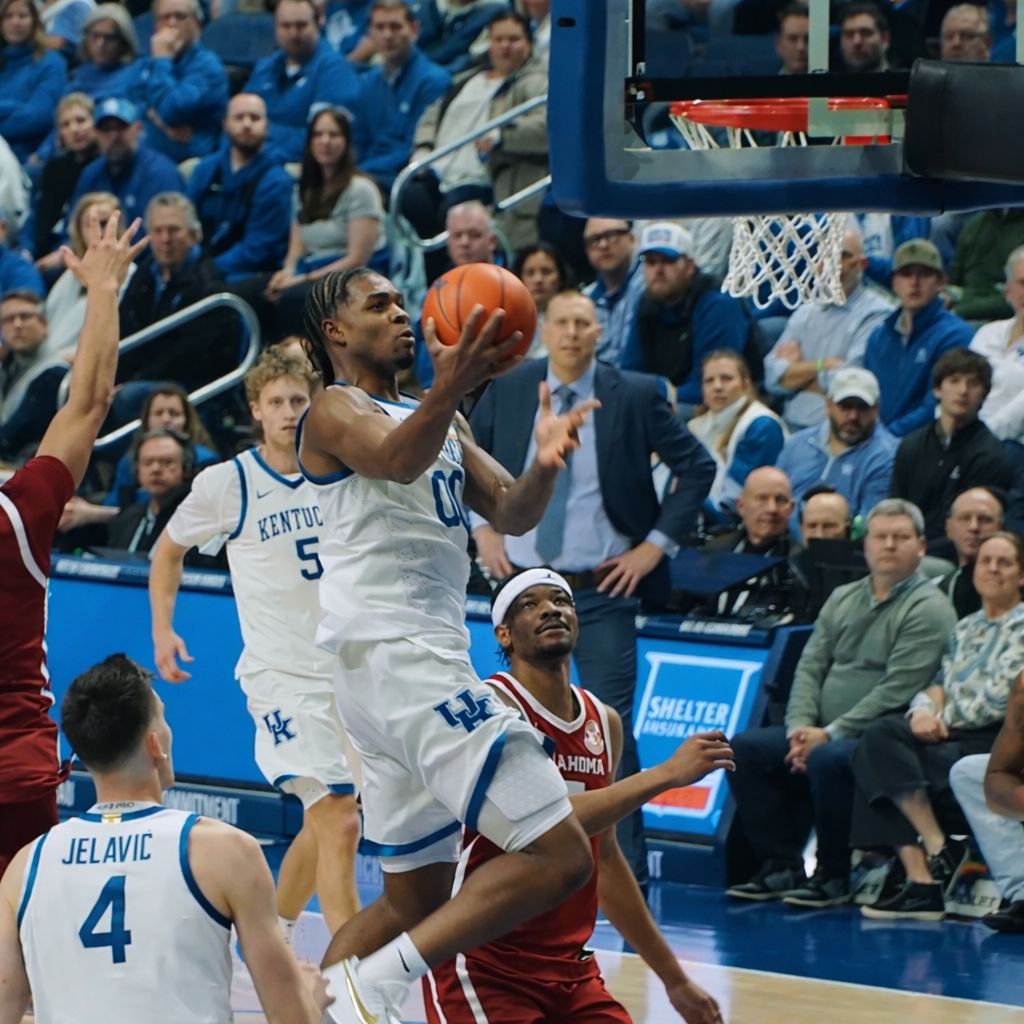
There was a moment Wednesday night inside Rupp Arena when Oklahoma basketball once again teased the idea that it could survive in this league. Down 82–74 with just over three minutes to play, the Sooners had clawed back from a 19-point deficit, quieted a Kentucky crowd that rarely goes silent, and forced the Wildcats to think instead of celebrate. For a brief stretch, Oklahoma looked stubborn, dangerous, and alive.
Then reality arrived on schedule.
Kentucky answered with an immediate 8–0 run. Oklahoma didn’t make another field goal. The final score — a 94–78 loss — was not a heartbreak. It was not controversial. It was not unlucky. It was inevitable. And that inevitability is the most damning indictment of where Oklahoma basketball stands right now.
This wasn’t just a loss. It was a confirmation.
Nine straight defeats. A 1–9 record in SEC play. The program’s longest losing streak since 2009–10. These are not numbers that can be explained away by youth, injuries, or bad bounces. They point to something deeper and more structural: Oklahoma has become a team that competes early, fades late, and expects the collapse before it arrives.
At Kentucky, the pattern was painfully familiar. The Sooners trailed just 35–32 late in the first half. They were defending well enough, moving the ball, and staying connected. Then came the dead stretch — the four-minute blackout that has defined this season. Oklahoma went scoreless for the final 3:54 of the half. Kentucky went on an 11–2 run. Game control flipped instantly, and Oklahoma never truly recovered.
That stretch wasn’t about talent. It was about resilience.
Resilient teams find a way to manufacture points when shots stop falling. They get to the free-throw line. They grind out second-chance opportunities. They defend with desperation. Oklahoma did none of those things because, quite frankly, it hasn’t all season.
Kentucky dominated the glass 41–25. That rebounding margin isn’t a statistic; it’s a statement. Eleven offensive rebounds turned into 19 second-chance points, and those extra possessions crushed Oklahoma’s margin for error. When you already struggle to score in bursts, giving a team like Kentucky more chances is basketball malpractice.
And yet, the most uncomfortable truth from Wednesday night wasn’t the rebounding, the shooting percentages, or even the defensive breakdowns. It was the way this loss mirrored almost every other one in this nine-game spiral.
Oklahoma didn’t quit. That’s the problem.
This team keeps fighting just hard enough to keep hope alive — and just soft enough in the critical moments to let the game slip away. Against Kentucky, they cut the deficit to eight late. Against Texas, they faded at home. Against Arkansas, they blew a 13-point first-half lead. Against Alabama, they led with six minutes left. Against Missouri, they lost on a buzzer-beater in overtime. The story changes in location and opponent, but the ending remains the same.
At some point, patterns stop being coincidence and start being identity.
Xzayvier Brown deserved better Wednesday night. His five three-pointers and 21 points were the kind of performance that usually keeps a team afloat. Tae Davis chipped in 16. But Oklahoma is no longer a team that can win by having one or two players play well. The margin is gone. The error tolerance has vanished. When Kentucky’s former Sooner Otega Oweh scored 24 on efficient looks and Brandon Garrison bullied the interior for a 20-point, 11-rebound double-double, it highlighted another harsh reality: Oklahoma’s best nights are no longer enough.
Defensively, the regression is alarming. Kentucky shot 50 percent from the floor and nearly 46 percent from three. This is a program that once prided itself on physicality and control. Now, stops come sporadically and usually too late. When Oklahoma needs a sequence — one stop, one rebound, one basket — it rarely strings them together.
That inability to stack positive moments has turned close games into predictable losses. And predictability is poison.
Which brings us to the uncomfortable conversation everyone is dancing around.
Porter Moser’s seat isn’t just warm. It’s scorching.
This loss didn’t create the pressure. It amplified it. A 1–9 conference record in Year Five isn’t rebuilding — it’s stagnation. Falling below .500 overall isn’t development — it’s regression. Sliding toward the bottom of the SEC while posting historic losing streaks isn’t bad luck — it’s an alarm bell.
This isn’t about calling for heads in February. It’s about acknowledging that the trajectory is wrong. Oklahoma didn’t enter the SEC to survive. It didn’t accept the toughest basketball league in the country to become a cautionary tale. Yet here the Sooners are, sitting dead last, flirting with program-worst marks, and watching their NCAA tournament hopes dissolve before Valentine’s Day.
What makes this loss particularly damaging is what it says about belief. Teams that believe they can win don’t crumble at the first scoring drought. They don’t get out-rebounded by sixteen. They don’t respond to a late surge with empty possessions and passive defense. Oklahoma’s body language at the end of games tells you everything you need to know. There’s effort, but there’s no expectation.
And expectation is the foundation of winning programs.
Saturday at Vanderbilt will offer another opportunity. Another chance to flip the script. Another moment where Oklahoma can prove this season isn’t already decided. But if the same issues appear — the same droughts, the same rebounding gaps, the same late-game fade — the result won’t matter as much as the confirmation.
Wednesday night at Kentucky didn’t embarrass Oklahoma because of the score. It embarrassed Oklahoma because it looked familiar.
And familiarity, right now, is the enemy.
Follow us on Instagram & Facebook