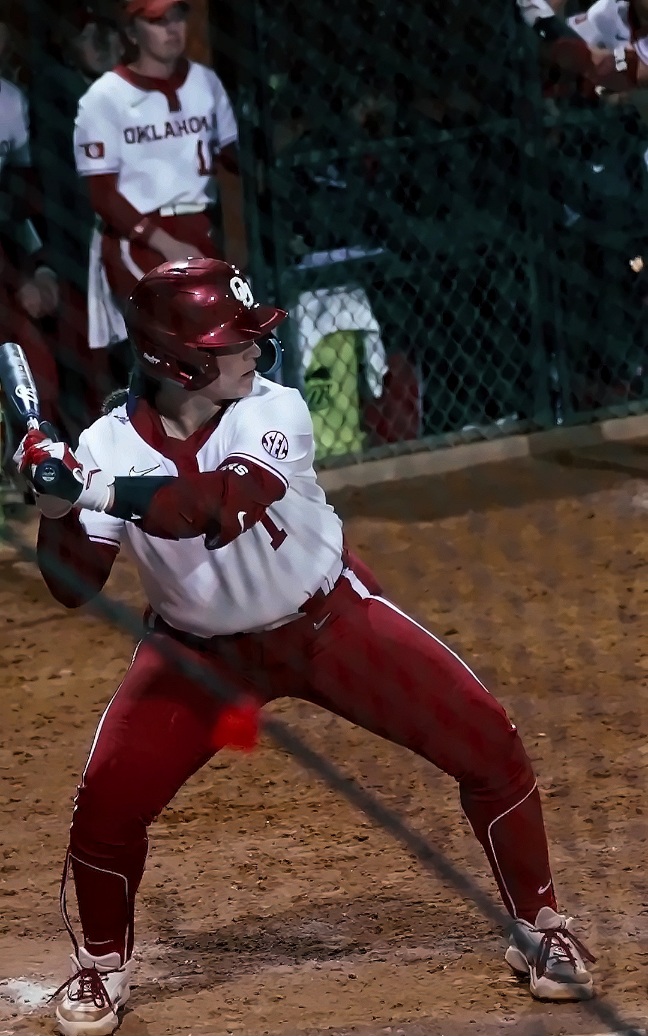
For most programs, a 5–1 weekend at the Mary Nutter Collegiate Classic would simply be a success. For Oklahoma, it was something more revealing.
It was a diagnostic test.
Across six games in Palm Springs, Oklahoma didn’t just win. The Sooners exposed the DNA of their 2026 identity—one built on historic offensive force, accelerated freshman impact, evolving pitching structure, and a psychological resilience that continues to separate them from everyone else in college softball.
The Sooners left California with a signature run-rule win over No. 23 Washington, a top-15 dismantling of Duke, and perhaps most importantly, clarity about who they are becoming.
Here is what we learned.
1. This Offense Isn’t Just Good—It’s Potentially Historic
The numbers alone are staggering.
Fifty-six home runs in 15 games.
That isn’t simply the best mark in the country—it’s a pace that exceeds even Oklahoma’s legendary 2021 offense, widely considered the gold standard of modern college softball power.
What makes this group uniquely dangerous is that the power isn’t concentrated. It’s systemic.
When junior star Ella Parker hit three home runs in the 15–2 run-rule demolition of Washington, she wasn’t carrying the offense. She was embodying it.
Her 4-for-4 performance wasn’t an outlier—it was an illustration of the Sooners’ offensive ecosystem.
This lineup applies pressure in layers:
- Power at the top
- Power in the middle
- Power at the bottom
- And perhaps most terrifyingly—power from players who weren’t even in college a year ago
Opposing pitchers can navigate around one elite hitter. They cannot navigate around nine.
The Washington game provided the clearest example. Oklahoma didn’t wait for momentum. They created it instantly, turning quality pitching into batting practice within innings.
This isn’t random. It’s structural dominance.
The Sooners aren’t relying on sequencing. They’re overwhelming opponents with force.
2. The Freshmen Aren’t Just Contributing—They’re Transforming the Team’s Ceiling
Every championship program reloads. Few accelerate this quickly.
Catcher Kendall Wells delivered one of the most productive tournament performances by a freshman in recent Oklahoma history: six home runs and 13 RBIs in six games.
Her presence changes lineup geometry. Pitchers must now account for power behind established veterans, eliminating safe zones in the batting order.
Meanwhile, outfielder Kai Minor did something equally dangerous in a different way.
She hit .667 for the tournament.
Ten hits in fifteen at-bats.
An 11-game hitting streak.
She isn’t just producing. She’s stabilizing innings, extending rallies, and forcing defensive stress.
Perhaps the most telling freshman statistic came in Oklahoma’s only loss—a 6–4 upset against Long Beach State.
All four Oklahoma RBIs came from freshmen.
Even in defeat, the future was driving the offense.
This is the defining characteristic of elite program continuity: production overlap between generations.
Oklahoma isn’t waiting for freshmen to develop.
They already have.
3. The Pitching Staff Is Evolving—And Becoming More Dangerous Because of It
For years, Oklahoma’s dominance often centered around a singular, overpowering ace.
This year’s staff looks different.
It looks deeper.
And increasingly, it looks more adaptable.
Transfer pitcher Miali Guachino delivered two complete-game wins during the tournament, including the statement victory over Washington. Her command, tempo, and composure stabilized a staff that entered the season facing legitimate questions.
She didn’t just win games.
She established trust.
Sophomore standout Audrey Lowry continued her undefeated start, demonstrating elite strike efficiency and rare control for a young pitcher.
Meanwhile, veteran transfer Sydney Berzon proved her value in a different role—high-leverage relief. Her 4.2-inning relief appearance to secure a win against California showed how Oklahoma can now neutralize late-game threats without overextending starters.
This is the key philosophical shift under head coach Patty Gasso.
This is no longer an ace-dependent rotation.
It’s a matchup-driven weapon system.
Different arms for different situations.
Different styles for different hitters.
That flexibility will matter enormously when Oklahoma enters the postseason and faces elite lineups capable of adjusting to repetition.
4. The Loss to Long Beach State May Have Been the Most Important Game of the Weekend
Dynasties aren’t defined by perfection.
They’re defined by response.
The 6–4 loss to Long Beach State was Oklahoma’s first defeat against a non-power opponent in years. It exposed vulnerabilities—defensive lapses, sequencing inefficiencies, and the consequences of falling behind early.
But what followed revealed far more about this team’s character.
Oklahoma didn’t spiral.
They recalibrated.
They defeated California.
Then they obliterated Washington.
Outscoring opponents 22–7 in their final two games.
The Washington game wasn’t just a win. It was a statement.
Elite teams don’t avoid adversity. They metabolize it.
Oklahoma absorbed the loss and emerged sharper.
This remains one of the defining psychological traits of the Gasso era.
The Sooners don’t just recover.
They retaliate.
Take A Deeper Dive Into Oklahoma Softball
Exclusively on our subscription page.
– Ella Parker Made History on Sunday – And Reminded Everyone Why Oklahoma Still Revolves Around Her
– Game 15 Highlights
– Sooners Unleash Historic Power Display to Route Washington, Reclaim Identity In Mary Nutter Finale
5. Leadership Has Become Distributed—and That May Strengthen the Team Long-Term
One of the most subtle but significant developments this season is structural leadership change.
There are no official captains.
Instead, leadership exists by committee.
Veterans like Kierston Deal and Isabela Emerling provide emotional and experiential stability, but responsibility extends throughout the roster.
This matters because it accelerates maturation.
Freshmen aren’t waiting behind hierarchical barriers.
They’re participating in ownership immediately.
That creates faster psychological growth—and more resilient collective identity.
Programs decline when leadership ages out faster than culture.
Oklahoma has prevented that.
Leadership is now embedded, not assigned.
6. Defensive Stability Continues to Anchor Lineup Flexibility
Offensive power draws headlines, but defensive stability enables experimentation.
Gold Glove infielder Ailana Agbayani provides that anchor.
Her presence at second base gives Oklahoma defensive certainty at a critical position. That stability allows Gasso to rotate offensive personnel in other positions without sacrificing overall defensive integrity.
This flexibility creates matchup advantages nightly.
Few teams in the country can simultaneously maximize offense while maintaining elite defensive reliability.
Oklahoma can.
7. The Program’s Championship Infrastructure Remains Fully Intact
Perhaps the most important takeaway isn’t statistical.
It’s structural.
The Sooners didn’t simply win games. They demonstrated continuity of identity.
They still overwhelm opponents offensively.
They still develop elite young talent rapidly.
They still adapt tactically.
They still respond to adversity with force.
And most importantly—they still expect dominance.
This wasn’t a finished product.
It was a preview.
What It Means Moving Forward
This tournament didn’t prove Oklahoma is unbeatable.
It proved they are evolving.
The offense may become the most powerful in program history.
The freshman class may accelerate the championship timeline rather than extend it.
The pitching staff may ultimately prove deeper and more versatile than ace-dependent predecessors.
And the psychological core—the defining element of Oklahoma’s dynasty—remains intact.
The loss reminded them they are human.
The response reminded everyone else what they are.
Still the standard.
Still the measuring stick.
Still the program every opponent must solve—and few ever do.
The Mary Nutter Collegiate Classic didn’t just show who Oklahoma is.
It showed who they’re becoming.
Follow us on Instagram & Facebook