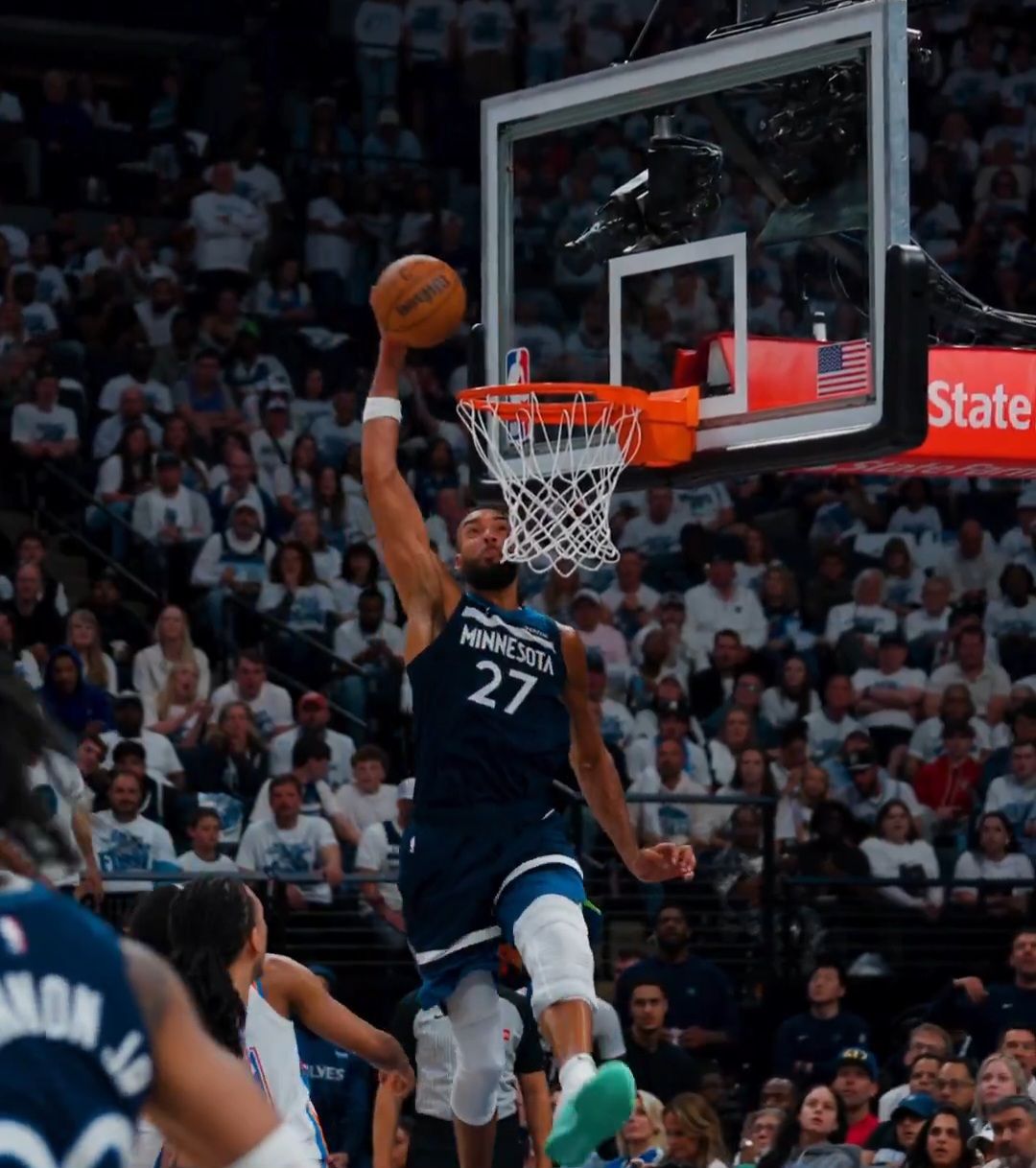
After two commanding wins that had the Oklahoma City Thunder riding high, Game 3 served as a sharp reality check. On Saturday night at Target Center, the Minnesota Timberwolves responded with force, delivering a 143-101 blowout that may swung the momentum of the Western Conference Finals and reintroduced doubt into OKC’s title push. Here are five burning takeaways from a lopsided game that possibly reshaped the series and exposed vulnerabilities the Thunder can’t afford to ignore.
1. Anthony Edwards Took Over and Didn’t Look Back
If there was any doubt about who the best player on the court was in Game 3, Anthony Edwards settled the debate quickly. The 22-year-old star torched the Thunder for 30 points on 12-of-17 shooting, adding nine rebounds and six assists in a performance that oozed confidence and control. Sixteen of his points came in a scorching first quarter that helped Minnesota build a 34-14 lead, stunning a Thunder team known for their poise.
Edwards wasn’t just scoring — he was orchestrating. Whether navigating through traffic or pulling up from midrange, he picked his spots with precision and punished every defensive lapse. It was a needed reminder of Edwards’ capacity to be not just a scorer, but a tone-setter. In a game the Wolves absolutely had to have, he delivered with surgical efficiency.
2. Thunder Defense Completely Collapsed
Oklahoma City entered this series as one of the stingiest defensive teams in the playoffs. That identity disappeared in Minneapolis.
Minnesota carved up the Thunder with relentless efficiency, scoring 72 points in the first half and finishing with 143 — the most OKC has allowed all season. The Timberwolves shot 63% on two-pointers and hit 20 threes, exposing soft closeouts and porous help defense. From paint touches to second-chance points, Minnesota dominated every physical metric.
It was particularly troubling how little resistance OKC offered once Minnesota started rolling. Defensive rotations were a step late, ball pressure was ineffective, and communication seemed nonexistent. This wasn’t just a loss — it was a defensive disintegration.
3. Bench Mob Ignites Timberwolves’ Run
While the stars set the stage, Minnesota’s bench turned the game into a runaway. Rookie Terrence Shannon Jr. poured in 15 points, including a nine-point burst in the second quarter that extended Minnesota’s lead to 30. His energy, shot-making, and defensive grit were infectious, helping keep the Thunder on their heels.
Nickeil Alexander-Walker, previously a minus-20 through the first two games, also contributed significantly, knocking down threes and helping set a more aggressive defensive tone. With Jaden McDaniels in foul trouble and Julius Randle struggling, the Wolves leaned on their depth — and for the first time in this series, it delivered.
OKC, meanwhile, saw their own reserves struggle. Key contributors like Isaiah Joe and Aaron Wiggins failed to make an impact, and head coach Mark Daigneault was forced to overextend his starters in an already lopsided game. Depth was a difference-maker, and the Timberwolves owned that battle.
4. Shai Gilgeous-Alexander Finally Neutralized
After dominating Game 2 with 38 points, Shai Gilgeous-Alexander met a different kind of resistance in Game 3. Minnesota threw a mix of defenders at him — McDaniels, Edwards, and even Mike Conley — with double-teams and early help disrupting his rhythm. He finished with just 14 points on 4-of-13 shooting and was largely a non-factor in the second half.
Without Gilgeous-Alexander’s usual magic, OKC’s offense stalled. The Thunder shot just 14-of-44 from beyond the arc and failed to compensate with interior scoring. Isaiah Hartenstein and Chet Holmgren combined for just 16 points, and the team turned the ball over 14 times. SGA has been the engine of OKC’s playoff push, but Game 3 revealed just how much the Thunder rely on his individual brilliance to stabilize their offense.
5. Momentum Swings Back to Minnesota
A 2-1 series lead is still a position of strength for the Thunder, but the tone has shifted dramatically. The Target Center crowd was electric, and Minnesota played with a level of urgency and physicality that OKC failed to match. With Game 4 set for Monday night in Minneapolis, the Timberwolves suddenly look confident, cohesive, and capable of leveling the series.
The psychological edge belongs to Minnesota now. They shrugged off two losses, answered the bell at home, and thoroughly dismantled a team that had looked nearly invincible. For OKC, the challenge now becomes twofold: rediscover their defensive identity and reassert their offensive tempo before the Timberwolves seize complete control.
Closing Thoughts
Every playoff series has its inflection point. Game 3 might be that moment for the Timberwolves. If they carry this energy and execution into Game 4, they’ll head back to Oklahoma City with the series tied and all the pressure back on the Thunder.
For OKC, this was a reminder that championship runs are rarely smooth. Responding to adversity is what separates contenders from champions. Game 4 will reveal if the Thunder are ready to wear that crown — or if Minnesota just cracked the code.
Follow us on Instagram