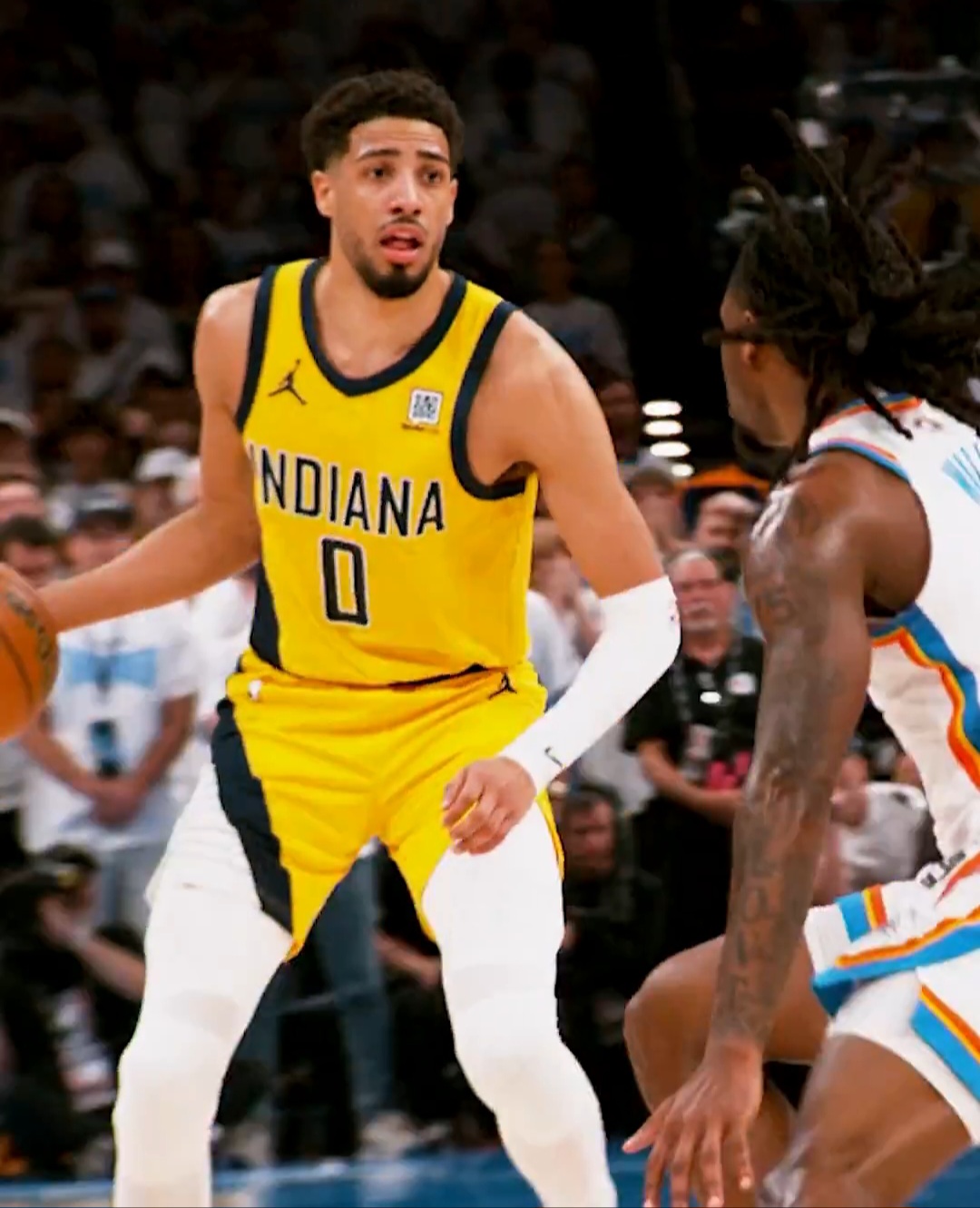
The Oklahoma City Thunder found themselves in an all-too-familiar sprawl of triumph Wednesday night in Game 1 of the NBA Finals. For nearly the entire night, they dominated the Indiana Pacers, their homecourt advantage palpable, their execution precise. Lead sustained. Momentum maintained. “They played like the better team for 47 minutes,” crows one stat line. And then—with under 10 seconds left—the pendulum swung. Tyrese Haliburton, stifled most of the night, rose like a phantom to sink a game-winner, leaving the Thunder reeling and the scoreboard reading a cruel 111–110.
That stunning finish felt seismic. Oklahoma City had put Indiana through a blender, forcing 25 turnovers while coughing up just seven themselves—a historical anomaly that, in nearly every NBA game ever played, results in a blowout. They’d built as much as a 15-point cushion in the fourth, with SGA orchestrating a 38-point masterclass. And yet, a 21-foot Haliburton dagger sliced through their blueprint.
The Agony: Statistics That Don’t Show the Pain
A turnover margin that lops off almost two full dozen possessions should mean carnival lights and champagne showers. Instead, it meant tears and head-shaking contemplation. Only once before in playoff history did a team lose with a -18 turnover differential—and that was decades ago. But Tuesday night, none of history mattered: the Thunder created more opportunities but watched them slip through.
Oklahoma City’s offense had produced. They hit 11 threes on 36 attempts (31%), and Lu Dort alone splashed five of them. Yet the defensive intensity that forced Indiana’s 25 turnovers didn’t translate into enough separation at crunch time. The Thunder’s late-game comfort zone shattered when SGA’s errant final shot rattled out and Haliburton’s composure bloomed.
Execution in the Clutch Is Everything
The final minute epitomized everything the Thunder aspire to be—and everything they need to fix. Oklahoma City seemed to understand the assignments—contesting shots, securing rebounds. But in the most critical moments, the blueprint got lost. They seemed to assume victory after leading by double digits, giving Indiana enough space to breathe, swing momentum, and design a chase.
SGA, with his 38-point night, was masterful. But the final moments required defense, play-calling, situational awareness, and yes—a shot maker. Indiana found theirs; Oklahoma City didn’t. Turnovers favored the Thunder, shots were clicking—but time and composure snatched the win away.
Why This Draw Isn’t a Disaster
Yes, the loss hurts. But it’s not a defining defeat. It’s a cautionary tale, one that prompts urgent yet not existential questions. The team still holds home-court advantage. They still lead the series—not on paper, but in practicality. They’ve shown they can dominate the best. They’ve been factory-calibrated for this moment. What they now must do: recalibrate their mental framework for the final seconds of games.
Mark Daigneault, the Zen architect behind Oklahoma City’s rise, will remind his players of something simple: they forced 25 turnovers. Young teams choke in rhythm when chaos enters. The Thunder didn’t—they created the chaos. The freak finish was less about inability and more about inexperience in such a moment. Learning is what gets the job done next.
A Battle, Not a Blowout – The Series Is Still Theirs
These Finals are never supposed to be clean. They’re the crucible that defines a generation or carries a reputation. A one-point home loss to a clutch performer like Haliburton doesn’t tip the scales; it sharpens them. Indiana’s star guard has proven his shot-making ice; the Thunder now must counter with ice-cold discipline and prayer on their own.
Oklahoma City is better-equipped for series play than any team in recent years. They’ve survived brutal blowout losses, closed gritty games on the road, and disassembled Denver with surgical precision. Game 1 might be a setback, but it’s also a springboard. It adjusts their hunger, lights the fire under their locker-room speeches, and reminds every pro that the Finals is ruthless.
Big Picture: Why the Thunder Still Command the Futures
If you’re the Thunder, Thursday morning is just a new day. They still hold control. Their strengths—iron defense, efficient offense, elite ball control, deep roster—remain intact. It doesn’t matter what the media writes or how loud the home boos become. What matters is they are 3–0 in close games this postseason (regular and playoffs combined), and lost only this one by a single bucket.
Nothing forces a roster to grow faster than feeling the pressure. How they respond in Game 2—intensity, rotations, coach’s decisions—will define whether this was a hiccup or a crack. They won’t panic. They won’t overreact. They’ll adjust.
The Takeaway
In the 111–110 Game 1 defeat, the Oklahoma City Thunder showed both genius and vulnerability. They’re brilliant. They’re human. Through shame and glory, through leads and heartbreak, they’ve built resilience. Finals are won not by perfection, but by response. The collective goal remains four victories. They have the momentum, the coach, and the roster to seize it.
By the time they step onto the court Sunday evening for Game 2, they’ll have a message louder than their home crowd’s cheers: We know what happened. We’re ready to respond.
Follow us on Instagram
One Reply to “The Oklahoma City Thunder Will Learn, Rebound, and Rule – Even After the Game 1 Finale Fade”