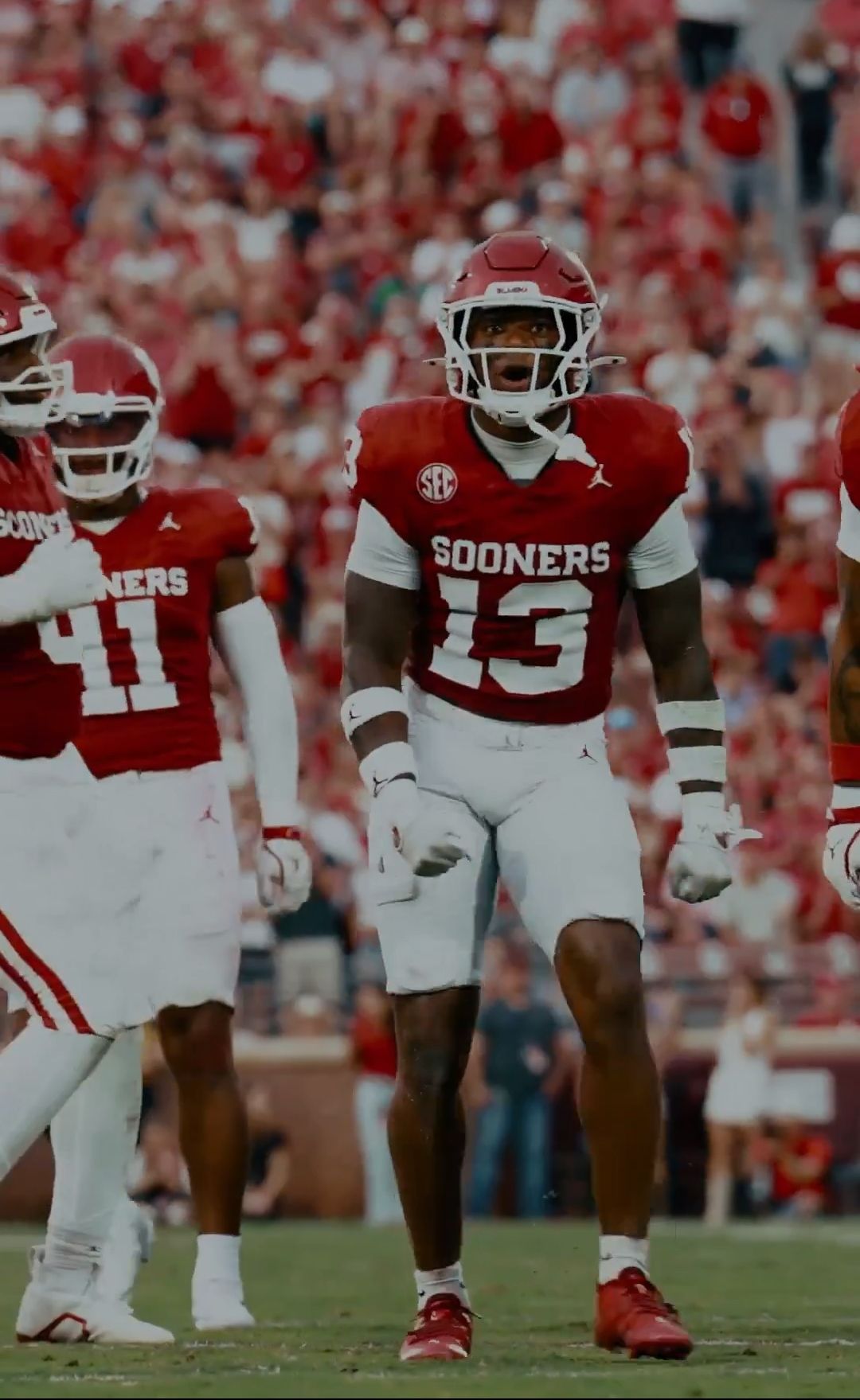
Oklahoma’s bye week wasn’t for rest — it was for recalibration. The timing was rough: on Tuesday, the program announced that Mateer would undergo surgery on his throwing hand and would miss the next contest against Kent State at a minimum. Suddenly, a team riding a perfect 4–0 opening month with top-10 national attention is facing a quarterback uncertainty that casts a shadow over October’s gauntlet of Texas, South Carolina, and Ole Miss.
Yet what’s striking is the way Oklahoma attacked the week. In press comments, Venables said, “Good first part of our season here. Close to a third, I guess. And right on time… Going to get a few guys back. Had a really good, spirited work in practice.” That kind of tone matters. It gives a sense the staff views the bye not as a forced pause but as a chance to polish flaws, get people healthy, and recalibrate strategy.
But make no mistake: this week was also a stress test. Without Mateer, the offense’s identity, efficiency, and composure will be challenged in ways it hasn’t been so far.
With Mateer sidelined, Michael Hawkins Jr. will slide into the starting role. It’s a high-stakes audition. He’s not a stranger to pressure: in 2024, he started four games and played in seven total. But it was a rough baptism — he was asked to operate behind a weakened offensive line, with limited weapons, and under an offensive coaching staff that couldn’t find balance. This time around, the context is healthier.
Venables has spoken publicly about Hawkins’ growth: “He’s attacked everything since the end of last season … he’s picked up the offense really well … he’s got a lot of really dynamic abilities.” The implication is that Hawkins is better equipped now — stronger understanding of the playbook, better rapport with teammates, and the mental maturity to handle bumps in-game.
One advantage Hawkins has that he didn’t fully enjoy last year: a coaching staff aligned around putting him in a position to succeed. With Ben Arbuckle as offensive coordinator and quarterbacks coach, Hawkins gets structure, guidance, and deliberate coaching. He’s not being thrown in blind — the staff is investing in him.
Now, his true test will begin with Kent State, a favorable matchup that allows Hawkins to find his rhythm without the full weight of SEC competition. But come Texas, South Carolina, and Ole Miss, he will be on display.
One of the key things that could stabilize Hawkins’ transition is a more reliable running attack. To date, Mateer himself has been responsible for a large chunk of OU’s rushing production: 190 out of 501 total yards, and five of nine rushing touchdowns. That’s not sustainable when he’s not under center.
Against Auburn, the ground game was largely stifled — a reminder of the offensive line’s importance. Injuries to center Jake Maikkula and guard Febechi Nwaiwu limited their effectiveness. Getting those linemen healthy and in rhythm is essential if the Sooners expect to relieve pressure from Hawkins.
The running backs room has been inconsistent. True freshman Tory Blaylock has shown flashes — 179 yards on 42 carries — but the higher-profile transfer Jaydn Ott has been largely invisible (17 yards on nine carries). Taylor Tatum hasn’t seen the field yet due to a hand cast. This is a room in flux, and as Hawkins takes over, the coaching staff must find a run/rhythm balance quickly.
In short: if the Sooners can’t sustain a credible rushing attack, Hawkins will be forced into longer third-down throws and deeper reliance on the passing game — exactly the kind of game you’d prefer to avoid during a quarterback transition.
Beyond offense, two other areas will determine how smoothly OU navigates this stretch: turnovers and defensive reinforcements.
One oddity in 2025: Oklahoma’s defense has yet to force a single turnover. Meanwhile, OU has committed six turnovers but yielded just nine points from those miscues. Rather than chase interceptions, safety Peyton Bowen has emphasized scheme soundness: “We’re not forcing anything … We just can’t go out and try to create these turnovers. We play within scheme and they’ll come.” Against Kent State — which has five turnovers in its first four games — there’s a good chance OU finally gets a takeaway and breaks through.
Defensively, the return of cornerback Eli Bowen could help strengthen the secondary. Bowen ranked among OU’s best corners last year. After missing time due to injury and rehab, his return offers depth that could matter in November matchups. With players like Gentry Williams, Kendel Dolby, Courtland Guillory, and Jacobe Johnson already in the rotation, getting Bowen back into form gives the staff flexibility and insurance.
A big intangible going into this stretch is mindset. When Mateer was in the lineup, some critics could say Oklahoma’s offense was tailor-made for his skillset. Now, the team must prove its identity transcends one player. The mantra of “next man up” becomes real, not rhetorical.
Peyton Bowen echoed this sentiment: “We all know what we’re capable of … we got the guys around him that surround him, picking him up, it’s like not losing a beat.” That kind of public vote of confidence matters. It builds locker-room cohesion around Hawkins and reduces drama.
Historically, Oklahoma’s culture has prized explosive offense, but the margin for error in the SEC is narrow. Tight games will force the Sooners to lean on defense, red-zone execution, and situational football — areas they’ve given up yardage but have mostly held strong.
Brent Venables said it plainly: “You always focus on your mistakes. You put together a practice plan … to attack areas of … ‘weakness.’ … That’s the difference between winning and losing.” This bye week was planned not to rest, but to correct. If this staff and roster engage in honest self-scouting, then the weeks ahead will show whether they’ve matured or merely pedaled in place.
When Oklahoma returns against Kent State, expectations will not be dialed back. No. 7 ranking, 4–0 record, SEC credibility — nothing about this program invites a soft landing. Hawkins is now in a spotlight not just as fill-in, but as a test for OU’s structural depth and identity.
If he performs well — steady, low turnover, decisive — the narrative will shift. Oklahoma won’t be seen as a Mateer-dependent offense, but a resilient system that can adapt. If he struggles, critics will pounce, and every October game becomes a referendum on the 2025 season.
But the opportunity is immense. If this team can weather this injury, regroup, win through October, and head into November with momentum, it reinforces that Oklahoma is no longer reliant on one star but is building a sustainable foundation for excellence.
Oklahoma’s bye week was never going to be a vacation — it was a gauntlet. With Mateer injured, the Sooners must recalibrate. Michael Hawkins Jr. has a shot at redefining his role. The offensive line must regain its health. The running game must find consistency. The defense must deliver structure and, yes, generate turnovers.
If they execute that plan, the Sooners can not just maintain their unbeaten run — they can reshape expectations. If they falter, that 4–0 start may become a tantalizing “what if.” For now, Sooner Nation should watch, hope, and believe — but also demand consistency, discipline, and growth. The next few weeks will define what kind of team Oklahoma truly is in 2025.
Matt Hofeld is a college football analyst and contributor covering the SEC. Follow him for more Oklahoma and conference-wide analysis throughout the 2025 season.
Follow us on Instagram