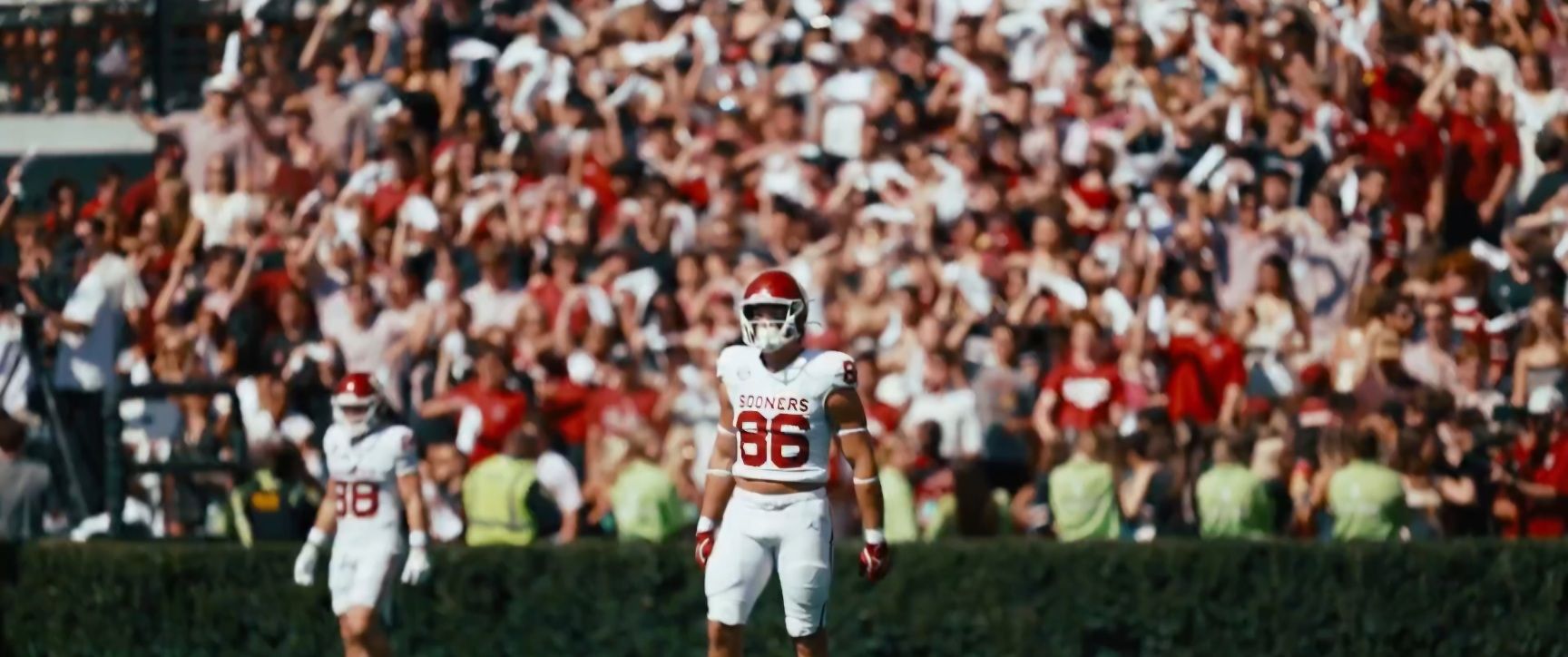
Through eight weeks of the 2025 season, the Oklahoma Sooners find themselves at a little bit of a crossroads — one familiar to programs making the jump from conference contender to national force. The move to the SEC was never just about geography or television deals; it was a test of identity. Could Oklahoma’s proud football tradition — built on physicality, swagger, and precision — survive in college football’s toughest league?
So far, the answer has been complicated.
At 6–1 entering this weekend’s showdown with Ole Miss, Brent Venables’ team has flashed moments of dominance and stretches of growing pains. They’ve looked like a playoff-caliber group one week, then a rebuilding roster the next. The offense has adapted under first-year coordinator Ben Arbuckle, while the defense continues to embody Venables’ relentless, detail-driven style. Yet the question remains: what kind of team is Oklahoma becoming?
Venables has never shied away from what he wants his program to be. “Our DNA has to be built on toughness and discipline,” he said earlier this fall. “That’s non-negotiable. From there, you build your balance — offense, defense, special teams — around that standard.”
That standard is visible in OU’s improvement on defense. The Sooners entered Week 9 ranked No. 2 nationally in scoring defense (9.43 PPG), No. 1 in quarterback sacks (28), and No. 1 in tackles for loss (75), a major step forward after years of inconsistency. The front seven, anchored by tackles David Stone and Jayden Jackson, and edge rusher R. Mason Thomas, has become the tone-setting unit Venables envisioned when he took over in 2022.
But where Oklahoma has truly evolved is in mentality. This group no longer relies on outscoring opponents in wild shootouts; they’re starting to embrace the grind. The Sooners’ yards per play allowed (4.9) is their best mark since 2015, while opponents have converted just 31% of third downs. Those are the stats of a team that knows how to finish drives — and that’s a defining trait in the SEC.
If the defense is the heart of the operation, the offense is the experiment — a work in progress blending Air Raid concepts with the bruising demands of SEC football.
Arbuckle inherited a unit in transition at best. They’ve tailored the scheme around efficiency and quarterback confidence. Quarterback John Mateer has shown flashes of brilliance, posting a 64.5% completion rate, almost 1,800 total yards with 12 touchdowns, but he’s also endured SEC growing pains — particularly against Texas, at the Cotton Bowl, where crowd noise and pressure packages seems to have forced hurried decisions.
Still, the Sooners’ offense is seeking balance in ways that would make even the Bob Stoops-era teams proud. OU averages just under 130 rushing yards per game, good for only 97th nationally. Thanks to a rejuvenated ground game led by freshman Tory Blaylock and sophomore tailback Xavier Robinson, there is hope to see the ground attack become more consistent. The offensive line, long a hallmark of the program, has been working towards rediscovering its rhythm. The unit has been burdened once again this season with injuries and has surrendered fourteen sacks in seven games.
Yet, balance doesn’t mean identity. That’s still forming.
“It’s huge … to know within the building, within the offense, that we could do it,” Mateer said in regards to Oklahoma’s three-touchdown performance at South Carolina last week. “We didn’t lose all confidence. But we got punched in the face; I got punched. And that’s the game of football, but you keep working. And you don’t flinch.”
That rhythm has shown up in bursts — the 26-point performance at South Carolina (2 points came from the defense), the surgical first half against Auburn — but inconsistency has lingered. Against Texas, OU managed only 6 points and turned the ball over three times. Last week, against South Carolina, was just the second time all season, and first with Mateer at quarterback, the Sooners didn’t turn the ball over at all.
For Arbuckle’s unit, efficiency is still chasing identity.
Leadership defines culture, and for this Oklahoma team, it’s been a quiet strength. Venables’ core — Stone, Jackson, Thomas, Mateer — has carried the locker room through uneven stretches. But the bigger test has been how this team responds down this final stretch.
All five of Oklahoma’s remaining opponents are currently ranked in both the AP and Coaches Poll.
“The difference between the SEC and everywhere else,” Venables noted earlier this month, “is you don’t get a Saturday off. You better bring your best every single week.”
That truth looms large heading into Saturday’s game against Ole Miss. The Rebels bring a high-octane offense and creative play calling under Lane Kiffin, representing both a measuring stick and a mirror. Ole Miss thrives on tempo and chaos — exactly what Oklahoma’s new identity is supposed to control.
If OU’s defense can dictate pace and keep the game in structure, it’s a sign the program has matured. If not, it risks sliding back into the roller-coaster identity that haunted its Big 12 days.
This season’s defining storyline might not be a single win or loss but rather whether Venables’ defensive culture and Arbuckle’s offensive philosophy can coexist.
It’s a tricky balance. The defense thrives on patience and physicality. The offense wants speed and rhythm. One side slows the game; the other accelerates it. The challenge lies in syncing tempo — controlling the ball without neutering explosiveness.
The early signs are promising. Oklahoma ranks No. 53 nationally in time of possession, an underappreciated stat that shows the offense’s ability to sustain drives and keep the defense fresh. Yet the playbook still has room for growth. Arbuckle’s next step is generating chunk plays against elite defenses without sacrificing control.
That’s what makes this week’s Ole Miss matchup so pivotal. The Rebels’ defense ranks 15th in the SEC against the run, meaning OU’s physical style could dictate the game. If the Sooners can run effectively while maintaining balance, they’ll showcase the kind of multidimensional identity Venables has long preached.
No team defines itself in one week, but certain games reveal who you really are. For Oklahoma, this is one of them.
A win over Ole Miss would move them closer to the SEC Championship conversation and, more importantly, prove they can impose their will against a Top 10 opponent. A loss wouldn’t derail their season — but it would delay the inevitable question of identity.
The Sooners have been many things over the years — innovators, contenders, survivors. In 2025, they’re trying to become something different: a complete football team.
If Venables’ defense keeps forcing turnovers, like they did last week, if Mateer finds consistency, and if Arbuckle’s offense continues to grow without losing its edge, Oklahoma might not just be surviving in the SEC — they might be becoming the kind of team that can win it.
Matt Hofeld is a college football & softball analyst and contributor covering the SEC. Follow him for more Oklahoma and conference-wide analysis throughout the 2025 season.
Follow us on Instagram & Facebook
One Reply to “Identity Check: What Kind of Team Is Oklahoma Becoming?”