For the better part of two weeks, Oklahoma looked like a basketball team finally discovering who it wanted to be.
Road win at Wake Forest.
Neutral-court win over Marquette.
Defense traveling.
Confidence climbing.
Then came Saturday night in Phoenix — and all of it vanished in about six minutes.
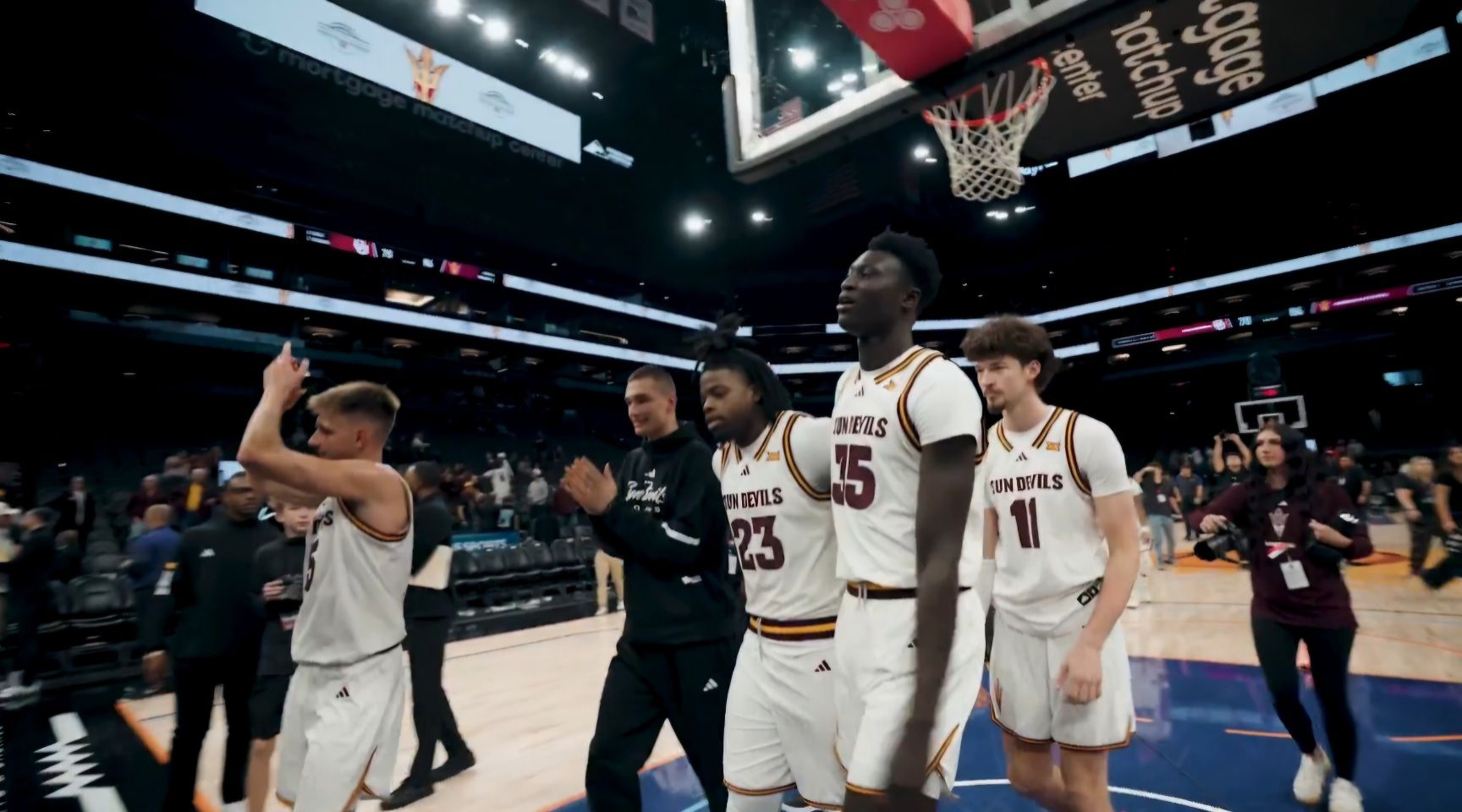
Oklahoma’s 86–70 loss to Arizona State at the Jerry Colangelo Classic wasn’t the result of one hot shooter or a bad night from deep. It was the result of a complete emotional and physical unraveling. And it happened early.
The Sooners didn’t just fall behind.
They lost themselves.
Oklahoma opened the game with a quick 4–0 lead and, for a moment, looked composed. That lasted until Arizona State turned the game into a track meet — and Oklahoma ran straight off the rails.
From that point, everything snowballed.
Arizona State responded with a 27–2 run that felt less like a surge and more like an avalanche. Within ten minutes, the game was 30–9. By halftime, OU trailed 47–28. The outcome didn’t feel unresolved — it felt obvious.
Arizona State shot 55.2% in the first half.
Oklahoma shot 28.1%.
Arizona State hit 7 of 10 threes.
Oklahoma hit 3 of 17.
Whether it was poor shot selection, rushed possessions, or simple confusion, Oklahoma never established control. It wasn’t just missing shots — it was missing identity.
The offense looked hurried.
The defense looked late.
The bench looked stunned.
Whatever momentum this team brought from Winston-Salem never made the flight to Phoenix.
Box scores will highlight the fouls.
Oklahoma committed 23.
Arizona State shot 33 free throws.
Mohamed Wague fouled out.
Tae Davis and Nijel Pack both logged four.
But this wasn’t a whistle problem — it was a reaction problem.
Oklahoma wasn’t just reaching. It was lunging. Chasing. Guessing.
Fouling is almost always born from desperation, and desperation arrives when players stop trusting position and start chasing plays they’re late to.
That’s exactly what it looked like.
Every foul was evidence that Oklahoma wasn’t set defensively.
Every foul shot was proof that the Sun Devils were in command.
Once OU lost its footing defensively, the officiating felt oppressive — not because it was unfair, but because Arizona State dictated the terms of engagement.
Arizona State didn’t disguise how the game was won.
Head coach Bobby Hurley was direct afterward:
“I thought we outworked them today, and because we did that, we were rewarded.”
That wasn’t coach-speak.
That was the truth.
Arizona State rebounded with urgency.
Rotated with purpose.
Attacked downhill.
Hurley emphasized it was intentional.
“If I don’t do anything about [rebounding] after giving up two offensive rebounds right away, then what I’m saying is meaningless.”
The Sun Devils weren’t just better — they were sharper. They turned Oklahoma’s early misses into instant pressure. They turned rebounds into runouts. They turned defensive stops into confidence.
By the first timeout, Arizona State already believed it was going to win.
Oklahoma looked like it was hoping it wouldn’t lose badly.
Games like this require stabilization — not hero ball.
Oklahoma never got it.
Nijel Pack never saw clean looks.
Tae Davis never found rhythm.
Wague spent more time navigating foul trouble than demanding space inside.
Instead, the scoring came late and in fragments.
Kuol Atak’s 12 points — all in the final 10 minutes — were admirable, but also telling. Those were points scored when the result was beyond reach. They weren’t momentum — they were resistance.
This felt like a team that didn’t know who needed to step forward.
And because of that, no one truly did.
This wasn’t about zone defense.
This wasn’t about scheme.
This wasn’t even about Arizona State shooting well.
This was about presence.
Oklahoma walked into a neutral-site game like a team still waiting to prove something to itself. Arizona State walked in like a team convinced of what it already was.
One played with urgency.
The other played with anticipation.
Only one of those wins games.
Momentum is fragile.
Identity is even more so.
And for the first time during this recent stretch, Oklahoma looked uncertain — not unlucky.
This game didn’t prove Oklahoma can’t be good.
It proved Oklahoma still doesn’t know how to respond when things go wrong.
Against Wake Forest, shots fell early.
Against Marquette, the breaks went OU’s way.
In Phoenix?
Nothing went right.
And Oklahoma had no counterpunch.
Championship-level teams do not rely on flow.
They create it — and they survive without it.
Oklahoma did neither Saturday.
This game doesn’t ruin Oklahoma’s season.
But it does redefine the conversation.
Neutral-site losses to Gonzaga, Nebraska, and now Arizona State place real weight on how Oklahoma performs from here forward. The resume isn’t empty — but the margin for inconsistency just got thinner.
Bedlam is next.
If Oklahoma wants to show Saturday was an outlier and not an origin story, it will have to bring:
Discipline.
Poise.
Force.
Not hope.
Oklahoma didn’t lose because Arizona State was great.
Oklahoma lost because it stopped being itself the moment adversity arrived.
Until that changes, the Sooners will continue to look dangerous — but not dependable.
And in this sport?
Dependable wins.
Follow us on Instagram & Facebook