There are wins that pad a résumé, and there are wins that quietly shape a season.
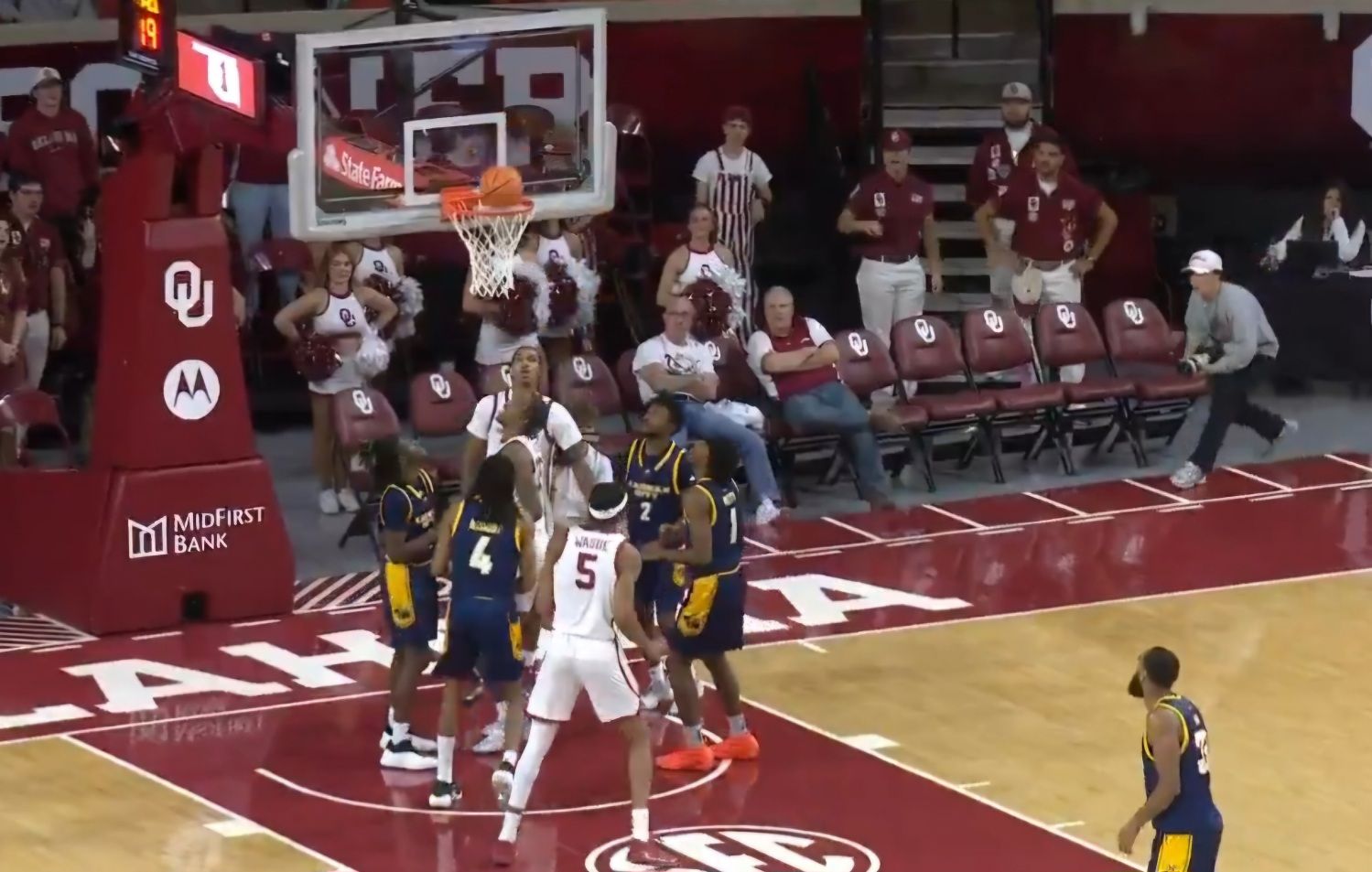
Oklahoma’s 89–67 victory over Kansas City on Tuesday night fell squarely into the latter category.
Yes, the Sooners did exactly what they were supposed to do against a struggling opponent. Yes, the final score reflected a talent gap that was evident from the opening possession. But what made this game matter — especially with conference play looming — was not the margin. It was the manner.
Oklahoma didn’t just beat Kansas City.
It controlled it.
From tempo to spacing, from defensive pressure to shot selection, the Sooners dictated every phase of the game in a way that felt intentional rather than opportunistic. For a team that spent the early part of the season searching for consistency, that distinction matters.
By the time the first media timeout arrived, the game had already taken its shape.
Behind aggressive guard play from Xzayvier Brown and Nijel Pack, Oklahoma sprinted out to a lead that never wavered. Brown scored 14 of his 21 points in the first half. Pack added 13 more. Together, they matched Kansas City’s entire first-half output, pushing the Sooners to a staggering 54–27 halftime advantage.
The numbers were overwhelming:
- 54.7% shooting in the first half
- One turnover in the opening 20 minutes
- Seven forced turnovers
- A 22–6 edge in points in the paint
This wasn’t a hot-shooting anomaly. It was structure.
“I feel like we’ve learned how to come out with that intensity,” Brown said afterward. “I think now, with this group, we’re just learning how to maintain that.”
That quote captured the night more accurately than the box score. Oklahoma didn’t rely on a run to separate. It relied on habits.
One of the more encouraging aspects of Oklahoma’s performance was how little it felt like the Sooners were chasing offense.
Brown’s 21 points came on 8-of-15 shooting. Derrion Reid added 15 on just six attempts. Mohamed Wague finished with 11 points, seven rebounds, and two blocks without demanding touches. Nijel Pack logged 15 points and four assists while rarely forcing the issue.
Oklahoma shot 50% from the field.
Five players reached double figures.
Twenty-one assists were recorded on 35 made baskets.
That balance speaks to a team increasingly comfortable within its offensive identity. The ball didn’t stick. The offense didn’t stall. And when Kansas City tried to speed the game up with perimeter shooting in the second half, Oklahoma responded calmly with interior touches and timely stops.
The lead never dipped below 20 again.
This was not a game that required heroics — and that’s exactly why it mattered.
Kansas City didn’t play well, but Oklahoma didn’t allow them to.
The Roos turned the ball over 16 times, with Oklahoma converting those mistakes into 24 points. Outside of Karmello Branch’s 23-point night — fueled almost entirely by six made three-pointers — sustained offense was hard to find.
Oklahoma’s rotations were sharp. Help defense arrived on time. Passing lanes were anticipated rather than reacted to.
Perhaps most telling: Oklahoma committed just eight turnovers for the game, marking the fifth time in seven contests the Sooners finished in single digits. That discipline, paired with defensive pressure, created a rhythm Kansas City never escaped.
Control, again, was the theme.
While the headline performances came from Brown and Pack, the night also quietly highlighted Oklahoma’s evolving rotation.
Freshman Kai Rogers played a career-high 15 minutes, finishing with four points, five rebounds, and an assist. His minutes weren’t flashy, but they were steady — exactly what Oklahoma needs as it inches closer to conference play.
“It’s been intentional, trying to get him more minutes,” head coach Porter Moser said. “He had his moments again tonight that were nice. With him, it’s just not thinking and playing with motor. Those are valuable minutes. He’s been trending upward.”
That trend matters.
Oklahoma doesn’t need Rogers to be a focal point. It needs him to be functional, physical, and reliable. Against Kansas City, he was all three.
The same could be said for Wague, whose stat line — 11 points, seven rebounds, two assists, two blocks, and a steal — reflected a steady presence rather than dominance. In games where Oklahoma’s guards carry the scoring load, that kind of interior stability is essential.
The lone sour note of the night came when guard Dayton Forsythe exited after just two minutes of playing time with an ankle injury — his second, as it turned out.
“He turned the other one,” Moser said. “He’s just so tough, and he plays so hard, and we’ve got to get him healthy.”
What stood out was how little Forsythe’s absence disrupted the flow of the game. Oklahoma adjusted. The rotation shifted. The tempo never changed.
That’s not something this team could consistently say earlier in the season.
Kansas City fell to 2–10 and remains winless on the road. This was not a résumé-defining opponent.
But Oklahoma isn’t at a point in its season where every win needs to be a statement to the committee. What the Sooners need right now is reliability — proof that they can take care of business, protect home court, and play complete games without emotional swings.
At 8–3, with six wins in their last seven outings, Oklahoma is beginning to look like a team that understands itself.
Fast starts.
Ball movement.
Defensive pressure.
Depth without panic.
Those traits won’t guarantee success in conference play, but they establish a foundation. And foundations are built in games like this — not the dramatic ones, but the controlled ones.
The Sooners remain unbeaten at home and will continue its homestand against Stetson on Dec. 22. Tougher tests are coming. Better teams will challenge this structure more aggressively.
But on Tuesday night, the Sooners showed they no longer need chaos to win comfortably.
They simply imposed their will.
And as conference play approaches, that may be the most important development of all.
Follow us on Instagram & Facebook