There was a time when a player entering the transfer portal meant one thing: he was gone.
That assumption no longer holds. Not in college football. Not in the SEC. And certainly not at Oklahoma.
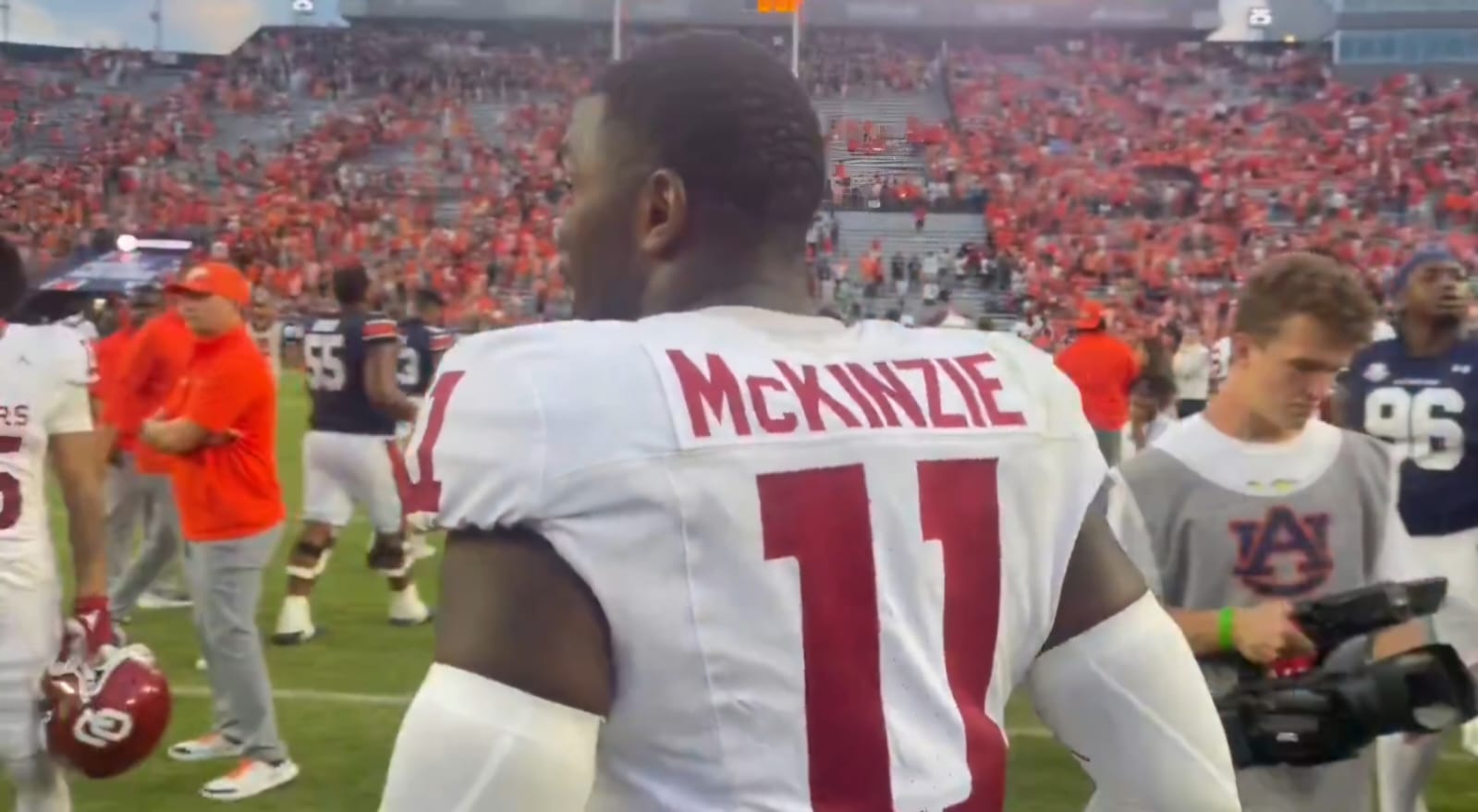
When Kobie McKinzie’s name surfaced on Sunday as a candidate for the NCAA transfer portal, the immediate reaction followed a familiar script. Surprise. Concern. Speculation. And, inevitably, the question that now hangs over nearly every portal entry involving a recognizable contributor:
Is this about football — or is this about leverage?
The truth is uncomfortable for everyone involved, because in 2025, the answer is often both.
McKinzie’s decision doesn’t exist in a vacuum. It exists in a college football ecosystem reshaped by NIL, by short-term rosters, and by a transactional undercurrent that programs like Oklahoma are still learning how to manage at scale. Whether McKinzie ultimately leaves or returns is almost secondary to what his portal entry represents: a reminder that roster stability is no longer about loyalty or development timelines — it’s about alignment, perceived value, and leverage.
And that reality doesn’t make anyone a villain.
A decade ago, entering the transfer portal was a nuclear option. Coaches treated it as a point of no return. Teammates read it as betrayal or surrender. Fans viewed it as quitting.
Today, it’s closer to an opening bid.
Players enter the portal for many reasons — playing time, scheme fit, personal circumstances — but it has also become a mechanism for self-evaluation. What am I worth? Who values me? Where do I stand? Those questions are no longer rhetorical. They’re answered quickly, directly, and often financially.
That’s why comparisons to David Stone linger in the background of McKinzie’s situation, even if the circumstances aren’t identical. Stone’s brief portal entry last spring rewired how Oklahoma fans interpret these moments. It showed that entering the portal doesn’t always mean a player wants out — sometimes it means he wants clarity.
And sometimes, it means he wants security.
This is where McKinzie’s case becomes particularly interesting. He’s not a household name. He’s not a national award candidate. He’s not someone you build billboards around.
He’s something far more complicated in today’s college football economy: a rotational contributor with upside.
Those players live in the most precarious space of the NIL era. They matter enough to replace. They’re valuable enough to attract interest. But they aren’t irreplaceable — at least not on paper.
For a linebacker like McKinzie, entering the portal may be less about dissatisfaction and more about recalibration. Where do I fit? What is my role? How secure is my future? Am I a piece — or am I an afterthought?
Those questions don’t always get answered honestly inside a program, especially one navigating roster churn and heightened expectations. The portal, for better or worse, has become the place where answers arrive unfiltered.
The NIL Question Is Inevitable — and Unavoidable
No one at Oklahoma will say publicly that NIL plays a role in these decisions. Players won’t either. That silence doesn’t mean it isn’t part of the calculus.
In the modern game, NIL isn’t a bonus — it’s a baseline. For many players, especially those who aren’t first-round prospects, NIL represents financial stability in a sport that still offers no long-term guarantees. It’s rent. It’s family support. It’s insurance against injury or depth-chart erosion.
If McKinzie is testing the market to understand his NIL value, that doesn’t make him mercenary. It makes him rational.
The uncomfortable truth for programs is that players no longer wait passively for validation. They seek it. And the portal provides instant feedback.
That doesn’t mean McKinzie is staging a standoff or playing hardball. It means he’s operating within the rules as they exist — rules the NCAA created and then largely abandoned programs to navigate alone.
From the program’s standpoint, McKinzie’s portal entry is frustrating — not because it’s unexpected, but because it underscores how little control staffs truly have anymore.
You can recruit well. You can develop players. You can communicate clearly. And still, you can wake up one morning and find a contributor exploring other options.
That’s not a failure of culture. It’s the cost of participation in modern college football.
The challenge for Oklahoma isn’t preventing portal entries — that’s impossible. The challenge is deciding which conversations are worth having when those entries happen. Which players do you re-engage? Which ones do you let walk? Where do you draw financial lines?
Those decisions are happening quietly, constantly, and with incomplete information.
This Isn’t About Panic — It’s About Perspective
It would be easy for fans to frame McKinzie’s decision as a red flag or a referendum on the program’s direction. That reaction misunderstands the moment.
The portal doesn’t always signal discontent. Sometimes it signals curiosity. Sometimes it signals insecurity. Sometimes it signals ambition.
And sometimes, it’s simply a pause.
McKinzie may leave. He may return. Either outcome would fit the current landscape. What matters more is that Oklahoma — and its fan base — adjusts expectations about what these moments mean.
Roster building is no longer linear. Careers aren’t always contained within a single locker room. Loyalty exists, but it competes with opportunity in ways it never had to before.
That’s not nostalgia talking. That’s reality.
The Bigger Picture: This Is the New Normal
If there’s discomfort around McKinzie’s portal entry, it’s because it reflects a broader truth: college football has shifted from program-centric to player-centric, and there’s no reversing that tide.
Programs adapt or fall behind. Players advocate or get left behind.
Neither side is wrong. They’re just navigating a system that incentivizes movement and monetizes uncertainty.
Kobie McKinzie didn’t break that system. He’s just operating inside it.
And until the sport finds equilibrium — if it ever does — these moments will keep happening. Quietly. Publicly. Awkwardly.
The portal isn’t an indictment anymore.
It’s a conversation.
And Oklahoma, like everyone else, has to decide how it wants to answer.
Follow us on Instagram & Facebook