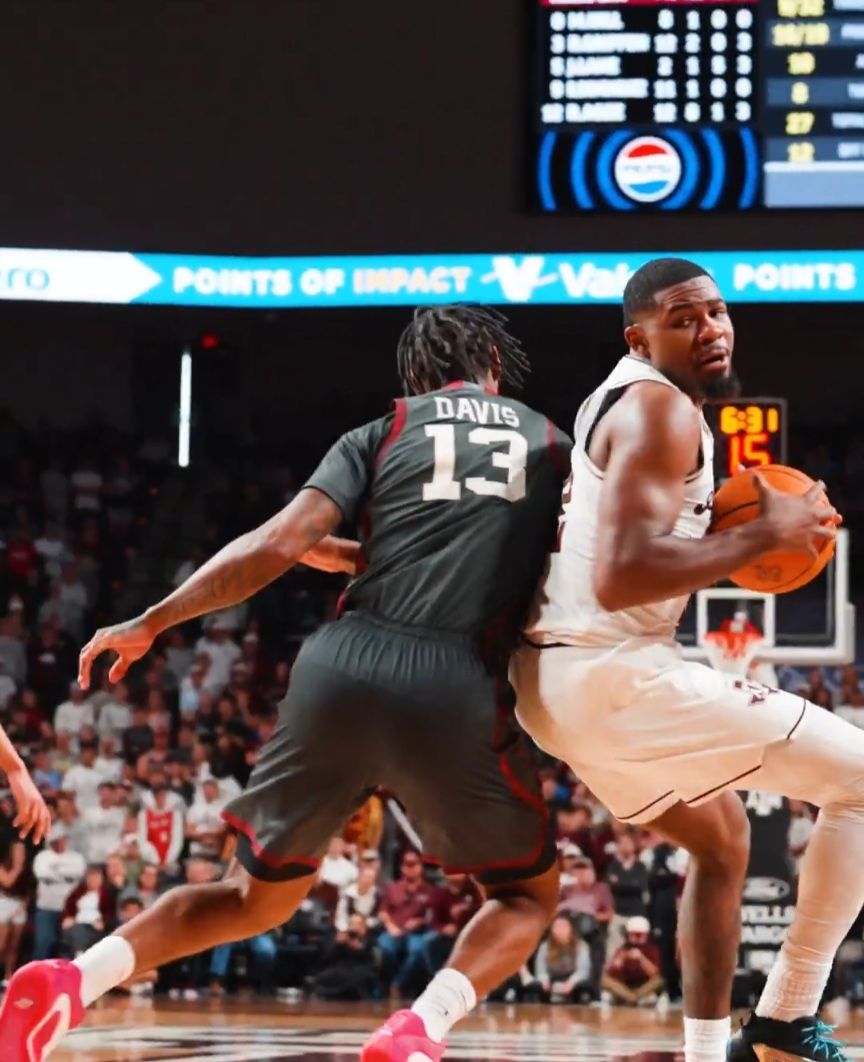
There was a moment late Saturday afternoon in College Station that said more about Oklahoma’s loss than the final score ever could.
Down five with just over three minutes left, the Sooners finally had the look they wanted. The floor was spaced. Nijel Pack had already proven he could hit from anywhere. The possession didn’t need to be rushed — just executed.
Instead, a whistle blew. Traveling. Possession gone.
It wasn’t the loudest moment in Reed Arena, but it was the most revealing. And it perfectly summed up why Oklahoma walked off the floor with an 83–76 loss to Texas A&M instead of a resume-defining road win.
This wasn’t a collapse. It wasn’t a talent gap. It wasn’t even a failure of effort.
It was Oklahoma losing the one thing that has defined this team all season: control.
When the Identity Slips, Everything Else Follows
Oklahoma entered Saturday’s game averaging just 9.5 turnovers per contest, the best mark in the SEC. That number wasn’t accidental. It was foundational. It was the quiet backbone of why this team had stayed competitive against quality opponents and why its NCAA Tournament hopes remained intact entering conference play.
Against Texas A&M, that identity vanished.
The Sooners committed a season-high 17 turnovers, many of them live-ball giveaways that fed directly into the Aggies’ transition attack. Texas A&M turned those mistakes into an 18–8 advantage in points off turnovers, flipping what should have been a grind-it-out road game into a contest Oklahoma constantly had to chase.
For a team built on defensive discipline, valuing possessions, and forcing opponents to play late in the shot clock, that breakdown was fatal.
And the most troubling part? Texas A&M didn’t do anything exotic to cause it.
“Bucky Ball” Isn’t New — Oklahoma Just Didn’t Handle It
Yes, Texas A&M’s aggressive press — often referred to as “Bucky Ball” — deserves credit. The Aggies disrupted Oklahoma early, forcing 11 first-half turnovers and preventing the Sooners from ever settling into a comfortable offensive rhythm.
But this wasn’t a surprise tactic. It’s who A&M is. It’s on film. It’s expected at Reed Arena.
The problem wasn’t preparation. It was execution.
Too many possessions ended without a shot attempt. Too many passes were telegraphed. Too many decisions were rushed. And when Oklahoma did break the press, it often failed to convert on the other end, allowing the Aggies to reset their pressure without consequence.
That cycle — turnover, transition defense, reset — slowly tilted the game.
Even in a contest with 19 lead changes, Oklahoma was constantly expending extra energy just to stay even.
Individual Performances Weren’t the Issue
If this were a game decided by lack of production, the box score would look very different.
Nijel Pack delivered one of his best performances in an Oklahoma uniform, scoring a game-high 24 points, knocking down a season-high six three-pointers, and adding five assists with just one turnover. He was efficient, aggressive, and unafraid of the moment.
Derrion Reid turned in a breakout performance, recording his first career double-double with 19 points and 11 rebounds, while hitting four of five from beyond the arc. Tae Davis added another double-double with 12 points and 10 rebounds, providing physicality and effort inside.
Those performances should have been enough.
But basketball games aren’t won in isolation. They’re won in margins — and Oklahoma lost too many of them.
Free Throws, Fouls, and the Cost of Playing From Behind
Turnovers weren’t the only compounding issue.
Texas A&M went 21-for-25 at the free-throw line, compared to Oklahoma’s 13-for-16. That’s not a massive percentage gap, but it is a volume gap — one created by Oklahoma spending long stretches defending in scramble mode.
Turnovers lead to transition defense. Transition defense leads to fouls. Fouls lead to free throws. Free throws stop runs — and start new ones.
When Oklahoma finally went cold late, missing several clean looks during Texas A&M’s decisive 14–6 closing run, there was no cushion left. Every empty possession mattered more because so many had already been wasted.
That’s how close games slip away without ever feeling like they were blown.
This Loss Changes the Margin for Error
At 11–5 overall and 1–2 in SEC play, Oklahoma is not in danger territory — but it is no longer comfortable.
The SEC is unforgiving, and this year’s league schedule offers few soft landings. Two straight losses, both competitive, both instructive, still count the same in the standings.
The Texas A&M loss stings not because it exposed a fatal flaw, but because it highlighted how thin Oklahoma’s margin truly is.
This team does not win games by overwhelming opponents with talent. It wins by:
- Protecting the ball
- Defending at an elite level
- Controlling tempo
- Forcing opponents to beat them over 40 minutes
Take one of those away — especially the first — and the entire structure wobbles.
Saturday proved that.
Why Florida Now Feels Bigger Than It Should in January
This is why Tuesday night against Florida suddenly feels heavier than a typical mid-January home game.
Oklahoma returns to the Lloyd Noble Center, where it is 8–0 this season, and faces a Florida team sitting at 10–5 overall and 1–1 in SEC play. It’s not a must-win in the literal sense — but it’s close.
Another loss would push the Sooners to 1–3 in conference play, a hole that becomes increasingly difficult to climb out of in a league where NET opportunities are everywhere but margin is everything.
Just as importantly, Oklahoma needs to reassert its identity.
The home crowd should expect a response — not in terms of scoring fireworks, but in composure. Fewer rushed passes. Better spacing against pressure. Cleaner entries into offense. Possessions that end with shots.
Those things don’t show up in highlights. They show up in wins.
The Bigger Picture: This Loss Can Still Matter — If It’s Learned From
Losses like Saturday’s are dangerous only if they’re repeated.
If Oklahoma cleans up the turnovers, that Texas A&M game looks less like a warning sign and more like a hard lesson in SEC basketball. Reed Arena has claimed better teams than this one. Oklahoma was not overwhelmed. It was undone by its own slippage.
That’s correctable.
But if the turnover issues linger, if pressure continues to rattle a team built on control, then this loss will be remembered not as a one-off — but as the moment the margins started working against Oklahoma.
Saturday wasn’t about effort. It wasn’t about heart.
It was about discipline.
And for a team walking the NCAA Tournament tightrope, discipline isn’t optional — it’s everything.
Follow us on Instagram & Facebook