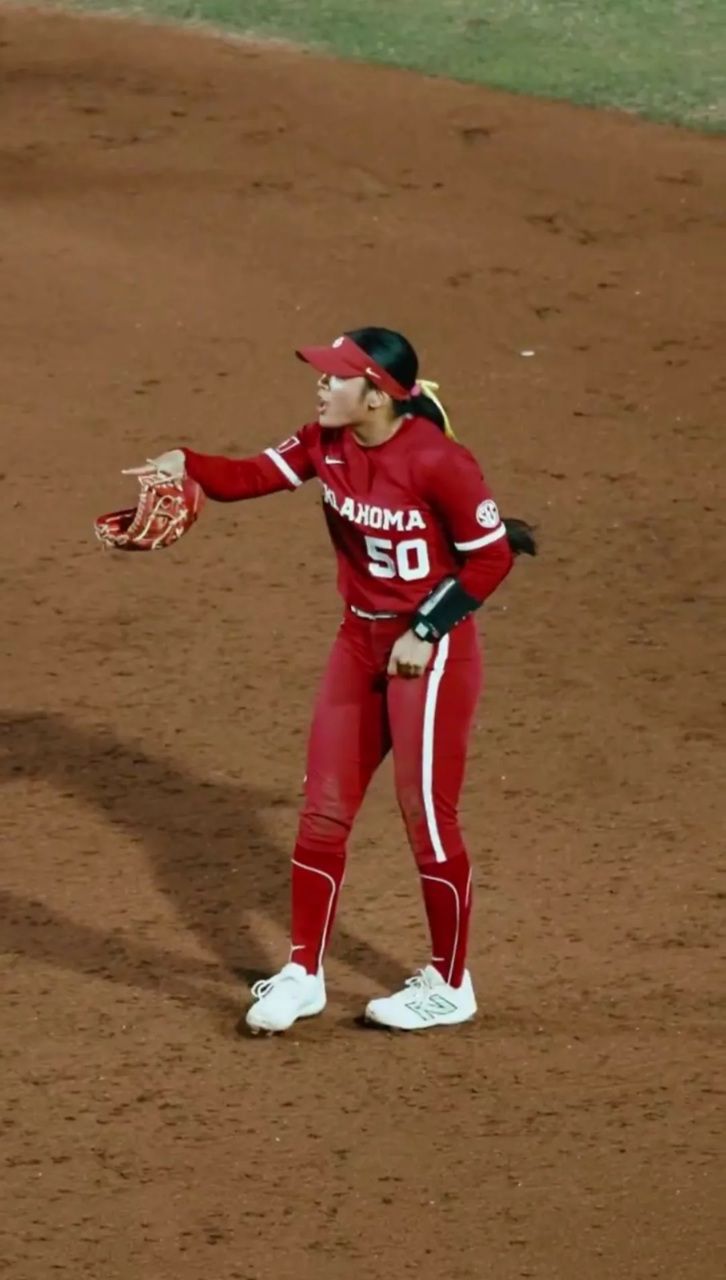
By any reasonable standard, Oklahoma softball enters the 2026 season from a position of strength. A 52-win campaign sits in the rearview mirror. The roster returns the core of a defense that was among the most efficient and reliable in the country. The program’s identity—honed over decades under Patty Gasso—remains intact even as the Sooners continue to navigate the week-to-week brutality of the SEC.
And yet, what defines Oklahoma’s 2026 outlook is not simply that things stayed the same.
It’s that they stayed the same while still evolving.
Continuity has become a buzzword across college softball, but in Norman it carries a sharper meaning. It does not imply stagnation or comfort. It signals refinement. Oklahoma’s defensive foundation is not being rebuilt; it’s being tuned. The Sooners are not searching for answers on that side of the ball. They are sharpening tools they already trust.
That distinction matters, because defense—quiet, repeatable, and often overlooked—is once again the connective tissue holding Oklahoma’s championship aspirations together.
A Veteran Infield That Sets the Tone
At the center of that continuity is an infield that already functions like a veteran unit, not just in experience but in communication and trust.
Second base remains the heartbeat. Ailana Agbayani enters her senior season as both the emotional anchor and the tactical director of Oklahoma’s defense. Her Rawlings Gold Glove and .989 fielding percentage in 2025 reflect precision, but they don’t fully capture her value. Agbayani manages positioning. She controls tempo. She is the player teammates look to when the game speeds up.
That leadership was critical to Oklahoma turning a nation-leading 89 double plays last season—an achievement rooted not in athleticism alone, but in anticipation and chemistry.
To her left, Gabbie Garcia’s rapid maturation at shortstop continues to pay dividends. Garcia played the position in 2025 with the calm of a veteran, committing just four errors in 177 chances. Shortstop at Oklahoma is never just about range and arm strength; it’s about command. Garcia showed early that she could handle both, accelerating the defensive stability of the entire unit.
At third base, Nelly McEnroe-Marinas brings physicality and confidence to one of the most demanding roles in Gasso’s system. Her fielding percentage undersells the difficulty of the plays she’s asked to make—charging hard bunts, reacting to rockets down the line, throwing on the run across the diamond. Oklahoma doesn’t ask its third baseman to survive. It asks her to attack. McEnroe-Marinas embraces that responsibility.
First Base as a Strategic Upgrade
Rather than entering 2026 with uncertainty at first base, Oklahoma appears poised to turn the position into a strength.
Kasidi Pickering’s likely move to first is not a fallback—it’s an upgrade that ripples across the entire defense. Pickering’s athleticism, soft hands, and spatial awareness translate seamlessly to the position, particularly in a system that values range and flexibility. Her background in the outfield allows her to handle errant throws and difficult hops with ease, quietly stealing outs that don’t show up in the box score.
Just as importantly, moving Pickering inside frees Oklahoma to maximize speed and coverage elsewhere. This is where continuity and versatility intersect: one calculated move strengthens multiple areas at once.
A Reimagined, Faster Outfield
With Pickering potentially anchoring first base, Oklahoma’s outfield alignment comes into focus—and it may be one of the fastest and most aggressive groups in the country.
Center field belongs to Kai Minor in projection and logic alike. The No. 1 recruit in the 2025 class is a true five-tool talent whose speed and first step immediately change how much ground Oklahoma can cover. Minor doesn’t just chase balls; she erases gaps. Her presence allows the Sooners to play shallower, challenge hitters, and turn potential doubles into routine outs.
That aggressive posture is balanced by reliability on the corners. Abigale Dayton slides naturally into left field, where her instincts and flawless 1.000 fielding percentage from 2025 provide calm to an otherwise explosive unit. Dayton takes efficient routes, communicates well, and makes the plays she’s supposed to make—every time.
On the right side, Sid Barker’s versatility once again proves invaluable. Barker’s strong arm and steady glove make her a natural fit in right field, while her ability to move elsewhere gives Gasso matchup freedom without sacrificing defensive integrity.
Take a Deeper Dive With Our 2026 Oklahoma Softball Preview
Available exclusively on our Facebook subscription page
– Offensive Anchors
– Defensive Stability
– Leadership & Experience
Defense as Philosophy, Not Reaction
What separates Oklahoma from most of the country is not just defensive talent—it’s defensive philosophy.
Under Gasso, versatility is proactive. Players are trained across positions from the moment they arrive. Infielders learn outfield reads. Outfielders learn corner footwork. Pitchers are expected to field like infielders. No one is exempt.
“We have so many options,” Gasso has said. “We could make 10 different lineup models and feel very comfortable with them.”
That comfort is not accidental. It’s the product of years of cross-training and clear expectations. Oklahoma does not build lineups around positions. It builds positions around competitors.
The benefits are most evident in high-stress situations. First-and-third chaos. Delayed steals. Squeeze plays. While other teams scramble, Oklahoma responds automatically, often deploying multiple rehearsed defensive counters. Versatility makes complexity manageable.
Aggression, Execution, and Confidence
Oklahoma’s defense does not sit back and react. It attacks.
Gasso’s emphasis on unconventional throws—sidearm, on the run, off the “wrong” foot—prioritizes urgency over aesthetics. Get the lead out. Always. That mindset fuels elite double-play efficiency and an uncanny ability to escape jams without surrendering momentum.
Defense and pitching feed each other. When a team trusts its range, pitchers attack the zone. They don’t nibble. Balls put in play are not feared—they’re welcomed.
Confidence becomes a competitive weapon. Players who know they can handle multiple roles don’t flinch when lineups change or pressure spikes. Mistakes don’t spiral. Adjustments don’t feel disruptive.
That belief is institutional at Oklahoma. Versatility is not punishment. It’s empowerment.
Why It All Matters for 2026
The SEC does not reward rigidity. It punishes it.
Weekend series grind bodies down. Opponents exploit weaknesses relentlessly. Programs that survive are those that adapt without losing identity.
Oklahoma’s advantage is that adaptability is its identity.
The Sooners open 2026 with an experienced middle infield, a veteran third baseman, an athletic first-base solution, and an outfield built on speed and coverage. They return trust. They return clarity. They return a system that already works.
This isn’t a defense searching for answers.
It’s a defense sharpening edges.
And when the margins shrink—when championships hinge on one clean exchange, one perfect route, one unconventional throw—Oklahoma will once again rely on what it trusts most.
Continuity, preparation, and a defensive versatility that turns pressure into opportunity.
At Oklahoma, evolution doesn’t disrupt the standard.
It reinforces it.
Follow us on Instagram & Facebook