When Oklahoma takes the floor tonight against the Auburn Tigers, the stakes will be unmistakable—even if the standings don’t immediately suggest it.
This isn’t just another late-February conference game. It’s a collision between urgency and opportunity. Oklahoma enters at 13–14 overall and 3–11 in SEC play, still searching for stability in a season defined by flashes of offensive brilliance and persistent defensive frustration. Auburn arrives at 15–12 and 6–8 in league play, clinging to NCAA Tournament relevance and desperate to avoid a damaging loss.
And inside the Lloyd Noble Center, where Oklahoma has consistently played its best basketball, the margins separating the two teams may be thinner than their records suggest.
A Program First: The Beginning of a New SEC Chapter
This matchup carries historical significance beyond its immediate implications. It marks the first regular-season conference meeting between Oklahoma and Auburn since Oklahoma joined the SEC, symbolizing a new competitive reality for a program still adjusting to the league’s physicality, pace, and nightly difficulty.
For head coach Porter Moser, the transition has been uneven. Oklahoma’s offensive system has evolved into one of the conference’s more efficient perimeter attacks, but defensive inconsistency has undermined that progress.
Tuesday night presents both a challenge and a measuring stick.
The Auburn Threat: Size, Scoring, and Interior Punishment
Everything about Auburn begins with physicality and scoring volume.
The Tigers average 83.7 points per game, built on a foundation of interior dominance and versatile scoring options. At the center of that identity is forward Keyshawn Hall, Auburn’s leading scorer at 20.5 points per game and one of the team’s top rebounders at 6.9 per contest.
Hall presents a multifaceted challenge. He can attack off the dribble, score through contact, and stretch defenses enough to prevent easy help rotations. Against an Oklahoma defense that has struggled to consistently protect the rim, Hall’s presence looms large.
He’s not alone.
KeShawn Murphy, coming off a 25-point performance in Auburn’s win over Kentucky, adds another layer of complexity. At 6-foot-10, Murphy’s ability to operate both inside and along the perimeter creates matchup stress for Oklahoma’s frontcourt.
Point guard Tahaad Pettiford provides structure, averaging 3.6 assists per game and serving as the engine of Auburn’s transition offense. Pettiford’s composure under pressure allows Auburn to maintain tempo and exploit defensive breakdowns.
Collectively, Auburn’s frontcourt size and offensive efficiency directly target Oklahoma’s most persistent weakness.
The Sooners rank near the bottom nationally in opponent two-point shooting percentage allowed, surrendering over 53 percent shooting inside the arc. That vulnerability has translated into consistent scoring opportunities for opponents capable of attacking the paint.
Auburn fits that profile precisely.
The Rebounding Battle: Oklahoma’s Most Dangerous Statistical Liability
If there is a single statistical category most likely to determine Tuesday’s outcome, it’s rebounding.
Oklahoma ranks 306th nationally in opponent offensive rebounding rate, a number that underscores the team’s struggles securing defensive possessions. Auburn, by contrast, averages nearly 37 rebounds per game and thrives on second-chance scoring opportunities.
Second-chance points do more than add to the scoreboard—they disrupt defensive rhythm, extend possessions, and exhaust opponents physically.
Against an Auburn team that thrives on momentum, Oklahoma cannot afford repeated defensive breakdowns on the glass.
That’s where Mohamed Wague becomes essential.
Wague ranks among the SEC’s most effective rim protectors, with a block percentage of 6.8 percent. His presence inside offers Oklahoma its best chance to disrupt Auburn’s interior scoring and stabilize defensive possessions.
Without him, Oklahoma’s defensive ceiling drops significantly.
Oklahoma’s Offensive Identity: The Perimeter Equalizer
Despite its defensive struggles, Oklahoma possesses a clear and potent offensive weapon: perimeter shooting.
The Sooners rank second in the SEC in three-point shooting percentage during conference play at 36.4 percent, averaging nearly 10 made threes per game. That efficiency gives Oklahoma a volatility advantage—one capable of neutralizing Auburn’s interior strength.
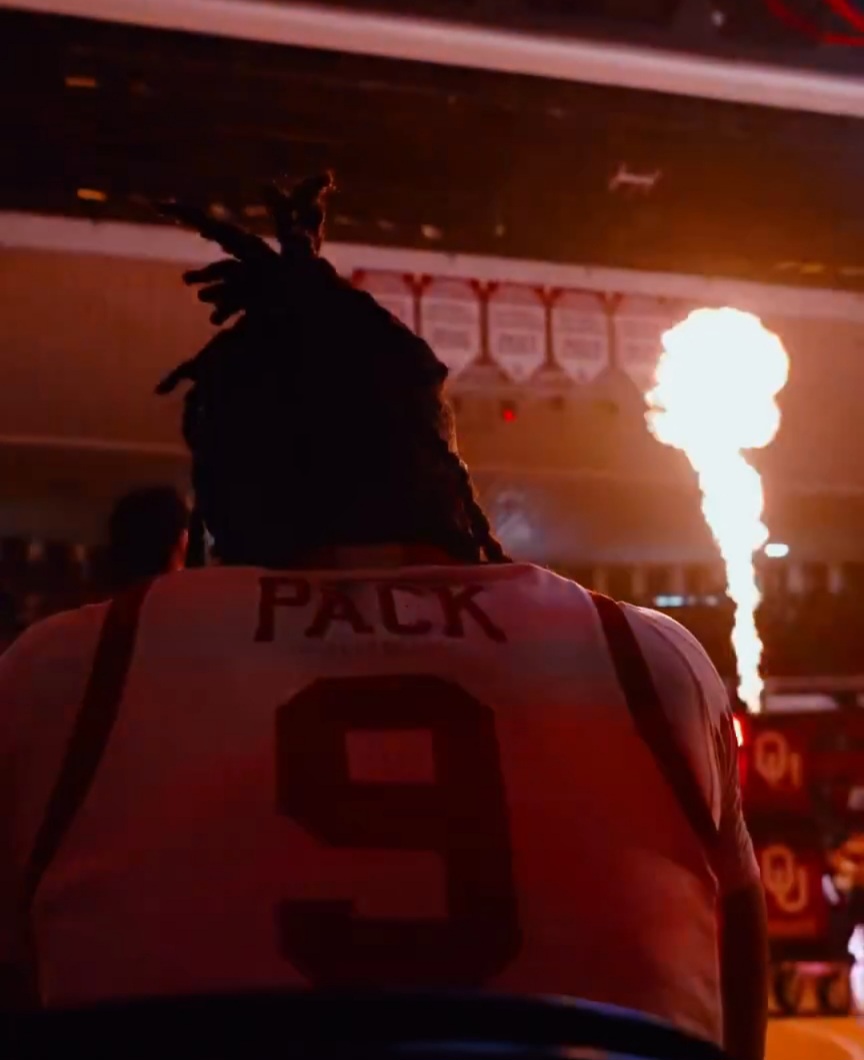
Veteran guard Nijel Pack anchors that identity.
Pack averages 15.7 points per game and leads the SEC in individual three-point accuracy at 44.1 percent. His ability to create shots off the dribble and punish defensive lapses makes him Oklahoma’s most dangerous offensive weapon.
But Auburn’s defensive scheme presents a unique challenge.
The Tigers rely heavily on physical perimeter defense, designed to disrupt timing and limit clean shooting opportunities. If Pack finds rhythm early, Oklahoma’s offense becomes significantly more difficult to contain.
If Auburn disrupts him, Oklahoma’s offensive consistency becomes far less certain.
The Emerging Backcourt Support: Xzayvier Brown and Dayton Forsythe
While Pack remains Oklahoma’s offensive centerpiece, recent contributions from Xzayvier Brown and Dayton Forsythe have added necessary depth.
Brown enters the game averaging 15.1 points over his last ten contests, providing scoring versatility and secondary playmaking. His ability to attack off the dribble offers Oklahoma an alternative offensive pathway when perimeter shooting stagnates.
Forsythe’s role is equally critical.
He led Oklahoma with 14 points and six assists in the Sooners’ narrow loss to Texas A&M, demonstrating the decision-making stability required against physical SEC defenses. His ball security and playmaking will be essential against Auburn’s defensive pressure.
If Oklahoma’s backcourt can maintain composure and efficiency, the Sooners’ offensive ceiling rises significantly.
Auburn’s Road Vulnerability: The Hidden Opportunity
Despite Auburn’s statistical advantages, one factor works strongly in Oklahoma’s favor: location.
Auburn is just 2–6 in true road games this season and has struggled to replicate its offensive efficiency away from home. The Tigers enter Tuesday’s game on a three-game road losing streak, highlighting their inconsistency in hostile environments.
By contrast, Oklahoma has been noticeably stronger in Norman.
The Sooners shoot 38 percent from three-point range at Lloyd Noble Center, compared to lower percentages on the road. Their overall shooting efficiency improves significantly at home, reflecting greater offensive comfort and confidence.
Home-court advantage won’t eliminate Auburn’s strengths—but it narrows the gap.
The Defensive Reality: Oklahoma’s Season-Long Struggle
Ultimately, Oklahoma’s ability—or inability—to defend consistently remains the defining variable.
The Sooners currently rank 162nd nationally in defensive efficiency, the lowest mark in the SEC. Over their last ten games, they’ve allowed an average of 84.5 points per contest, a number that underscores their vulnerability against high-scoring opponents.
Auburn’s offensive profile suggests Oklahoma will again be tested defensively.
Stopping Auburn entirely isn’t realistic.
Containing them, however, is essential.
Betting Market and Analytical Outlook
Oddsmakers view Tuesday’s game as effectively even, with Auburn listed as a slim 1.5- to 2.5-point favorite. Analytical models project Auburn’s win probability at approximately 55 percent, reflecting modest statistical advantages without overwhelming separation.
The projected total of 157.5 points suggests expectations of a high-scoring game—a reflection of both teams’ offensive capabilities and defensive limitations.
That projection aligns with the on-court reality.
This game is unlikely to be decided in the 60s.
The Tactical Equation: What Must Happen for Oklahoma to Win
For Oklahoma to secure victory, several conditions must be met:
1. Win the perimeter battle.
Three-point efficiency remains Oklahoma’s greatest weapon.
2. Limit Auburn’s second-chance points.
Rebounding discipline is non-negotiable.
3. Protect the paint.
Interior defensive resistance must improve.
4. Maintain offensive composure.
Avoid prolonged scoring droughts.
A Narrow Margin Defined by Execution
This matchup represents a convergence of strengths and weaknesses.
Auburn brings size, interior scoring, and rebounding advantages. Oklahoma counters with perimeter shooting, home-court efficiency, and offensive volatility.
Ultimately, the outcome will be determined by which team successfully imposes its identity.
If Auburn dominates inside and controls the glass, its physicality will likely carry the night.
If Oklahoma establishes perimeter rhythm early and protects defensive possessions, the Sooners possess enough offensive firepower to secure a win.
In a season defined by inconsistency, Tuesday night offers Oklahoma something increasingly rare: opportunity.
Whether they seize it will determine far more than one result.
It will define the trajectory of their season’s final chapter.
Follow us on Instagram & Facebook