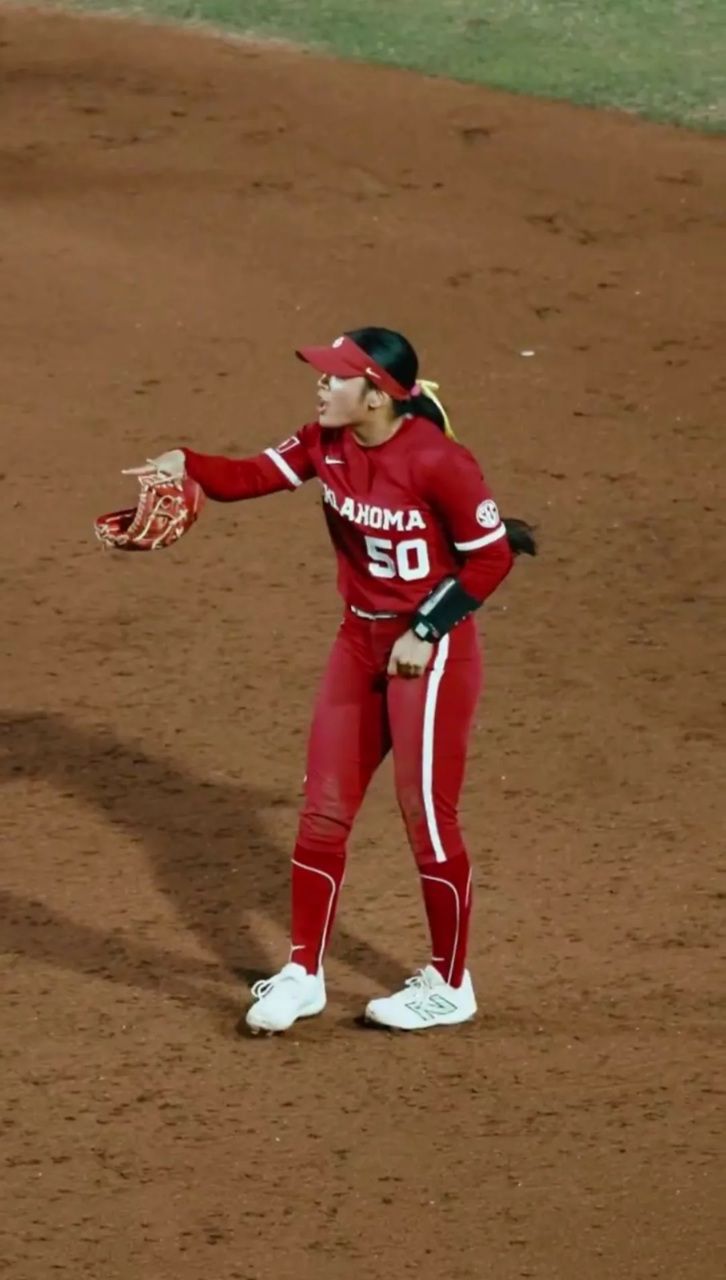
For the first time in years, the road to Oklahoma City doesn’t feel like it runs exclusively through Norman. This weekend, it cuts straight through Austin.
When No. 2 Oklahoma arrives at McCombs Field to face No. 4 Texas, it won’t just be another chapter in a historic rivalry—it will feel like a postseason series dropped into early April. There are layers to this one: a new conference dynamic, national seeding implications, psychological carryover from last June, and a collision between the most explosive offense in the sport and one of its most battle-tested arms.
If you’re looking for a simple storyline, you won’t find one. This series is about validation, pressure, and the subtle shift in power at the top of college softball.
1. The Hostile Environment Test
Patty Gasso didn’t sugarcoat it.
This, she said, will be the toughest environment her team faces all season.
McCombs Field has quietly become one of the sport’s most intimidating venues, especially when Oklahoma comes to town. The Longhorn faithful don’t just show up—they amplify. Every pitch carries weight. Every mistake gets louder. And for a Sooners team that leans heavily on freshmen and underclassmen, that matters.
So Gasso has taken a proactive approach. In the days leading up to the series, Oklahoma has practiced with artificial crowd noise—pumping chaos into routine drills to simulate what’s coming.
That detail tells you everything about how this weekend is being approached internally.
Because for all of Oklahoma’s dominance this season—a 22-game winning streak, a deep lineup, historic power numbers—this is still a relatively young roster in key spots. Kendall Wells is a freshman. Several contributors are still learning what high-stakes road softball feels like.
And Austin won’t ease them into it.
This is less about talent and more about composure. Can Oklahoma execute when communication gets harder? When momentum swings faster? When every at-bat feels like it’s happening under a spotlight?
That’s the test.
2. SEC Pole Position Is on the Line
For decades, Oklahoma-Texas has been defined by geography, history, conference standings, and postseason clashes. Now, that it’s an SEC battle—and the stakes have only intensified.
Oklahoma enters the weekend at 11–1 in conference play, sitting atop the standings. Texas, at 9–3, is close enough to make this series a pivot point.
Win the series, and Oklahoma effectively creates separation that could prove decisive in the race for the SEC regular-season title. Drop it, and suddenly the Longhorns—and potentially others—are right back in the conversation.
But it goes deeper than conference bragging rights.
This series carries significant implications for NCAA Tournament seeding. The winner doesn’t just gain momentum—they strengthen a case for the No. 1 overall seed, which not only guarantees home-field advantage through Super Regionals, but also should bring the path of least resistance to the Women’s College World Series. In a sport where environment matters as much as execution, that’s not a small detail.
For Texas, protecting home turf is essential. For Oklahoma, proving it can win in this environment could reshape how the national picture views them.
Because despite their dominance, there are still questions.
Take A Deeper Dive Into Oklahoma Softball
– April Before June | Why Oklahoma vs. Texas Is Already a WCWS Preview
– Red River Collision | No. 3 Oklahoma at No. 4 Texas
– The Evolution in the Circle | How Oklahoma Turned Risk Into a Weapon
Exclusively on our subscription page.
3. Validation Weekend for Oklahoma’s Offense
Let’s start with the numbers.
Oklahoma has hit 144 home runs this season—already the third-most in NCAA single-season history. They’re averaging double-digit runs per game and routinely turning tight contests into run-rule decisions by the middle innings.
It’s overwhelming. It’s relentless. And at times, it’s looked almost unfair.
But here’s the quiet conversation around the sport: how much of that production is matchup-driven?
Oklahoma’s strength of schedule hasn’t consistently matched its output, and skeptics have pointed to that gap. Fair or not, it creates a narrative heading into this weekend:
Can this offense look the same against elite pitching in a hostile environment?
Texas presents that test.
The Longhorns don’t just have arms—they have a staff built on experience and execution, anchored by one of the most important pitchers in recent Oklahoma history.
4. Teagan Kavan and the WCWS Shadow
If there’s a single figure hovering over this series, it’s Teagan Kavan.
Not just because of her résumé. Not just because she’s approaching 500 career strikeouts. But because of what she represents to Oklahoma.
She’s the one who solved them.
In the 2025 Women’s College World Series, Kavan delivered a performance that disrupted Oklahoma’s rhythm on the sport’s biggest stage. She didn’t overpower them with flash—she controlled the game, limited damage, and forced the Sooners out of their comfort zone.
That matters.
Because Oklahoma hasn’t forgotten it. And neither has Texas.
This weekend becomes a psychological chess match as much as a physical one. Does Kavan still have that edge? Or does Oklahoma’s evolution—particularly its power surge—change the equation?
The matchup is simple on paper: elite pitcher vs. historic lineup.
But the subtext is what makes it compelling.
If Oklahoma can solve Kavan early, it shifts the entire tone of the series. If not, the doubt that lingered from last June could resurface in real time.
5. Star Power and the Next Generation
Big series are often defined by stars, and this one has no shortage.
For Oklahoma, it starts with Kendall Wells.
The freshman phenom has already tied the NCAA single-season freshman home run record with 30, putting her in the same conversation as legends like Jocelyn Alo and Lauren Chamberlain. Her presence in the lineup changes how opponents pitch to everyone else—and she’s done it with a consistency that feels rare for a first-year player.
But she’s not alone.
This weekend also shines a spotlight on Texas standout Leighann Goode, who recently earned a “Golden Ticket” to the Athletes Unlimited Softball League. That recognition adds a professional layer to every at-bat she takes—evaluators aren’t just watching results, they’re watching how she handles moments like this.
And then there’s the broader youth movement.
Oklahoma’s reliance on freshmen isn’t a weakness—it’s part of its identity. But this weekend will reveal how quickly that group can adapt to the highest level of pressure they’ve seen so far.
Because talent travels. Composure has to be learned.
6. A Series That Feels Like June
Everything about this weekend points forward.
The intensity. The matchups. The stakes.
This doesn’t feel like a midseason series—it feels like a preview.
The kind of series that shapes narratives heading into May. The kind that influences seeding discussions, Player of the Year races, and the quiet confidence teams carry into the postseason.
For Oklahoma, it’s an opportunity to silence any remaining skepticism. To prove that its offensive numbers translate against elite competition in hostile conditions.
For Texas, it’s a chance to reinforce its status as the reigning national champion—and to remind everyone that the path to another title might still run through Austin.
And for the sport as a whole, it’s exactly what you want: two heavyweights, fully aware of what’s at stake, meeting before the margins get even smaller.
By Sunday, we’ll know more than just who won a series.
We’ll have a clearer picture of who might still be standing in Oklahoma City.
Follow us on Instagram & Facebook