There are ugly losses, and then there are losses that force a program to confront uncomfortable questions.
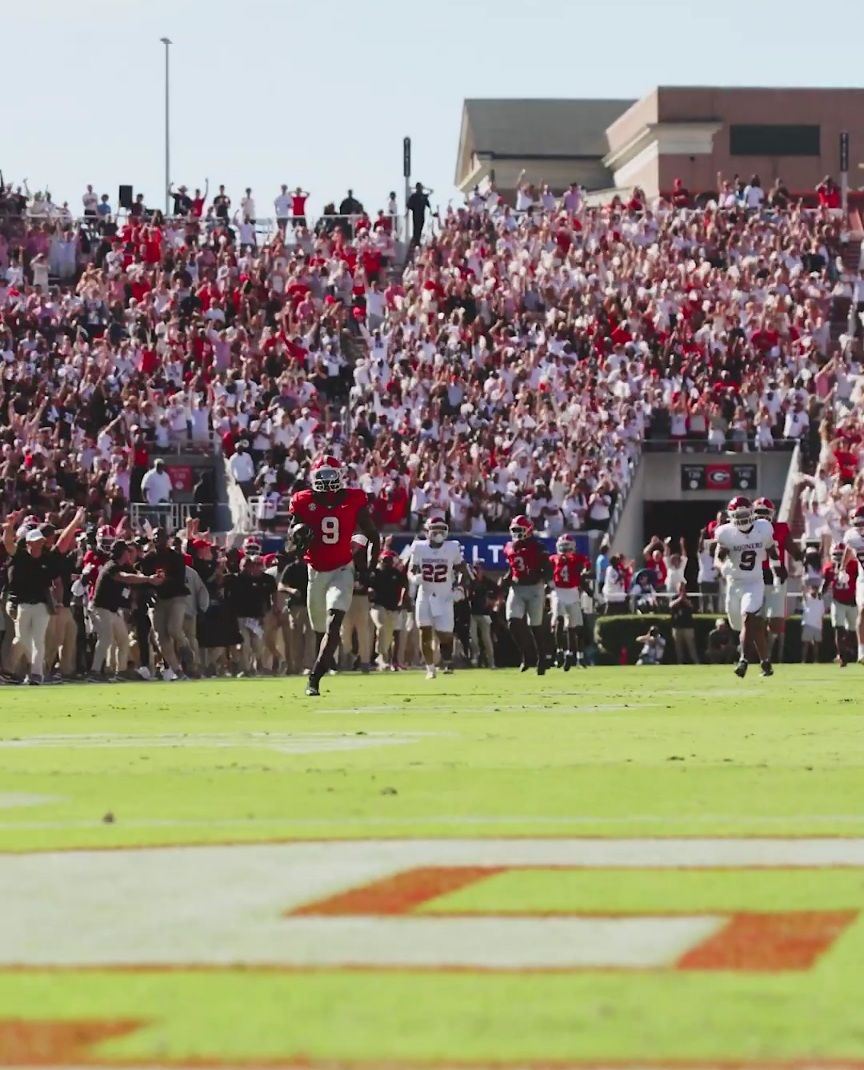
Oklahoma’s 41-13 loss to No. 2 Georgia certainly qualifies.
The final score suggests the Sooners were completely outclassed from the opening kickoff. In some respects, they were. Georgia is an exceptionally talented football team, and the Bulldogs eventually turned a competitive statistical game into a 28-point victory.
But the most revealing part of Saturday afternoon wasn’t the 306 yards Georgia produced.
It was the four turnovers Oklahoma committed.
The Sooners actually ran 69 offensive plays, held the ball for more than 35 minutes and finished with 296 total yards. Georgia ran just 53 plays. The difference was that Oklahoma repeatedly handed the Bulldogs opportunities, and Kirby Smart’s team took advantage of nearly every one.
Oklahoma leaves Athens at 2-2 overall and 0-1 in SEC play.
Here are five takeaways from a game that exposed some significant problems—but also provided a few reasons not to completely throw out everything we thought we knew about this football team.
1. The Turnovers Completely Changed the Game
This is the obvious one, but it is also the most important.
Oklahoma did not lose because Georgia gained 500 yards.
It didn’t.
The Sooners did not lose because Gunner Stockton threw for 400 yards.
He didn’t.
They lost because they repeatedly gave Georgia the football in disastrous situations.
John Mateer committed three turnovers himself—two lost fumbles and one interception—while Rocky Beers added another fumble in the third quarter. Georgia turned those opportunities into points, including Chris Cole’s 85-yard fumble return for a touchdown.
The sequence in the second quarter was devastating.
Oklahoma was still within striking distance before the game unraveled. Then Mateer lost a fumble that Cole returned 85 yards for a touchdown. Later, Mateer threw an interception to K.J. Bolden. Then another Mateer fumble late in the half gave Georgia another short field, which the Bulldogs converted into a touchdown.
Suddenly, a game that had not been statistically overwhelming became a 28-0 halftime deficit.
That’s the difference between playing Georgia and playing New Mexico.
Against a lesser opponent, you might survive mistakes.
Against Georgia, mistakes become points.
The encouraging part is that Mateer’s final passing numbers were not disastrous: 25-of-34 for 231 yards and two touchdowns with one interception. The problem was the ball security.
That distinction matters heading into the bye week.
2. Oklahoma Still Cannot Run the Football
If there was one offensive problem that existed before Saturday and became impossible to ignore against Georgia, it was the running game.
Oklahoma finished with just 65 rushing yards, and Lloyd Avant managed only 23 yards on 10 carries. His longest run was five yards.
That’s not good enough.
And it’s not a problem that suddenly appeared in Athens.
Oklahoma struggled to establish the run against Michigan. The Sooners struggled again against New Mexico. Now they went into Georgia and produced essentially nothing on the ground.
That creates a fundamental problem for Ben Arbuckle.
If the defense doesn’t have to respect the running game, it can devote more resources to John Mateer and the passing game.
If the offensive line can’t consistently create movement, Oklahoma becomes dependent upon quarterback creation and explosive passes.
That’s an incredibly difficult way to build a consistent offense.
There is also an important distinction here.
The answer isn’t simply to say Oklahoma needs to “run the ball more.”
The Sooners need to run it better.
Those are two very different things.
Bill Bedenbaugh and the offensive staff have two weeks to determine whether this is a personnel problem, a blocking-scheme problem, a combination of both—or something that requires a philosophical adjustment.
Because Texas is next.
And Texas won’t be any more forgiving.
3. The Defense Was Better Than the Score Suggests
This may sound strange after giving up 41 points, but Oklahoma’s defense actually gave the Sooners a chance to remain competitive for much longer than the final score indicates.
Georgia finished with 306 total yards, and Stockton completed just 14 of 25 passes for 171 yards, one touchdown and one interception. Oklahoma also held Georgia to 3-of-12 on third down.
That is not the statistical profile of a defense that was simply destroyed for four quarters.
The problem was field position.
The problem was sudden-change situations.
The problem was asking the defense to repeatedly protect short fields created by the offense.
Georgia’s 41 points make the defensive performance look much worse than it actually was.
In fact, the Bulldogs had only 173 yards of offense through three quarters while Oklahoma had 210.
That is an extraordinary statistic considering the scoreboard.
Oklahoma’s defense eventually cracked because football isn’t played in a vacuum. You cannot repeatedly put a defense back onto the field after turnovers and expect it to maintain the same level of effectiveness.
Eventually, something gives.
The defense gave up a 54-yard touchdown run by Dwight Phillips early in the fourth quarter, but by then the game was already decided.
The bigger takeaway is that Oklahoma’s defense remains the reason this team has a chance to compete in the SEC.
The offense is what has to catch up.
Take A Deeper Dive Into Our Oklahoma Football Coverage On Our Facebook Subscription Hub
The Georgia Vulnerability Target | The Advanced Matrix Oklahoma Needs To Attack
Oklahoma Just Bet On The One Trait You Can’t Teach
Jay Schell Chooses Oklahoma | Brent Venables Just Won A Recruiting Battle That Means Much More Than One Commitment
Help support Heartland Sports by Unlocking Exclusive, data-driven film room breakdowns, recruiting Update, high-leverage personnel matrix updates you won’t find anywhere else, and More by subscribing to our premium Oklahoma Sooners football coverage today.
4. Rocky Beers Is Becoming a Major Piece of the Offense
There weren’t many offensive positives to take from Athens.
Rocky Beers was one of them.
The tight end caught eight passes for 84 yards and a touchdown, leading Oklahoma in receiving. His 17-yard touchdown reception finally got the Sooners on the scoreboard in the third quarter.
Isaiah Sategna III also caught eight passes for 81 yards, giving Oklahoma two legitimate receiving threats against one of the best defenses in the country.
That matters.
Beers’ emergence is especially significant because Oklahoma has spent the first month of the season searching for reliable answers in the passing game.
Against Michigan, Beers caught six passes for 94 yards.
Against New Mexico, the ball was distributed more evenly, with Hayden Hansen and Sategna making significant contributions.
Against Georgia, Beers was again heavily involved.
That isn’t a fluke anymore.
He is becoming one of the foundational pieces of this passing offense.
But there is a frustrating footnote.
Beers also fumbled in the third quarter, giving Georgia another possession.
So even one of Oklahoma’s bright spots became part of the turnover problem.
The bye week has to be about finding more players who can consistently create the kind of matchup Beers is creating.
5. The Bye Week Has Become About Finding an Offensive Identity
This is the biggest takeaway of all.
Oklahoma does not need to reinvent its entire football program during the bye week.
It needs to figure out what it wants its offense to be.
Through four games, the identity isn’t clear.
The Sooners have a quarterback with legitimate playmaking ability. They have explosive receivers. They have a tight end who is emerging as a major weapon.
But they haven’t established a dependable running game.
They haven’t consistently protected the football.
And they haven’t consistently finished drives.
Those problems are connected.
When the running game isn’t working, the offense becomes more dependent upon the quarterback.
When the quarterback is forced to create more, the margin for error becomes smaller.
When turnovers occur, the defense is forced to defend short fields.
And when the defense spends too much time on the field, eventually the opponent breaks through.
That’s essentially what happened in Athens.
The good news is that Oklahoma now has a bye week before the Red River Rivalry.
The bad news is that the opponent waiting on the other side is No. 1 Texas.
There is no need for Oklahoma to panic.
But there is absolutely a need for Oklahoma to be honest.
The Sooners have a defense that looks capable of keeping them in games against elite competition.
They have skill-position talent that can make plays.
They have a quarterback who showed against Georgia that he can still move the football through the air despite a disastrous stretch of turnovers.
What they don’t have yet is a consistent offensive formula.
And that’s what the next two weeks have to be about.
Not simply fixing John Mateer’s mistakes.
Not simply fixing the offensive line.
Not simply finding more carries for Lloyd Avant.
Finding an identity that gives this team a chance to win when the defense doesn’t play a perfect game.
Georgia exposed that problem in a way New Mexico couldn’t.
Now Brent Venables, Ben Arbuckle and the entire offensive staff have two weeks to answer it.
Because, as we talked about before the game, there are no more layups on Oklahoma’s schedule.
And the next test is one of the biggest rivalry games in all of college football.