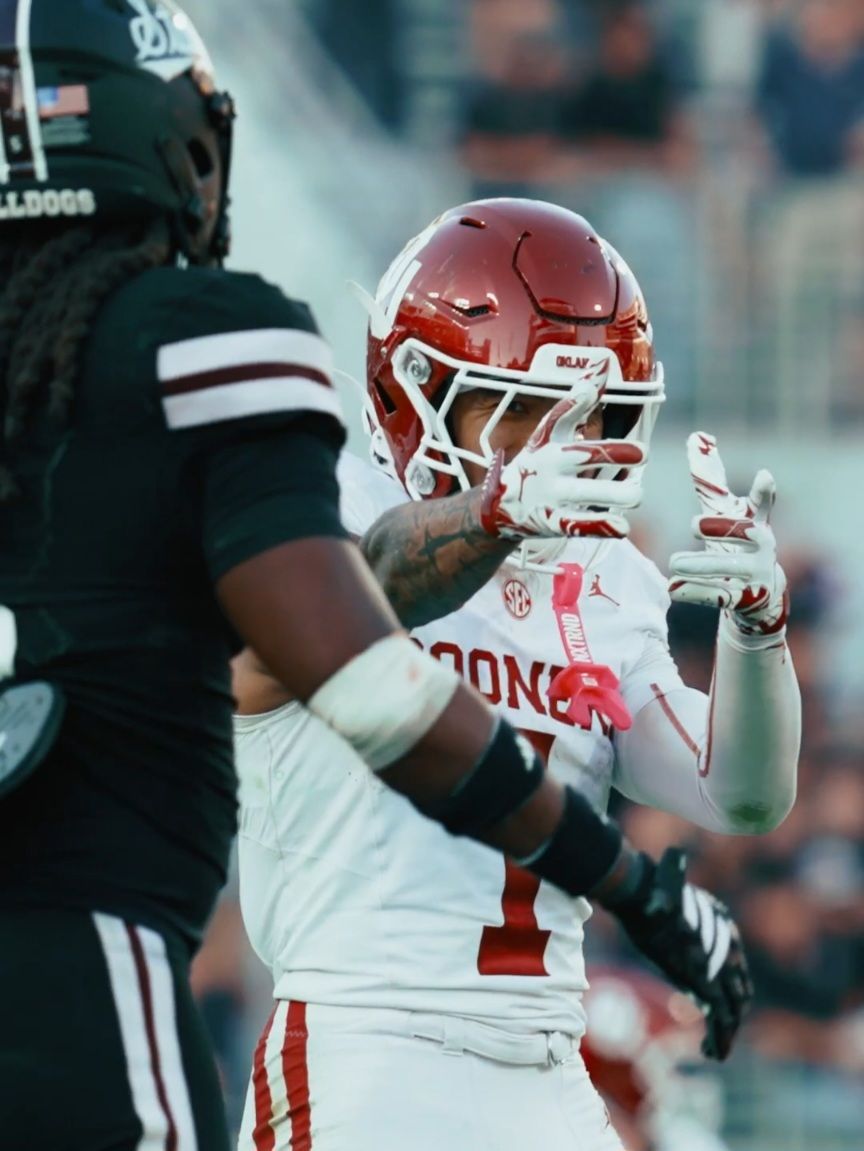
For weeks, watching Oklahoma’s offense felt like pulling teeth.
The Sooners entered Saturday ranked 126th nationally in total offense and 113th in scoring offense, averaging just 21.3 points per game. The frustration reached another level during last week’s 21-13 loss to Kentucky, when John Mateer threw three interceptions and questions about the direction of the offense became impossible to ignore.
Then came Starkville.
Oklahoma put together a 96-yard touchdown drive before halftime, followed it with a 75-yard scoring drive to open the second half, and left Mississippi State with a 23-15 loss. Mateer completed 22 of 29 passes for 283 yards, two touchdowns and zero interceptions. Isaiah Sategna III erupted for 164 receiving yards, providing the kind of explosive downfield threat the Sooners had been missing.
Suddenly, the offense looked different.
The quarterback was protecting the football. Receivers were making plays. Ben Arbuckle’s game plan was producing explosive gains instead of another afternoon of stalled drives and frustrated fans.
For a fan base that had spent the previous week wondering whether Oklahoma could get its offense back on track, it was a welcome sight.
But before we start declaring the passing game fixed, let’s pump the brakes.
Mississippi State entered the matchup with one of the nation’s worst pass defenses, allowing 264.8 passing yards per game. The Bulldogs gave Oklahoma opportunities to attack downfield, and the Sooners took advantage.
That deserves credit. It also raises a fair question: Did Arbuckle finally unlock the offense, or did Oklahoma simply find the right opponent at the right time?
That’s what we’re sorting out.
Welcome to the Sunday Overreaction Index, where we separate legitimate progress from conclusions that might be getting a little ahead of themselves. On our scale, 1 means a complete nothing-burger—business as usual—while 10 means absolute hype or panic.
This week, we’re examining Oklahoma’s protection adjustments, the explosive passing game and a late defensive lapse that allowed Mississippi State quarterback Parker Puckett to find the end zone.
The win was important. The offensive production was encouraging. But the real test is whether Oklahoma can carry that momentum into next week’s matchup with South Carolina.
Because one good Saturday can change the mood in Norman. Sustained improvement is what changes the season.
1. Ben Arbuckle Found Ways to Protect His Quarterback
Overreaction Index: 3/10 — Legitimate progress
Oklahoma’s offensive line has been a concern, and missing key pieces only makes the challenge more difficult. With Heath Ozaeta and Michael Fasusi among the players dealing with availability issues, Ben Arbuckle needed to find ways to keep the pocket from becoming a problem.
Against Mississippi State, the answer wasn’t necessarily to ask the offensive line to win every snap in a traditional pocket. It was to change the picture.
Moving the quarterback’s launch point with sprint-outs and bootlegs can make life more difficult for a defense. Instead of allowing pass rushers to attack the same spot on every dropback, the offense forces them to adjust their pursuit angles. Quick throws and run-pass options can also get the ball out before pressure has time to develop.
The objective is simple: Don’t let the defense dictate the entire play.
That approach matters for Mateer, especially when Oklahoma needs to keep him comfortable and avoid putting him in situations where he feels compelled to make a difficult throw. After a three-interception performance against Kentucky, taking care of the football was just as important as producing big numbers.
Against Mississippi State, Mateer completed nearly 76% of his passes without throwing an interception. That’s a significant response.
Fasusi’s reported return to the lineup also offered a reason for optimism. Mateer has spoken positively about the young offensive lineman, and getting more stability up front would give Arbuckle additional options moving forward.
The bigger takeaway is that Oklahoma doesn’t have to rely on one perfect version of its offensive line to move the football. Scheme, tempo, quarterback movement and quick decisions can all help compensate for protection problems.
That doesn’t mean the offensive line concerns have disappeared. South Carolina will present a different challenge, and Oklahoma still needs to prove it can protect Mateer consistently against quality competition.
But Arbuckle deserves credit for finding ways to make the offense function.
The verdict: This isn’t an overreaction. Oklahoma showed signs of adapting to its personnel challenges instead of simply hoping the protection would improve. The question now is whether those adjustments remain effective against better defenses.

Take A Deeper Dive Into Our Oklahoma Football Coverage On Our Facebook Subscription Hub
The Film Room: How Ben Arbuckle Unlocked Isaiah Sategna for a 164-Yard Masterclass
The Column: Resolving the Crossroads — How Venables Restored Oklahoma’s Identity on the Road
Oklahoma vs. Mississippi State: Key Notes And Storylines As The Sooners Head To Starkville
Help support Heartland Sports by Unlocking Exclusive, data-driven film room breakdowns, recruiting Update, high-leverage personnel matrix updates you won’t find anywhere else, and More by subscribing to our premium Oklahoma Sooners football coverage today.
2. Is the Passing Game Finally Unlocked?
Overreaction Index: 8/10 — Pump the brakes
This is where things get interesting.
Mateer’s numbers against Mississippi State were exactly what Oklahoma needed. He completed 22 of 29 passes for 283 yards, threw two touchdowns and avoided the turnovers that had plagued him the previous week.
Sategna was the biggest beneficiary.
His 164 receiving yards gave Oklahoma a legitimate downfield weapon and helped turn the passing game into something more dangerous than a collection of short completions. The Sooners showed they could create explosive plays, stretch the field and make a defense pay when opportunities appeared.
That is real progress.
However, context matters.
Mississippi State entered the game allowing 264.8 passing yards per contest, ranking among the worst pass defenses in the country. Oklahoma didn’t face an elite secondary in Starkville. The Bulldogs had struggled to limit opposing passing attacks, and the Sooners took advantage.
That doesn’t erase what Mateer and Sategna accomplished. You can only play the opponent on your schedule, and Oklahoma needed a performance like this regardless of who lined up across from it.
But there’s a difference between proving you can exploit a struggling secondary and proving you can consistently move the ball against the best defenses in the SEC.
That distinction is especially important after the Kentucky game. One week earlier, Mateer threw three interceptions in a loss that intensified questions about the offense. One week later, he delivered an efficient, turnover-free performance.
Both games matter.
The Kentucky loss showed how quickly things can unravel when Oklahoma struggles to execute. The Mississippi State win showed what the offense can look like when Mateer protects the ball and the passing game generates explosive plays.
Now comes the challenge of making the latter version the norm.
Can Sategna continue creating separation? Can Oklahoma consistently attack downfield when opponents devote more attention to him? Can Mateer maintain his accuracy when defenses disguise coverage, pressure him and force him to work through progressions?
And can Arbuckle continue finding answers when opposing defensive coordinators have more film on the adjustments Oklahoma used in Starkville?
Those are the questions that will determine whether this was a turning point or simply a productive afternoon against a vulnerable opponent.
Oklahoma should absolutely build on this performance. The Sooners needed evidence that the passing game could generate explosive plays, and they got it. Mateer needed a game in which he could make plays without giving the ball away, and he delivered.
But declaring the passing game completely fixed would be premature.
The verdict: An 8/10 on the Overreaction Index. The excitement is understandable, but the sample size is one game, and the opponent’s defensive struggles deserve consideration. Oklahoma showed what its passing game can become. It still needs to prove it can do it consistently.
3. Should Oklahoma Be Worried About the Late Defensive Lapse?
Overreaction Index: 2/10 — Don’t panic yet
Oklahoma won by eight points, but the final margin didn’t fully reflect how comfortable the Sooners might have hoped to make the afternoon.
Mississippi State remained in the game, and Parker Puckett’s late touchdown gave the Bulldogs another opportunity to make things uncomfortable. For Oklahoma fans who have watched too many close games, any late score can trigger familiar concerns.
Is the defense getting tired? Are the Sooners struggling to finish games? Did the coaching staff become too conservative with a lead?
Those are fair questions, but one late touchdown isn’t enough to establish a larger problem.
When a team is protecting a lead late in the game, defensive priorities can change. Preventing an explosive play may become more important than taking aggressive risks, and offenses can find opportunities underneath or against softer coverage. Fatigue can also become a factor as defenders accumulate snaps, particularly in a physical SEC game.
Still, it would be a stretch to attribute Puckett’s touchdown definitively to defensive fatigue or a specific coverage decision.
The more important point is that Oklahoma’s defense did enough to win on the road. Mississippi State finished with 15 points, and the Sooners left Starkville with a victory in a game that carried plenty of pressure after the Kentucky loss.
That doesn’t mean every defensive concern should be dismissed. Oklahoma needs to finish drives, tackle consistently and avoid giving opponents unnecessary opportunities to climb back into games. Those details become increasingly important as the schedule gets tougher.
But there is a difference between identifying an area to clean up and treating one late score as evidence that the defense is falling apart.
The Sooners don’t need to be perfect. They need to keep improving.
The verdict: A 2/10. The late touchdown is worth reviewing, but it shouldn’t overshadow a road victory. Oklahoma can correct the mistakes without turning one score into a crisis.
The Bottom Line: Progress, Not Proof
Oklahoma needed a win in Starkville, but it also needed to see something different from its offense.
It got both.
Mateer protected the football. Sategna delivered an explosive receiving performance. Arbuckle found ways to generate production, and the Sooners responded to a difficult week with a 23-15 road victory.
Those are encouraging signs, particularly after the offense struggled so mightily against Kentucky.
At the same time, the questions haven’t all disappeared. Oklahoma still needs to demonstrate that it can produce explosive passing plays against stronger secondaries, protect Mateer consistently and finish games without allowing opponents to hang around.
That’s why the next matchup matters.
South Carolina provides Oklahoma with another opportunity to show that the progress in Starkville wasn’t a one-week exception. If the Sooners can move the ball efficiently, protect the football and continue creating explosive plays, the conversation around this offense will begin to change for good.
If the passing game stalls again, the Mississippi State performance will look more like a welcome outlier than a breakthrough.
For now, Oklahoma fans should enjoy the win without getting carried away.
The offense showed signs of life. Mateer bounced back. Sategna gave the Sooners a weapon they can build around.
That’s meaningful progress.
But the Sooners haven’t unlocked the entire offense just yet. They’ve simply shown that the door might finally be opening.