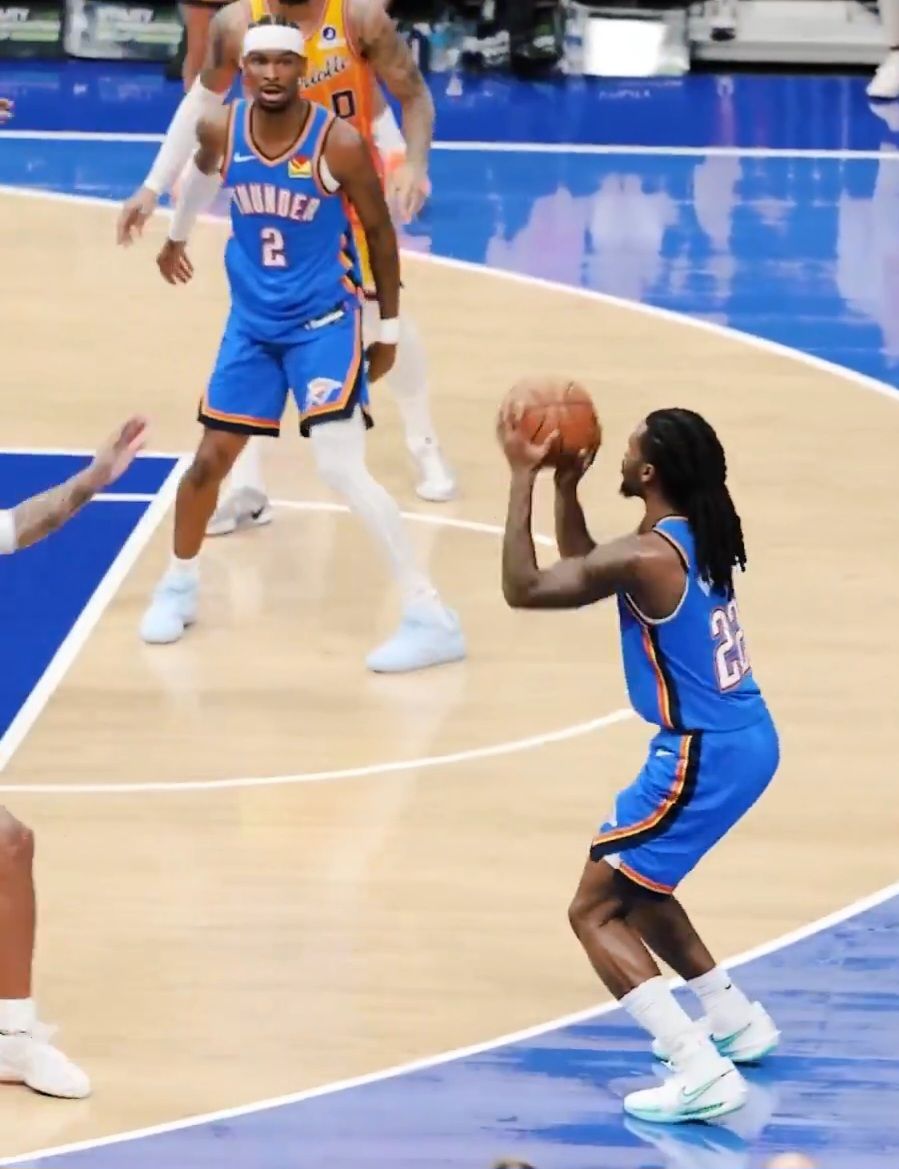
In a league obsessed with stars, superteams, and offensive explosions, the Oklahoma City Thunder have quietly mastered something far more demoralizing to opponents: the art of the third-quarter knockout punch.
Saturday’s 109–96 win over the Charlotte Hornets wasn’t just another checkmark in the defending champions’ scorching 13–1 start. It was yet another reminder that the Thunder’s ability to detonate games after halftime is becoming one of the most unstoppable forces in basketball.
And if the rest of the NBA isn’t worried yet, they should be.
Oklahoma City didn’t overwhelm Charlotte with sheer talent right out of the gate. In fact, the game was messy and tightly contested early — 11 ties, 11 lead changes, and a halftime score of just 55–52. The Hornets were hitting threes, playing loose, and even built a six-point lead late in the second quarter.
Then the third quarter happened.
The Thunder unleashed a 16–1 avalanche — a run so dominant it erased all signs of competitiveness and turned the game into a formality. By the time the fourth quarter arrived, Oklahoma City led by 17. Shai Gilgeous-Alexander didn’t even have to check in again.
This isn’t an anomaly.
This is who the Thunder are.
Every elite team has something it leans on:
- Golden State’s shooting avalanche.
- Denver’s Jokic-Murray two-man game.
- Boston’s relentless spacing and perimeter depth.
For Oklahoma City, it’s the third-quarter reset — a combination of adjustments, pace, defensive pressure, and relentless star power that breaks opponents who have hung around for 24 minutes but can’t survive the next 12.
Saturday’s version was as surgical as it gets.
Shai Gilgeous-Alexander did Shai things — 33 points on 13-for-19 shooting, slicing apart defenders like he was walking through a crowded room instead of an NBA court. Chet Holmgren dominated the paint and stretched the floor. Cason Wallace wreaked havoc everywhere. Ajay Mitchell delivered meaningful minutes yet again.
But the story was the timing.
“Shai only needed three quarters again,” Hornets coach Charles Lee said after the game, acknowledging OKC’s ability to put games away early and rest their MVP. “They make adjustments at halftime and come out a different team.”
He’s not wrong.
The Thunder are now:
- 23 straight wins against East teams
- 22–2 in their last 24 road games
- 13–1 overall
- Winners of five straight
But most striking:
They keep burying teams in the same 12-minute stretch.
The Thunder outscored Charlotte 32–18 in the third quarter, turning a three-point game into a runaway. That’s been the pattern all season.
This isn’t luck. This is system, culture, and discipline.
If the NBA allowed teams to start games in the third quarter instead of the first, the Thunder might go 82–0.
Holmgren in particular has made halftime his playground. He had 25 points, eight rebounds, and hit both of his threes, continuing a stretch of offensive growth that should terrify the league.
He’s no longer just a skilled defensive center — he’s becoming a three-level scorer who bends defenses.
Holmgren said earlier this season, “I’m just trying to punish whatever the defense gives me,” and Charlotte had no answer for that. Whether it was a face-up jumper, a rim run, or a trailing three, he punished everything.
And when Shai is doing what Shai does — controlling pace, dictating matchups, and creating effortless buckets — the Thunder become a machine.
The Hornets found out the hard way. Miles Bridges couldn’t check Shai in space. No ball screen coverage worked. And by the time Charlotte adjusted, the damage was done.
Every contender needs a glue guy — someone who changes possessions, flips momentum, and plays with impossible energy.
For the Thunder, Cason Wallace is becoming that guy.
Three steals. Two threes. Ten points. Four assists. And more winning plays than a box score can capture.
Wallace now has six games with three or more steals — in just 13 appearances.
His emergence is why Oklahoma City’s defense is ranked No. 1 in the league. It’s why missing Lu Dort didn’t cripple them. Wallace is becoming another elite perimeter disruptor, and the Thunder’s guard depth is an embarrassment of riches.
The rest of the league should be alarmed that Oklahoma City doesn’t just have the best defense — they have a defensive identity that’s repeatable, sustainable, and now backed by All-NBA star power.
Championship teams have certain traits:
- They respond to adversity within games.
- They don’t panic after opponent runs.
- They adjust better than anyone.
- They deliver knockout blows when it matters.
Last season, the Thunder were young, fast, exciting — but still learning how to finish games.
This season, they’re finishing them before the fourth quarter even starts.
That’s what growth looks like.
That’s what champions look like.
The Thunder are no longer just the future. They’re the present.
To the Hornets’ credit, they competed hard. Miles Bridges had 15, Moussa Diabate continues to take real steps forward, and the team fought even without LaMelo Ball and Brandon Miller.
Diabaté summed it up honestly:
“At the end of the day, experience gives you confidence. Reps build trust in your game.”
Charlotte is improving. They just faced a team that’s not only better, but fully realized.
Last season, the story was:
- “They’re ahead of schedule.”
- “They’re fun, but they’re young.”
- “They’ll contend eventually.”
But after Saturday, and after 13 wins in their first 14 games, and after another third-quarter decimation, there’s no “eventually” anymore.
This is a dominant team with:
- An MVP in his prime
- A top-5 defensive unit
- A top-10 offense
- Ridiculous depth
- A weaponized third quarter that consistently destroys opponents
We’re watching a dynasty take shape in real time — and the rest of the league is running out of answers.
Because if you can’t beat the Thunder in the first half,
you’re almost certainly not going to beat them at all.
Follow us on Instagram & Facebook
One Reply to “Oklahoma City’s Third-Quarter Breakaway Has Become the NBA’s Most Devastating Weapon”