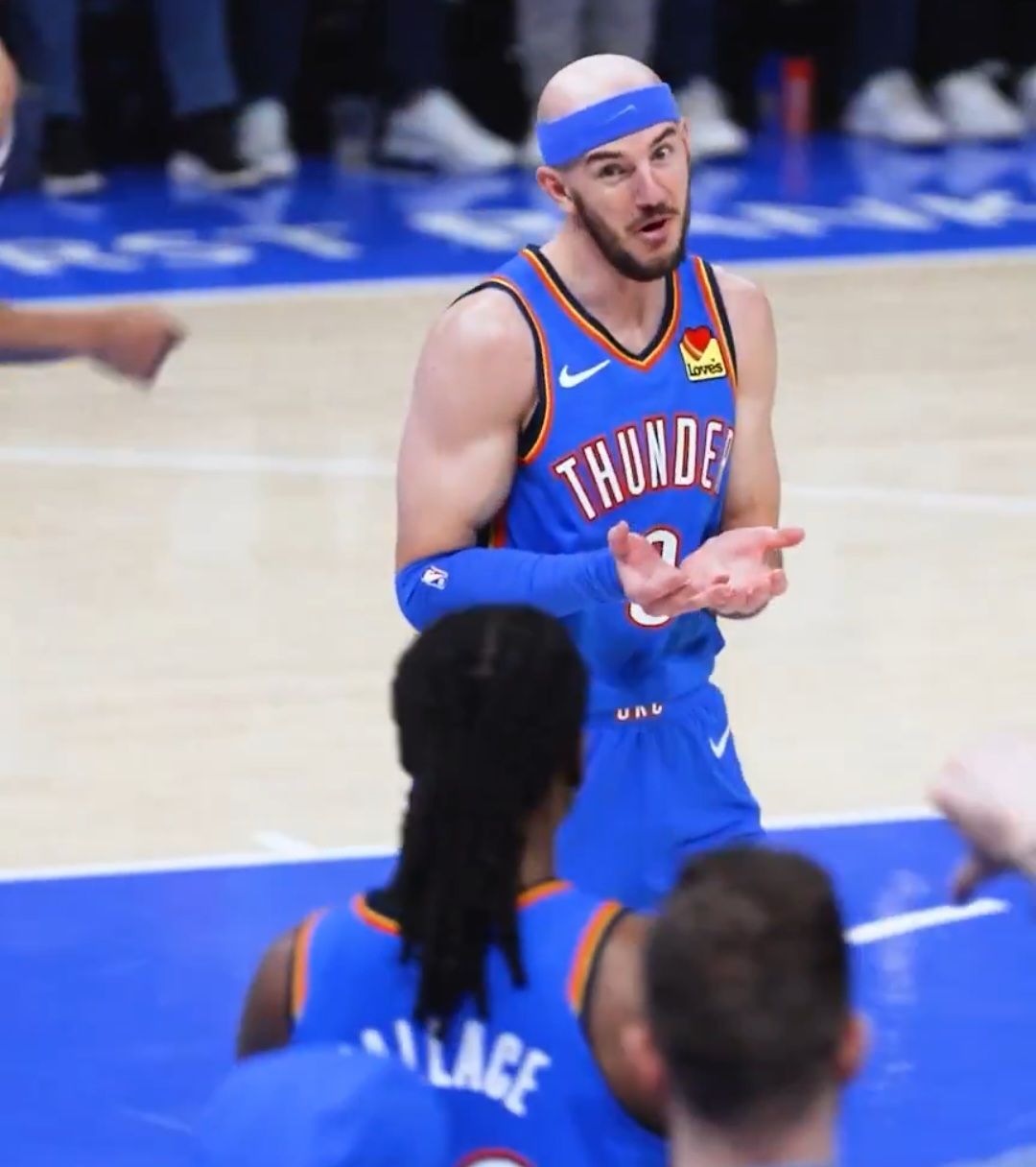
The Oklahoma City Thunder didn’t lose Friday night’s game in Minneapolis because of one shot, one turnover, or one blown assignment. They lost it because basketball, especially at the highest level, is rarely about a single moment. It’s about accumulation. About the small cracks that widen just enough for a team like the Minnesota Timberwolves — physical, patient, and opportunistic — to force their way through.
Yes, the final minute will be the headline. An 8–0 Minnesota run. Anthony Edwards rising with confidence for a go-ahead three. Shai Gilgeous-Alexander getting stripped late. The box score will forever show a 112–107 Timberwolves win. But if you want to understand why the Thunder walked off the Target Center floor frustrated, you have to look well before the clock dipped under sixty seconds.
This was a loss built slowly, possession by possession, rebound by rebound.
And that should concern Oklahoma City more than any single late-game mistake.
The Illusion of Control
For most of the night, the Thunder felt like the better team. They moved the ball well early, controlled tempo, and got exactly what they wanted from their star. Shai Gilgeous-Alexander was brilliant again — 35 points, seven assists, operating with his usual blend of patience and inevitability. When OKC went up 107–104 late, the game seemed to be tilting their way. Minnesota had struggled at the line. Julius Randle was ice-cold from the field. The Wolves had looked disjointed at times.
And yet, there was an underlying truth bubbling beneath the surface: Oklahoma City never truly owned the game.
That illusion of control evaporated in the final minute because Minnesota had been chipping away at it all night.
The Rebounding Problem That Won’t Go Away
If you’re searching for the most glaring, least glamorous reason OKC lost, it’s this: they could not finish defensive stops.
Allowing 29 second-chance points is not a minor flaw. It’s a flashing red warning light. It means good defense didn’t matter because the possession didn’t end. It means five Thunder players were in the right place initially — and then one or two failed to box out, failed to pursue the ball, failed to impose physicality.
Minnesota didn’t shoot particularly well. They didn’t need to. They simply outworked Oklahoma City on the glass, especially when it mattered. Naz Reid, Donte DiVincenzo, and Edwards repeatedly extended possessions, forcing OKC’s defense to scramble and reset. Over the course of 48 minutes, that takes a toll — not just physically, but mentally.
By the fourth quarter, those extra efforts compound. Rotations get a half-step slower. Closeouts become more desperate. Fouls creep in. Confidence wavers.
You don’t lose games like this because of bad defense. You lose them because your defense doesn’t end.
Anthony Edwards, Star Power, and the Difference Late
The Thunder are built on collective excellence. On versatility. On depth. On decision-making. That formula wins a lot of games. But nights like Friday reveal the one thing you can’t scheme away: elite wing star power in crunch time.
Anthony Edwards didn’t dominate wire-to-wire. What he did was far more devastating — he waited. He absorbed. And when the moment arrived, he seized it.
His return from injury changed Minnesota’s ceiling in real time. Suddenly OKC’s defenders had to account for a player who could beat you with strength, speed, or audacity. Edwards’ 26 points and 12 rebounds weren’t just numbers; they were momentum shifts. And that three-pointer with 38.5 seconds left wasn’t just a shot — it was a declaration.
The Thunder threw different looks at him. None fully worked when it mattered most.
This isn’t an indictment of OKC’s defense as much as it is a reminder of professional basketball realities: sometimes the other team has that guy, and your margin for error shrinks to almost nothing.
The Free Throw Window That Never Opened
There was a moment — fleeting but real — when the door cracked open for Oklahoma City to put the game away. Julius Randle’s struggles, including a missed free throw with under a minute left, should have been the signal. Minnesota was wobbling. The Thunder had the lead. One clean possession, one strong finish, one composed trip to the line could have ended it.
Instead, OKC hesitated.
That hesitation wasn’t fear; it was fatigue — the cumulative effect of not finishing possessions earlier. When you’ve spent all night scrambling for rebounds and chasing loose balls, clarity disappears late. Decisions slow. Movements tighten.
And against a team as physical as Minnesota, hesitation is fatal.
The Shai Turnover — Symptom, Not Cause
It will be replayed. It will be discussed. Shai Gilgeous-Alexander, stripped of the ball late after Edwards’ go-ahead shot, sealing Minnesota’s control.
But pinning the loss on that moment misses the point entirely.
SGA was asked to carry an enormous burden all night, both offensively and as a stabilizer. He delivered. What happened late wasn’t carelessness — it was pressure meeting exhaustion. Minnesota crowded him. The Wolves trusted their defense. They gambled, and it paid off.
If anything, the fact that OKC needed Shai to be flawless in that moment underscores the larger issue: the Thunder didn’t generate enough late-game margin elsewhere to absorb a single mistake.
What This Loss Actually Says About OKC
Here’s the uncomfortable truth: this loss doesn’t mean Oklahoma City isn’t elite. It means they’re approaching the edge of what they still need to become.
The Thunder are smart. They’re skilled. They’re connected. But nights like Friday expose three questions that will follow them into April and May:
Can they consistently close defensive possessions against physical teams?
Can they execute with clarity when the game slows and bodies collide?
And can they neutralize — or at least survive — elite wings in closing time?
Minnesota answered “yes” to all three on Friday. Oklahoma City didn’t.
That doesn’t diminish what the Thunder are building. It sharpens it.
Because games like this — tight, hostile, physical, unforgiving — are the ones that teach contenders who they really are. The Thunder didn’t collapse in the final minute. They simply ran out of margin.
And in the NBA, margin is everything.
Follow us on Instagram & Facebook