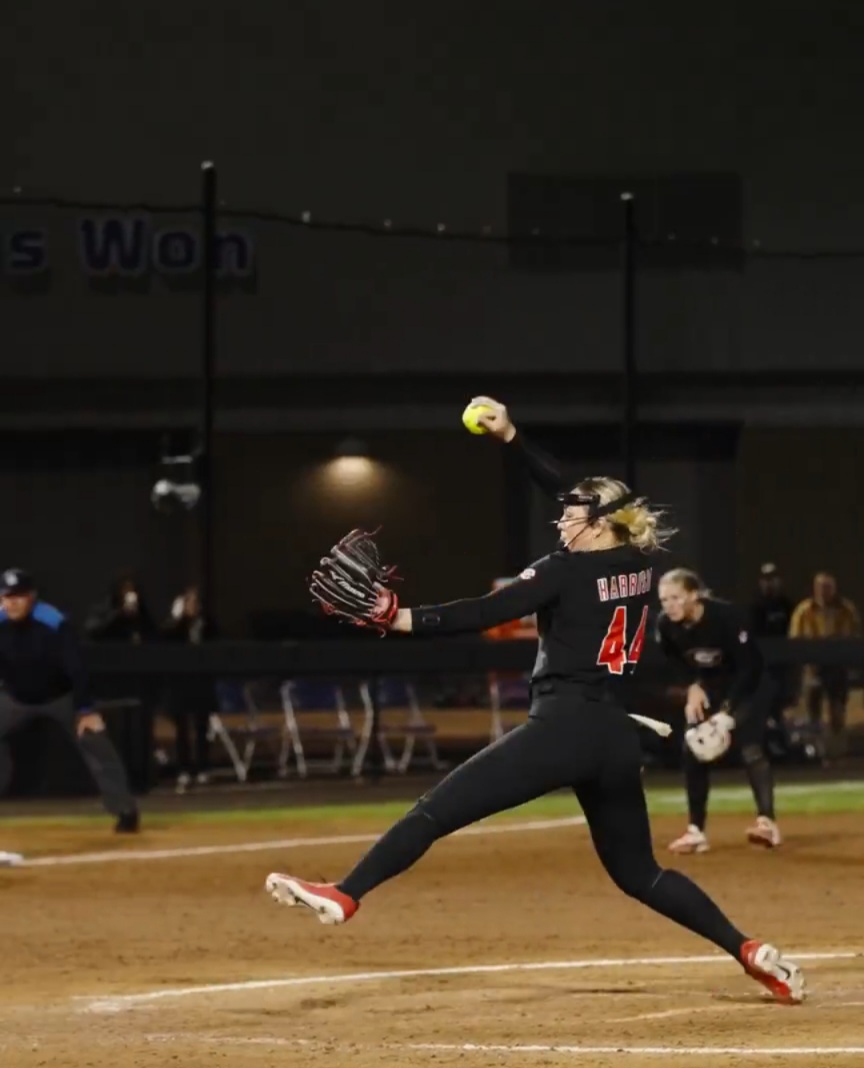
The box score says Oklahoma lost 10-5 to Georgia in the SEC Tournament quarterfinals Thursday night.
The deeper numbers tell a far more alarming story.
For two innings at John Cropp Stadium in Lexington, the Sooners looked poised to continue their march toward another conference tournament championship. The offense exploded early. The dugout energy was electric. The top seed in the SEC appeared firmly in control against a Georgia team Oklahoma had already swept less than two weeks earlier.
Then the game completely flipped.
Georgia scored 10 unanswered runs, Oklahoma’s elite offense disappeared almost entirely after the second inning, and one of the nation’s most dominant teams suddenly looked vulnerable heading into NCAA Tournament play.
The result was not simply an upset.
It was a statistical outlier in nearly every direction.
Here is the deeper breakdown behind Oklahoma’s stunning 10-5 loss to Georgia.
5-0: The Lead That Disappeared
The Sooners could not have scripted a much better start offensively.
Oklahoma scored four runs in the opening inning and added another in the second to build a 5-0 advantage. Against most teams, that cushion feels overwhelming. Against a Georgia squad OU had already beaten 10-2, 3-1, and 6-5 during a regular-season sweep in Norman, it looked decisive.
Instead, it became the setup for one of the most shocking collapses in SEC Tournament history.
The five-run blown lead tied the largest comeback ever recorded in the SEC Softball Tournament. The painful irony for Oklahoma? The Sooners themselves set the same comeback mark one year ago when they rallied from a 6-1 deficit against Arkansas during the 2025 SEC Tournament semifinals.
This time, Oklahoma was on the wrong side of history.
Even more surprising was how quickly the momentum vanished.
The Sooners scored all five of their runs within the first two innings. They failed to score over the final five frames despite entering the tournament averaging more than 10 runs per game.
10 Unanswered Runs: Georgia’s Ruthless Response
The defining number of the night was simple: 10.
That is how many consecutive runs Georgia scored after falling behind 5-0.
The Bulldogs completely dominated the middle and late innings, punishing Oklahoma pitching while simultaneously shutting down the nation’s most dangerous offense.
The comeback officially started in the fourth inning when Georgia erupted for five runs to tie the game. Jaydyn Goodwin and Gabi Novickas launched solo home runs before Bailey Lindemuth crushed a game-tying three-run blast to center field.
Just like that, the game reset.
From there, Georgia continued applying pressure inning after inning.
The Bulldogs added three more runs in the sixth inning — all with two outs — before tacking on two insurance runs in the seventh.
The sequencing made the collapse even more jarring.
Georgia’s hitters consistently delivered in high-leverage situations while Oklahoma failed to answer once adversity arrived.
1 Hit After the Second Inning
This may be the most shocking statistic from the entire game.
After Kai Minor’s solo home run in the second inning gave Oklahoma a 5-0 lead, the Sooners managed only one hit the rest of the night.
One hit over the final five innings.
For perspective, Oklahoma entered the SEC Tournament with:
- 566 runs scored in 55 games
- 32 run-rule victories
- 27 double-digit scoring games
- Seven players with double-digit home runs
- A .392 team batting average
This offense had overwhelmed elite pitching staffs throughout the season. Instead, Georgia freshman Presley Harrison turned the Sooners into a lineup searching desperately for answers.
At one point, Harrison retired 12 consecutive Oklahoma hitters.
That sequence completely changed the game.
Oklahoma stopped generating traffic on the bases. The pressure disappeared. And the Sooners’ normally explosive lineup began expanding the strike zone and chasing pitches late in counts.
The most dangerous offense in college softball suddenly looked ordinary.
6.2 Innings: Presley Harrison’s Breakout Performance
Georgia freshman Presley Harrison entered Thursday’s quarterfinal as a relatively unproven arm on the postseason stage.
She left it as the biggest reason the Bulldogs advanced.
After Georgia’s starter struggled immediately, Harrison entered in relief during the first inning and delivered the best outing of her young career. Her final line:
- 6.2 innings pitched
- 1 earned run allowed
- 7 strikeouts
- 0 walks
The zero walks matter enormously.
Against an Oklahoma offense built on patience and power, Harrison consistently attacked the zone and forced the Sooners into uncomfortable at-bats. She worked ahead in counts, mixed speeds effectively, and never allowed Oklahoma to regain offensive rhythm.
The freshman showed remarkable poise against a lineup featuring Kendall Wells, Ella Parker, Gabbie Garcia, Kai Minor, and Isabela Emerling.
That group entered Thursday with a combined 107 home runs.
After the second inning, Harrison completely neutralized them.
4 Two-Out RBIs: The Inning Oklahoma Couldn’t Escape
The sixth inning represented Oklahoma’s final opportunity to stabilize the game.
Instead, it became the moment Georgia fully seized control.
The Bulldogs entered the inning tied 5-5 and immediately put pressure on the Sooners with consecutive singles. Oklahoma appeared close to escaping trouble after recording two outs, but Georgia continued delivering clutch hits.
Kierstin Roose ripped an RBI single to center to give Georgia its first lead of the night. Then came the defensive mistake that compounded the damage.
The throw home was misplayed, allowing another run to score. Moments later, Goodwin doubled to center to push the lead to 8-5.
All three runs in the inning scored with two outs.
That statistic illustrates the difference in execution between the two teams Thursday night. Georgia consistently delivered in pressure situations while Oklahoma failed to generate any late offensive response.
21-3: Audrey Lowry Finally Looks Human
Sophomore ace Audrey Lowry entered the SEC Tournament as one of the biggest reasons Oklahoma earned the conference’s top seed.
She left Lexington with only her third loss of the season.
Lowry’s final numbers:
- 21-3 record
- Loss charged Thursday night
- Allowed Georgia’s decisive offensive surge
To be fair, Lowry was hardly alone in Oklahoma’s collapse. Defensive miscues, offensive silence, and Georgia’s timely hitting all contributed to the loss.
But Georgia’s lineup clearly adjusted to Lowry’s timing as the game progressed. Early in the night, Oklahoma’s sophomore right-hander looked sharp. By the middle innings, Georgia hitters appeared increasingly comfortable tracking her movement and attacking mistake pitches.
The fourth inning exposed that shift dramatically.
And once Georgia’s confidence grew, the Bulldogs never stopped swinging aggressively.
3-for-4: Kai Minor Continues to Shine
Lost amid the frustration of the loss was another brilliant performance from freshman Kai Minor.
Minor finished:
- 3-for-4
- Home run
- Two doubles
- Two runs scored
She accounted for more than half of Oklahoma’s total hits.
Minor continues to establish herself as one of the most important players in Oklahoma’s lineup entering NCAA Tournament play. Thursday marked her 25th multi-hit game of the season, extending her team lead in that category.
Even more impressive is her consistency late in the year.
Minor has now homered in back-to-back games and recorded her second two-double game in the last three contests. While Oklahoma’s offense struggled collectively Thursday night, Minor continued producing quality at-bats throughout the game.
That consistency may become critical moving forward as the Sooners attempt to regroup before regionals.
10 Runs Allowed: A Rare Defensive Breakdown
Oklahoma allowing 10 runs is almost unheard of this season.
Thursday marked only the second time all year the Sooners surrendered double-digit runs. The only previous occurrence came during an 11-6 loss at Arizona back on Feb. 6.
That gap matters.
For nearly three months, Oklahoma consistently paired explosive offense with reliable pitching depth and steady defense. Thursday night represented a complete breakdown of that formula.
The Bulldogs hit Oklahoma with power, situational hitting, and relentless pressure. Once the game tightened, the Sooners never regained defensive composure.
And against a confident SEC opponent, that proved fatal.
What the Numbers Mean Now
The immediate concern for Oklahoma is not just the loss itself.
It is how unusual the loss looked statistically.
The Sooners rarely surrender large leads. They rarely go silent offensively for five straight innings. They rarely allow double-digit runs. And they rarely lose control of momentum the way they did Thursday night.
That is why this game will linger entering the NCAA Tournament.
Still, Oklahoma remains one of the nation’s elite teams. The Sooners won the SEC regular-season title, finished 48-8 overall, and own one of the strongest résumés in the country.
But Thursday night exposed something every championship contender fears in May:
Even historically powerful teams can unravel quickly when momentum turns.