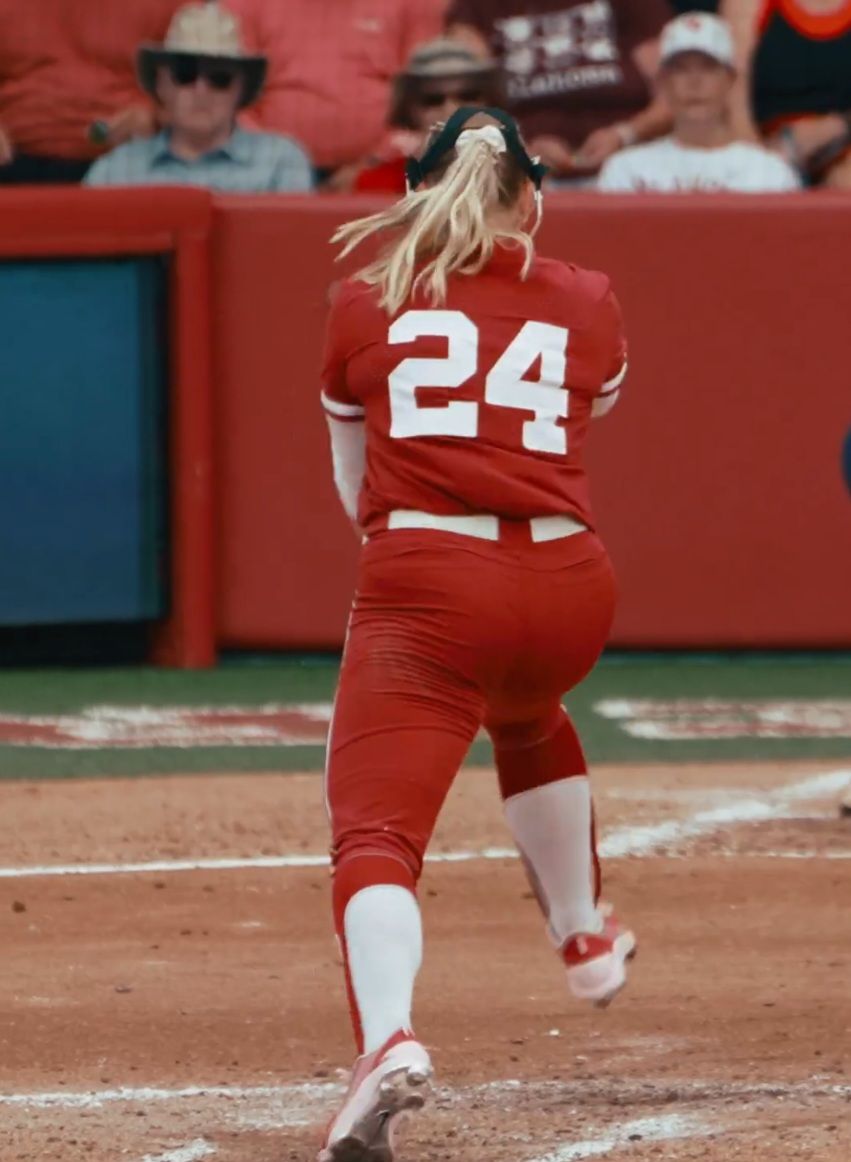
The NCAA Softball Tournament is supposed to reward order.
That was the entire premise of my original “10 Bold Predictions” column before regionals began last weekend. National seeds host at home. Elite programs pack stadiums. Established powers lean on depth, tradition, and postseason experience. Historically, the tournament has been carefully engineered to protect the sport’s giants from early disaster.
And yet, entering the 2026 tournament, the bracket felt unusually unstable.
The SEC had flooded the top eight national seeds. Oklahoma entered with the nation’s best batting average. Alabama grabbed the No. 1 overall seed. Texas arrived as the defending national champion. UCLA looked capable of hitting softballs into orbit. Meanwhile, programs like Nebraska and Mississippi State carried the type of momentum that can quietly become dangerous in May.
My central thesis was simple: modern college softball has become too explosive, too deep, and too emotionally volatile for clean regional weekends.
After three days of softball chaos, I’m convinced that thesis was mostly right.
But I was also reminded — repeatedly — that predicting postseason softball is a dangerous game.
Because while the giants largely survived, they absolutely did not escape untouched.
And some of my boldest predictions aged beautifully.
Others detonated almost immediately.
The Predictions That Landed Perfectly
The cleanest hit of the weekend was undoubtedly UCLA.
I wrote that the Bruins’ offense felt “cartoonish.” That wasn’t exaggeration. It was a warning.
Then UCLA spent the weekend validating every word of it.
The Bruins overwhelmed opponents with precisely the avalanche offense I described before the tournament. Once pitchers lost command of innings, UCLA buried them instantly. Walks turned into crooked innings. One mistake became three-run chaos. The pressure never stopped.
Their regional final became the ultimate confirmation.
UCLA obliterated South Carolina 15-1 in six innings, punctuated by a massive Megan Grant grand slam that essentially turned Easton Stadium into a celebration by the middle innings. The Bruins didn’t simply win games. They emotionally exhausted opponents.
That mattered because my original prediction wasn’t merely that UCLA would advance.
It was that their offense would fundamentally distort games.
That’s exactly what happened.
The same was true for Nebraska.
I predicted that the Cornhuskers would survive regionals but would get dragged into a tense, emotionally draining Sunday fight. Nebraska entered the tournament riding a 21-game winning streak, and sometimes that kind of momentum creates pressure instead of freedom.
That regional turned into pure survival softball.
Grand Canyon pushed Nebraska in a Sunday afternoon showdown, and suddenly the hottest team in America was trapped in a 1-0 stress test with its winning streak hanging by a thread.
That prediction was less about talent evaluation and more about emotional reality. Regional weekends are uncomfortable. Expectations suffocate hosts. Every inning tightens the pressure.
Nebraska survived.
But it looked exactly like the kind of regional anxiety attack I expected.
The Alabama prediction also held up better than it initially appears.
I never predicted elimination for the Crimson Tide. I predicted vulnerability.
That distinction matters now.
Alabama advanced comfortably overall, but there were visible cracks offensively during the regional. Their 3-0 grind against Belmont carried precisely the nervous tension I expected from a team that leans heavily on structure, defense, and pitching consistency.
Championship-caliber teams often reveal their weaknesses before they reveal their dominance.
Alabama still advanced.
But for stretches, they looked human.
That’s important moving forward.
The Predictions That Immediately Exploded
Then there was LSU.
I identified LSU Tigers softball as the most vulnerable host in the bracket. I believed Virginia Tech’s explosive offense had the firepower necessary to create Baton Rouge chaos.
Instead, LSU’s pitching staff basically laughed at my prediction.
The Tigers opened regionals by completely suffocating opponents, outscoring teams 16-0 in their first two games before dispatching Virginia Tech 7-2 in the regional final. Rather than surviving chaos, LSU controlled tempo from the first pitch all weekend.
In hindsight, I overvalued volatility and undervalued LSU’s ability to dictate pace at home.
That’s the danger of leaning too heavily into offensive metrics in postseason softball. Power matters. But emotional control and pitching depth still decide weekends.
LSU had both.
And then there was Oklahoma.
Honestly, I’m still not over this one.
I predicted Oklahoma would not allow a single run during regionals. Through two games, it looked prophetic.
The Sooners crushed Binghamton 11-0.
Then they annihilated Kansas 9-0.
At that point, the prediction was alive and terrifyingly close to reality. Oklahoma looked furious. Focused. Ruthless. Patty Gasso’s post-SEC Tournament challenge to her team had clearly landed.
Then Michigan’s Erin Hoehn ruined perfection with a second-inning solo homer Sunday afternoon.
One swing.
One run.
That was it.
Oklahoma still steamrolled through the regional, outscoring opponents 28-1 while extending its Super Regional streak to 16 consecutive seasons. The Sooners looked every bit like a national-title threat.
But Michigan spoiled the aesthetic.
And honestly, there’s something fitting about that. Perfection almost never survives regional softball.
The most fascinating miss, however, involved NiJaree Canady and the Texas Tech Red Raiders.
My prediction envisioned Canady delivering a legendary solo-carry performance reminiscent of old-school ace dominance. I believed Texas Tech’s entire postseason formula would revolve around simply giving her the ball and letting her suffocate the bracket.
Instead, Texas Tech revealed something far more important about modern softball.
Pitching depth may now matter more than singular greatness.
The Red Raiders leaned heavily on Kaitlyn Terry throughout the regional while Canady worked in relief situations and even contributed offensively with a huge pinch-hit double. Rather than operating as a one-woman survival act, Texas Tech functioned as a layered postseason roster.
That might ultimately be one of the biggest lessons from regionals.
The sport has evolved beyond the era where one ace can realistically carry a program through three consecutive postseason weekends.
What the Regionals Actually Revealed
At first glance, the regional round looked chalky.
Most national seeds advanced. Most powerhouse programs survived. The Women’s College World Series favorites remain alive.
But underneath that surface order was undeniable instability.
UCF eliminated Florida State.
Saint Mary’s made a stunning run to a regional final.
Grand Canyon nearly pushed Nebraska to a winner take all game.
South Florida turned the Fayetteville Regional upside down.
And nearly every host site experienced moments where tension became visible.
That matters because the middle tier of college softball is stronger than it has ever been.
The transfer portal has flattened rosters. Veteran hitters are scattered across the country. Mid-majors are no longer intimidated by environments, branding, or seeding numbers.
The giants still survive.
But they bleed more now.
And perhaps the most important regional takeaway is this: depth is becoming the defining trait of championship softball.
Not just superstar pitching.
Not just home-run power.
Depth.
Deep lineups.
Deep bullpens.
Deep emotional composure.
That reality now shapes the Super Regionals.
Because this weekend is loaded.
Oklahoma gets Mississippi State in Norman.
Alabama faces LSU in another all-SEC collision.
Nebraska hosts Oklahoma State.
Florida draws Texas Tech.
Tennessee and Georgia renew a brutal conference rivalry.
Those matchups exist because the favorites survived.
But they also exist because regionals exposed how narrow the margin between control and chaos has become.
And honestly, that’s good for the sport.
The 2026 NCAA Softball Regionals did not completely validate my prediction that chaos would consume the bracket.
But they absolutely confirmed something else:
Modern college softball is entering an era where dominance feels far more fragile than it used to.
The giants are still standing.
They just don’t look untouchable anymore.
Follow us on Instagram & Facebook