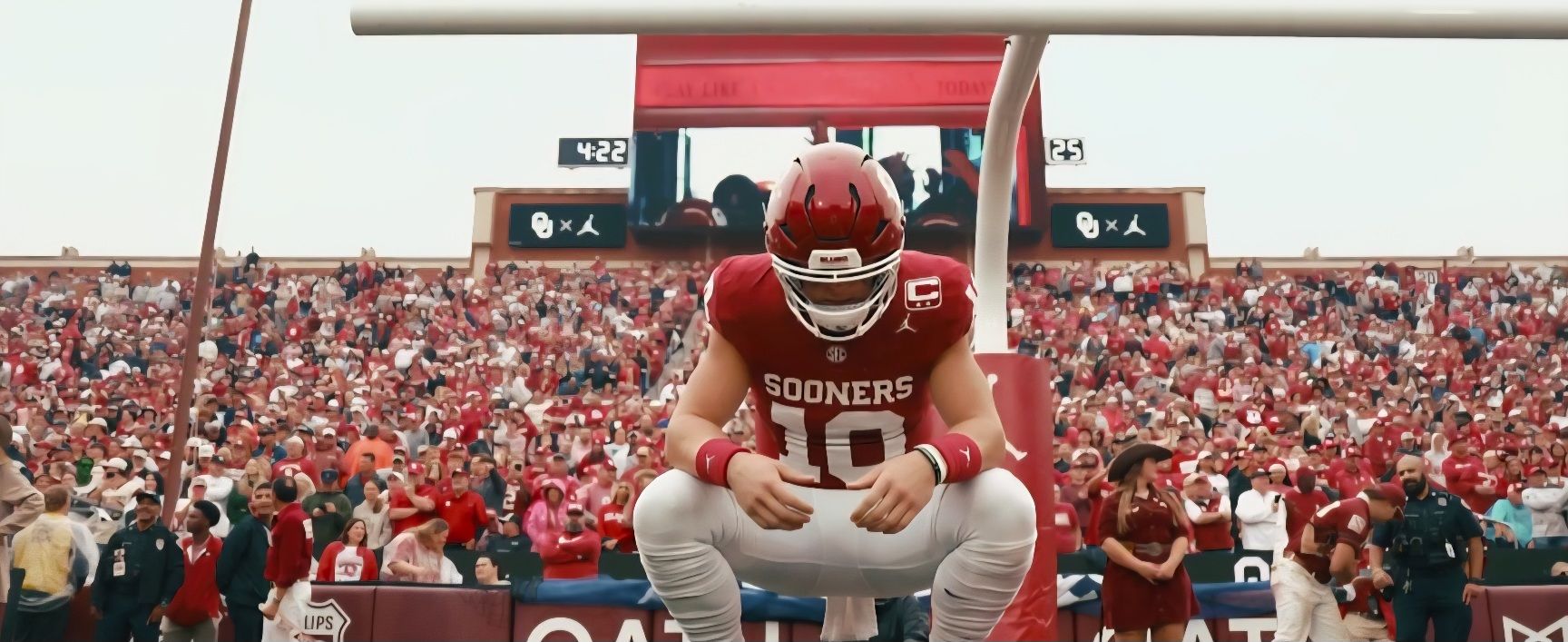
The last 24 hours have given Oklahoma plenty to be frustrated about.The Sooners were preparing for a Saturday afternoon showdown with No. 19 Ole Miss when a nationwide FAA ground stop disrupted the Rebels’ travel plans. The SEC ultimately moved the game to Sunday at noon, a decision Oklahoma Athletics Director Roger Denny publicly opposed after being told that refusing to play would result in a forfeit.
There has been plenty of noise surrounding the decision. There has been plenty of discussion about fairness, travel logistics and the conference’s handling of the situation.
But when the Sooners finally take the field at Gaylord Family – Oklahoma Memorial Stadium, none of that will matter.
Oklahoma has a football game to win.
Fortunately for Brent Venables, his team enters the weekend with something more valuable than an argument with the conference office: a blueprint.
The Sooners’ 23-7 victory over Florida in Gainesville last week was more than a much-needed win. It was a performance that offered some answers to three important questions about the direction of the program.
Could the defense still dominate against quality competition? Was the offensive line beginning to mature into a dependable SEC unit? And could special teams continue providing the kind of stability that allows a team to win when the offense isn’t producing touchdowns?
Oklahoma answered all three questions favorably in The Swamp.
Now comes the harder part: proving those answers weren’t specific to one night in Gainesville.
1. Did the Defense Definitively Prove Its Elite Status?
For much of the season, Oklahoma’s defense has been asked to carry an offense that struggled to find consistency. That responsibility became even more pronounced following the Sooners’ 42-25 loss to South Carolina, a defeat that raised questions about whether the defense could continue performing at a high level while the offense worked through its own problems.
The trip to Gainesville provided an emphatic response.
Against Florida, Oklahoma held the Gators to just 203 total yards on 47 plays, an average of 4.3 yards per snap. Florida managed only 70 rushing yards, finished with 11 first downs and converted just two of nine third-down opportunities.
The Sooners also kept the Gators from finding any offensive rhythm after halftime, shutting them out over the final two quarters.
This wasn’t a defense surviving a favorable turnover bounce or relying on one timely stop. It was a complete performance built on controlling the line of scrimmage, tackling in space and making Florida earn every yard.
The defensive front deserves much of the credit.
Florida entered the matchup with an offense that could lean on running back Jadan Baugh, but Oklahoma limited him to 35 yards on eight carries. The Sooners consistently disrupted the ground game, forcing the Gators into situations where they had to rely on their passing attack.
That allowed Venables to put more pressure on Florida quarterback Tramell Jones Jr. The Sooners came away with two interceptions, including a drive-ending end-zone takeaway by cornerback Courtland Guillory and another interception by safety Peyton Bowen.
Owen Heinecke led the way with 10 tackles, while Kip Lewis contributed seven tackles, a sack and a tackle for loss. Defensive lineman Danny Okoye added a sack and a tackle for loss of his own.
The performance was particularly important because of what preceded it. Oklahoma had just endured a difficult loss to South Carolina and a change in offensive leadership. There were legitimate questions about whether the defense could maintain its standard through the final stretch of the season.
In Gainesville, the answer was clear.
This defense can dictate a game.
That distinction matters against Ole Miss.
The Rebels arrive in Norman without starting running back Kewan Lacy and right guard Patrick Kutas. Backup running back Mai Frazier is also listed as questionable, leaving the availability and workload in the backfield as important pregame considerations.
Oklahoma should look to make those absences matter.
The Sooners need to establish control against the run early, challenge Ole Miss’ offensive line and force quarterback Trinidad Chambliss into uncomfortable passing situations. Chambliss is a dangerous player who has accounted for more than 2,300 passing yards and 18 touchdowns, so simply loading the box and assuming the Rebels cannot throw would be a mistake.
The better approach is to make Ole Miss one-dimensional without surrendering the explosive plays that can quickly change a game.
There is also a lesson from the Rebels’ 42-7 loss to Georgia. Ole Miss struggled to protect Chambliss, allowing five sacks while managing just seven points. Georgia showed that disrupting the pocket can make life difficult for the quarterback and the entire offense.
Oklahoma has the personnel to create similar problems.
The Sooners entered the weekend among the SEC’s best defenses against the pass and ranked near the top of the conference in sacks. If they can pair that pass rush with the same run discipline they displayed against Florida, they have an opportunity to make Sunday’s game uncomfortable for the Rebels.
The defense answered the question in Gainesville. Sunday is about demonstrating that the standard is sustainable.

Take A Deeper Dive Into Our Oklahoma Football Coverage On Our Facebook Subscription Hub
Oklahoma Lands Four-Star Linebacker Tylan Henderson, Jumps To No. 1 In 2028 Class Ranking
Oklahoma Lands Its Top In-State Target: What Kamieon Compton-Nero Brings to the Sooners 2028 Class
Oklahoma Enters The Race: What The Sooners’ Late Offer Means For Jeremiah Dent
Help support Heartland Sports by Unlocking Exclusive, data-driven film room breakdowns, recruiting Update, high-leverage personnel matrix updates you won’t find anywhere else, and More by subscribing to our premium Oklahoma Sooners football coverage today.
2. Is the Offensive Line’s Maturity Permanent?
Perhaps the most encouraging development from the Florida game came from a group that has spent much of the season under scrutiny.
Oklahoma’s offensive line has dealt with injuries, lineup changes and the growing pains that come with developing young players against SEC competition. The unit’s struggles contributed to an offense that entered the Florida game near the bottom of the conference in several major categories.
But in Gainesville, the offensive line looked different.
It wasn’t just better protection or a few successful running plays. Oklahoma controlled the pace of the game, sustained drives and repeatedly converted the kind of situations that had caused problems earlier in the season.
The defining moment came in the fourth quarter.
With a lead to protect, the Sooners put together a 20-play, 89-yard touchdown drive that consumed 12 minutes and 45 seconds. Oklahoma converted five third downs during the march before John Mateer connected with Isaiah Sategna for a six-yard touchdown.
That drive was a statement.
Florida knew Oklahoma wanted to run the football and shorten the game. The Gators knew the Sooners were trying to keep their offense on the field and drain the clock. They still couldn’t get the ball back.
That’s what physical, confident offensive-line play looks like.
Oklahoma finished with 351 total yards, including 144 rushing yards on 40 attempts. The Sooners ran 73 offensive plays, converted a season-high 10 of 18 third downs and controlled possession for 37:50.
The offensive line also gave Mateer a more manageable environment. He completed 21 of 33 passes for 207 yards and two touchdowns while adding 56 rushing yards.
Left tackle Michael Fasusi was particularly impressive. He earned SEC Offensive Lineman of the Week honors after helping Oklahoma produce its most complete offensive performance in weeks.
The bigger takeaway, however, was the unit’s collective improvement.
Oklahoma didn’t need to rely on explosive plays to move the football. It didn’t need to turn every possession into a high-risk passing situation. Instead, the Sooners consistently moved the chains and eventually put together a drive that effectively ended the game.
That is the kind of offensive identity that can travel.
And it could be especially valuable Sunday.
Oklahoma is expected to have guard Eddy Pierre-Louis available after he was listed as probable on the initial availability report ahead of the Florida game but ultimately did not play. His return would provide another option along the interior and give offensive line coach Bill Bedenbaugh additional flexibility.
The Sooners will need that depth against an Ole Miss defense that will be eager to disrupt Mateer and prevent Oklahoma from establishing its preferred offensive rhythm.
The weather could make the offensive line even more important. With cold temperatures and rain in the forecast, the passing game may become more difficult to execute consistently. Wet conditions can affect ball security, footing and timing, making the ability to run the football and stay ahead of the chains even more valuable.
Oklahoma shouldn’t assume that one strong performance means every problem has disappeared. The Florida game was an encouraging step, not a guarantee that the offensive line has permanently turned a corner.
But the blueprint is there.
Protect Mateer. Establish the run. Avoid putting the offense in repeated third-and-long situations. And when the Sooners have an opportunity to take control of the game, don’t let go.
The 20-play drive in Gainesville showed what this offense can look like when the offensive line plays with confidence. Sunday offers another opportunity to make that performance the expectation rather than the exception.
3. Can Special Teams Remain an Iron-Clad Safety Net?
When an offense is still finding its identity, special teams can become a team’s most dependable source of points and field-position advantages.
Oklahoma has the personnel to make that phase a strength.
The Sooners brought back an experienced group of specialists, including kicker Tate Sandell, punter Grayson Miller, returner Isaiah Sategna III and long snapper Ben Anderson. That experience has provided a level of consistency that is particularly valuable during a season in which the offense has undergone significant changes.
The Florida game offered another example.
Sandell accounted for 11 of Oklahoma’s 23 points, connecting on field goals of 41, 48 and 31 yards while converting both extra-point attempts.
His first-half kick from 48 yards was particularly important, extending Oklahoma’s lead to 13-7 with 20 seconds remaining before halftime. The late fourth-quarter field goal helped put the game out of reach.
Those points mattered.
In a game where Oklahoma’s defense was controlling the action but the offense wasn’t consistently finding the end zone, Sandell made sure productive possessions weren’t wasted.
The punting operation also helped Oklahoma manage field position. Miller averaged 43.2 yards across four punts, with a long of 53 yards. The Sooners avoided giving Florida an easy opportunity to generate momentum through the return game.
Sategna’s responsibility was just as important. With Oklahoma playing in a hostile road environment, securing the football and avoiding a costly mistake were essential. The return unit handled its responsibilities without giving Florida an opportunity to steal possession.
The result was another clean performance from a group that has the experience to handle high-pressure situations.
That matters because special teams can become the difference in games that aren’t decided by offensive fireworks.
Oklahoma’s new identity isn’t necessarily about winning shootouts. The Sooners have shown they can win by playing defense, controlling possession, protecting the football and taking points when they’re available.
Special teams make that approach possible.
Sunday could put that reliability to another test.
The forecast calls for temperatures around 40 degrees with a significant chance of rain and wind gusts that could affect kicking and punting. Those conditions can turn routine special-teams plays into potential momentum swings.
A wet football can make a punt return more difficult. Slick conditions can affect the operation between the snapper, holder and kicker. Wind can change the trajectory of a field-goal attempt or alter the effectiveness of a punt.
In those conditions, Oklahoma needs its experienced specialists to be a stabilizing force.
Sandell gives the Sooners confidence that they can turn a stalled drive into points. Miller can help flip the field when the offense cannot sustain a possession. Anderson’s experience is important when the margin for error becomes smaller.
And the return unit must understand that sometimes the best play is simply securing the football and giving the offense a chance to operate.
There may not be many easy opportunities Sunday. Oklahoma cannot afford to give Ole Miss extra possessions or favorable field position through a special-teams mistake.
The Sooners have an experienced group capable of preventing that from happening.
Now they need another dependable performance when the conditions are less than ideal.
The Identity Is There. Now Oklahoma Has to Live Up to It.
The SEC’s decision to move this game to Sunday has created an unusual challenge for Oklahoma.
The Sooners lost their Saturday routine, dealt with an unexpected public dispute between their athletic department and the conference office, and now face a compressed turnaround before heading Texas A&M next weekend.
There is no denying that the circumstances are frustrating.
But Oklahoma cannot allow the schedule change to become the story.
The Sooners have an opportunity to build on what happened in Gainesville. The defense showed it can dominate a quality opponent on the road. The offensive line demonstrated that it can control the game when asked to carry the offense. And special teams continued to provide points and field-position advantages when the Sooners needed them.
Those are three important pieces of a winning formula in November.
Ole Miss presents a different challenge. The Rebels have an explosive quarterback, plenty of offensive talent and a defense capable of making life difficult for Mateer. Oklahoma will have to execute, protect the football and handle the conditions.
But the Sooners don’t need to reinvent themselves.
They need to be the team that walked out of The Swamp with a 23-7 victory: physical up front, disciplined on defense, dependable on special teams and comfortable winning a game that doesn’t necessarily look pretty.
The SEC may have taken away Oklahoma’s Saturday afternoon. It cannot take away the progress the Sooners made in Gainesville.
Now the question is whether that progress has become an identity.
Sunday will provide another answer.