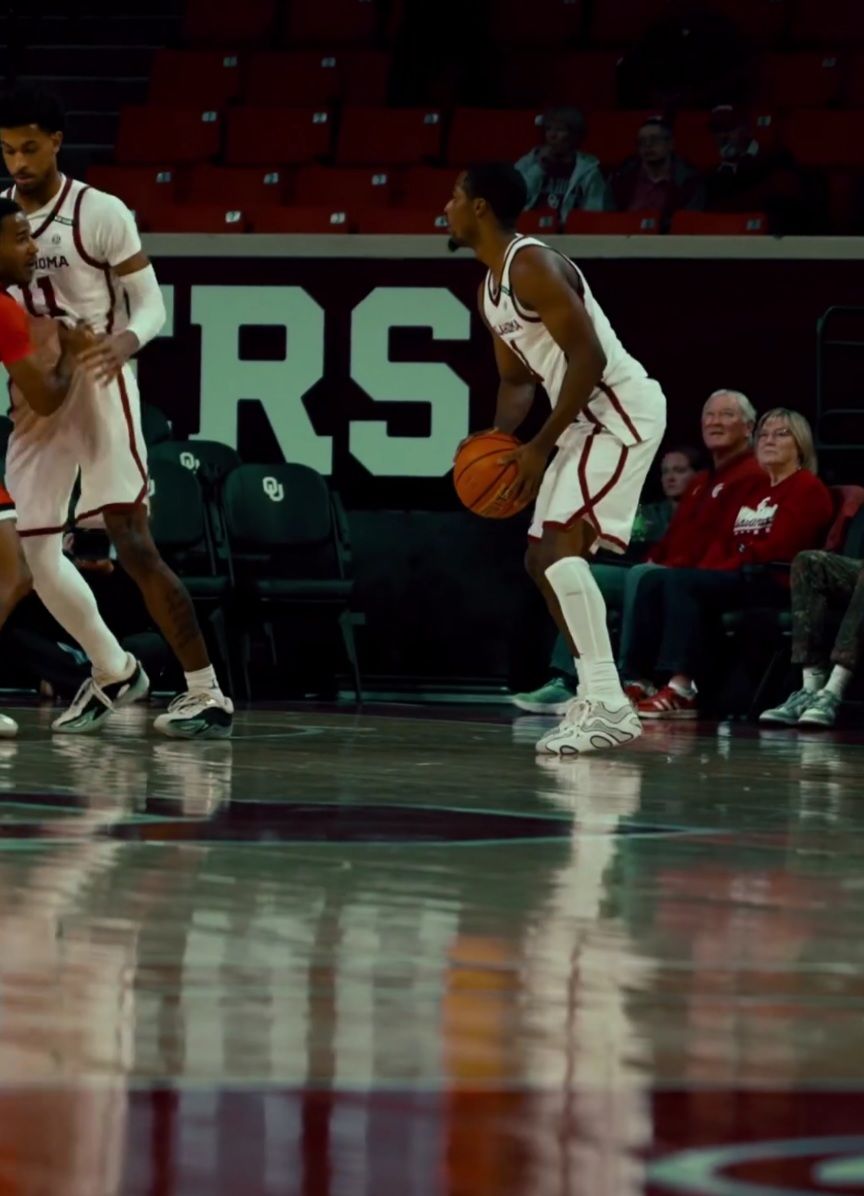
Oklahoma has spent the first three weeks of November trying to put its opening-night disappointment behind it. Four consecutive wins have helped the Sooners move forward from the stunning loss to East Texas A&M, but this afternoon brings a different kind of challenge—and a much better measuring stick.
The Sooners (4–1) travel to Fort Myers, Florida, to face an undefeated Pittsburgh team (6–0) in the opening game of the Skechers Fort Myers Tip-Off Beach Division. It will be Oklahoma’s first matchup against a power-conference opponent since the season began, and the Panthers arrive with a resume that includes wins over Penn State, Butler, and Villanova.
The timing makes this matchup particularly important. Oklahoma is still adjusting to life without starting center Duke Brennan, who is expected to miss an extended period after suffering a broken right ankle. The Sooners survived their first game without him, an 87–78 comeback victory over Campbell, but the rebounding issues were impossible to ignore.
Now comes a Pittsburgh team averaging 86.3 points and 38.5 rebounds per game, led by one of the most productive frontcourt players in the country.
This is the kind of test that can reveal a lot about Oklahoma’s early-season progress. The Sooners have the backcourt talent to compete, but they’ll need to prove they can handle a physical, balanced opponent without the interior presence they’ve relied on to start the season.
The Stakes: A Different Kind of November Test
Today’s game takes place at Suncoast Credit Union Arena in Fort Myers as part of the Beach Division of the Skechers Fort Myers Tip-Off.
Unlike a traditional tournament bracket, the Beach Division features predetermined showcase matchups. Oklahoma faces Pitt on Tuesday before meeting Purdue on Thanksgiving Day. Pittsburgh will take on DePaul in its second game.
For the Sooners, the opportunity is about more than adding another win to the record.
Pitt enters 6–0 after victories over Rider, Buffalo, Penn State, Butler, Villanova, and Central Michigan. The Panthers have already demonstrated they can win against quality power-conference competition, including a 76–64 road victory at Butler and an 81–61 win over Villanova.
Oklahoma, meanwhile, has won four straight since its season-opening loss. The Sooners have shown flashes of offensive balance and improved ball security, but their schedule has not yet provided a true power-conference measuring stick.
A win over an undefeated ACC opponent would give Oklahoma an important early-season result and a confidence boost heading into Thursday’s matchup with Purdue.
The challenge is significant. Pitt is not simply an undefeated team riding a favorable schedule. The Panthers have multiple scoring options, a productive point guard, and a frontcourt that could present Oklahoma with its toughest matchup of the young season.
Inside the Panthers: Jeff Capel Has a Balanced Attack
Pittsburgh is in its ninth season under head coach Jeff Capel, and the early results suggest a team that is comfortable playing on both ends of the floor.
The Panthers average 86.3 points per game while allowing just 66.8. They are shooting 47.7% from the field and 38.1% from three-point range, numbers that reflect an offense capable of scoring inside and out.
Defensively, Pitt creates problems with its activity and pressure. The Panthers average 10.7 steals per game, using their length and aggressiveness to disrupt opposing offenses and create transition opportunities.
That defensive pressure is especially important against an Oklahoma team that has made ball security one of its early strengths. The Sooners average just 8.2 turnovers per game, and their ability to maintain that discipline will be a major factor Tuesday.
Naithan George: The Engine of the Offense
The player who makes everything work for Pitt is senior point guard Naithan George (#2).
George averages 12.7 points and 7.7 assists per game while shooting 39.1% from three-point range. He also averages 2.5 steals, making him one of the most disruptive two-way guards in this matchup.
His assist numbers tell the story of his importance. George is the floor general who determines how Pitt operates, gets the ball to the right players, and keeps the offense moving.
Oklahoma cannot allow him to dictate the game.
The Sooners need to make George work defensively, pressure him without losing their assignments, and avoid giving him opportunities to turn steals into easy transition points. If he is comfortable initiating the offense, Pitt has enough scoring talent around him to make Oklahoma pay.
Jonathan Powell and the Supporting Cast
Jonathan Powell (#0) is Pitt’s primary perimeter shooting threat. The 6-foot-6 wing averages 14.8 points per game and is shooting 43.2% from three-point range, having connected on 19 of 44 attempts.
He is also playing 36 minutes per game, making him a constant presence on the floor and a player Oklahoma must account for throughout the afternoon.
A’lahn Sumler (#3) adds another capable ball-handler and perimeter threat. He averages 9.5 points and shoots 38.1% from beyond the arc. Jalil Bethea (#1) contributes 8.7 points per game and provides another player capable of stretching the floor.
Pitt does not have to rely on one player to carry its offense. George facilitates, Powell provides perimeter scoring, and Sumler and Bethea give Capel additional options.
That balance makes the Panthers difficult to defend. Oklahoma will need to communicate, close out under control, and avoid allowing one defensive breakdown to turn into an open three.
The Paint Problem: Baye Ndongo vs. Oklahoma’s Shorthanded Frontcourt
This is where the matchup becomes especially concerning for Oklahoma.
Baye Ndongo (#11) has been outstanding through the first six games, averaging 20.3 points and 10.8 rebounds per contest. He is shooting 63.9% from the field and pulling down 4.2 offensive rebounds per game.
Those numbers make him more than a productive forward. He is a player who can control possessions, punish defensive mistakes, and create problems for teams that struggle to keep him off the glass.
Ndongo’s combination of size, activity, and finishing ability is a difficult assignment for any frontcourt. For Oklahoma, it arrives at an especially inconvenient time.
The Sooners are without Brennan, their 6-foot-10 starting center who averaged 8.3 points and 5.3 rebounds through his first four games. Brennan’s right ankle injury and expected surgery leave Oklahoma without an experienced interior presence as it enters a stretch of more demanding competition.
The warning signs were already visible against Campbell. Oklahoma was outrebounded 33–22, including a 12–5 disadvantage on the offensive glass. The Sooners managed to win because their guards carried the offensive load, but that kind of rebounding deficit is dangerous against a team with Pitt’s interior production.
Ndongo will have help, too.
Chase Foster (#7) averages 13.0 points and 6.5 rebounds while adding a shot-blocking presence. Akir Souare (#4) contributes 4.7 rebounds per game and gives Pitt another physical frontcourt option. Six-foot-10 center Armani Mighty (#26) provides additional size in the rotation.
Oklahoma will need a collective effort to deal with that group.
Derrion Reid, who averages 13.0 points and 7.0 rebounds, will be particularly important. Khani Rooths has also been part of the frontcourt rotation, averaging 5.8 points and 3.0 rebounds. Sophomore Kai Rogers brings size of his own, but the Sooners cannot expect one player to replace everything Brennan provided.
This has to be a five-man rebounding effort.
Guards B.J. Edwards and Xzayvier Brown will need to help finish defensive possessions. Reid and Rooths must be physical around the basket, while Rogers and the remaining bigs need to make every minute count.
Oklahoma does not necessarily have to shut Ndongo down. But if he is allowed to dominate the offensive glass and consistently finish around the rim, the Sooners will be fighting an uphill battle.
Tale of the Tape
The statistical comparison illustrates why this is such an important early-season test for Oklahoma. Pitt has the advantage in scoring, shooting, and rebounding, while the Sooners have been more efficient at protecting the basketball.
| Category | Oklahoma (4–1) | Pittsburgh (6–0) |
|---|---|---|
| Scoring Offense | 78.0 PPG | 86.3 PPG |
| Scoring Defense | 66.6 PPG | 66.8 PPG |
| Field Goal % | 45.3% | 47.7% |
| 3-Point % | 32.7% | 38.1% |
| Rebounds Per Game | 33.4 | 38.5 |
| Assists Per Game | 16.6 | 15.8 |
| Turnovers Per Game | 8.2 | 10.0 |
| Steals Per Game | 9.4 | 10.7 |
The biggest statistical difference is on the glass. Pitt averages more than five additional rebounds per game, and the Panthers have a frontcourt centerpiece in Ndongo who can make that advantage even more pronounced.
Oklahoma’s clearest statistical advantage is ball security. The Sooners average fewer than nine turnovers per game, compared with 10.0 for Pitt. That difference could become critical against a Panthers defense that thrives on creating turnovers.
Three Keys to an Oklahoma Upset
1. Survive the Glass by Committee
Oklahoma cannot afford to let Ndongo turn missed shots into extra possessions.
The Sooners were outrebounded by 11 against Campbell, and Pitt presents a significantly more dangerous challenge in that department. Reid, Rooths, and Rogers must establish position, make contact, and finish possessions.
But the responsibility cannot stop with the frontcourt. Edwards and Brown need to crash down from the perimeter and help secure defensive rebounds.
Oklahoma does not have to dominate the glass. It simply cannot surrender repeated second-chance opportunities.
2. Protect the Basketball Against Pitt’s Pressure
Pitt averages 10.7 steals per game, and George is a major reason why the Panthers create so many problems for opposing ball-handlers.
Oklahoma’s ability to protect the basketball has been one of its most encouraging developments. The Sooners average just 8.2 turnovers per game, and Brown has been particularly effective managing the offense with a strong assist-to-turnover ratio.
That discipline must travel to Florida.
Live-ball turnovers against Pitt can quickly become transition baskets. Oklahoma needs to value possessions, make sound decisions against pressure, and avoid allowing the Panthers to create easy offense with their defense.
3. Win the Three-Point Math
Without Brennan, Oklahoma may have a more difficult time generating consistent offense around the basket. That places additional importance on the Sooners’ perimeter scoring.
Brown averages 15.2 points per game, Edwards adds 14.6, and Isaacs contributes 13.6 while shooting 42.4% from three-point range. That trio gives Oklahoma enough firepower to challenge Pitt, but the Sooners will need to make shots at a respectable clip.
Pitt’s Powell is shooting 43.2% from beyond the arc, and the Panthers have several other players capable of making Oklahoma pay for defensive lapses.
The Sooners need Isaacs to continue providing perimeter production, Brown to control the offense, and Edwards to attack when opportunities present themselves. If Oklahoma can stretch Pitt’s defense and force the Panthers to defend the entire floor, it can create more room for Reid and the frontcourt.
The Bottom Line
This is the first real opportunity for Oklahoma to show what it can be against a power-conference opponent, and the timing makes it even more interesting.
The Sooners are playing well, their backcourt has developed into a reliable offensive engine, and their ball security gives them a chance against teams that create pressure. But the absence of Brennan leaves a significant question mark in the middle, and Pittsburgh is built to test that weakness.
Ndongo is the matchup to watch. If Oklahoma can keep him from controlling the paint and limit Pitt’s second-chance opportunities, the Sooners have enough perimeter talent to make this a competitive game.
If the Panthers dominate the glass while George controls the tempo and Powell knocks down open shots, Oklahoma could find itself chasing the game.
The Sooners don’t need a perfect performance. They need a disciplined one, particularly on the defensive glass.
A win would be an important early statement for Moser’s team. And with Purdue waiting on Thanksgiving Day, Oklahoma has an opportunity to make this trip to Florida a meaningful step forward in its season.
Game Information
- Matchup: Oklahoma Sooners (4–1) vs. Pittsburgh Panthers (6–0)
- Date: Tuesday, Nov. 24
- Tipoff: 12:30 p.m. CT
- Location: Suncoast Credit Union Arena — Fort Myers, Florida
- TV: FS2
- Next Game: Oklahoma vs. Purdue, Thursday, Nov. 26, at 11 a.m. CT on FOX