Thanksgiving morning wasn’t supposed to look like this for either Oklahoma or Purdue.
Porter Moser’s Sooners arrived in Fort Myers riding a four-game winning streak, hoping to use a matchup with Pittsburgh as an opportunity to make an early-season statement. Instead, Oklahoma struggled through a miserable first half, shot just 27.6% before intermission, and ultimately fell 79–68 to an undefeated Panthers team.
Matt Painter’s Boilermakers experienced their own disappointment. Purdue entered the Skechers Fort Myers Tip-Off with a 4–2 record and a reputation for being one of the more consistent programs in the country. But DePaul handed the Boilermakers a 65–56 defeat Tuesday, ending a four-game winning streak and snapping Purdue’s 12-game run in multi-team events.
Now the two programs meet Thursday morning with one more opportunity to leave Florida with a positive result.
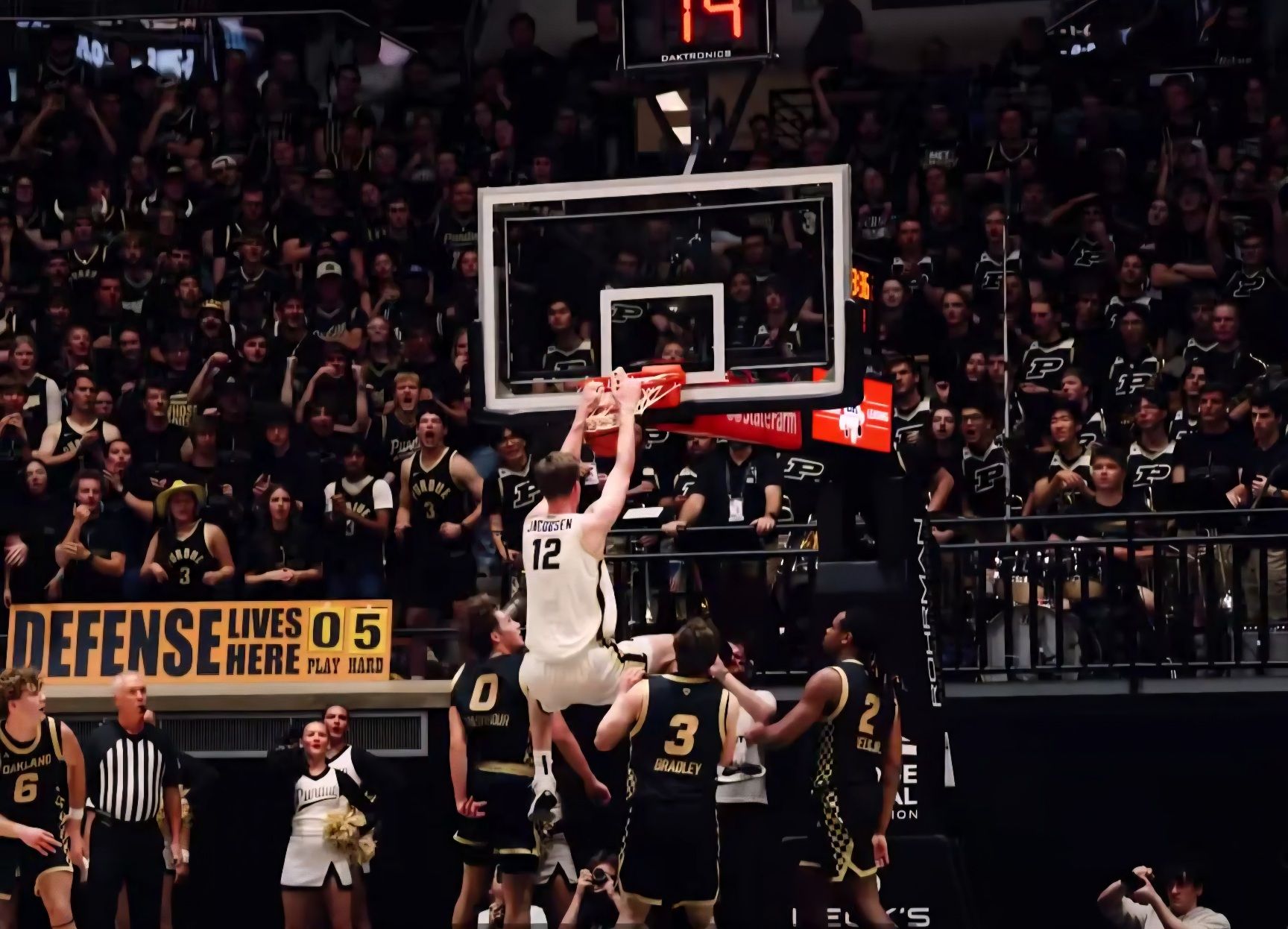
Oklahoma (4–2) faces Purdue (4–3) at Suncoast Credit Union Arena, with tipoff scheduled for 11 a.m. CT on FOX. The Sooners will have to contend with one of the tallest players in college basketball in 7-foot-4 center Daniel Jacobsen, but Purdue’s recent struggles also provide a blueprint for Oklahoma’s veteran guards to attack.
For Moser, the challenge is finding a way to compete physically without Duke Brennan while getting more consistent production from an offense that went cold against Pitt.
A New-Look Purdue Team Still Searching for Its Identity
Purdue basketball has a standard that few programs can match, and Painter has spent more than two decades building it.
Now in his 22nd season in West Lafayette, Painter has won consistently by developing disciplined, physical teams that execute offensively and make opponents work for everything. This year’s group has talent, but it is still establishing its identity following significant roster turnover.
The Boilermakers enter Thursday averaging 79.1 points per game while allowing 67.7. They shoot 46.9% from the field, 33.8% from three-point range, and 76.6% at the free-throw line.
One of Purdue’s biggest strengths has been its work on the glass. The Boilermakers average 37.9 rebounds per game and own a plus-10.2 rebounding margin. That is a particularly important number against an Oklahoma team that is still trying to figure out how to replace Brennan’s interior presence.
But Purdue’s loss to DePaul exposed some significant weaknesses.
The Boilermakers shot just 35.2% from the field and connected on only four of 28 attempts from three-point range. They also committed 12 turnovers, which DePaul converted into 17 points.
Purdue went through an extended stretch without a field goal late in the game, allowing DePaul to take control and finish off the upset. It was an offensive performance that Painter will want his team to put behind it quickly.
The Boilermakers have enough talent to respond, but Oklahoma has a chance to make things uncomfortable if it can pressure the ball and force Purdue’s less-established offensive pieces to make decisions.
The Centerpiece Threat: Daniel Jacobsen
Daniel Jacobsen | 7-foot-4, 250 pounds | Center
The first name Oklahoma fans need to know is Daniel Jacobsen.
At 7-foot-4, the junior center presents an obvious matchup problem. His size alone changes the geometry of the floor, and his production through seven games has made him the centerpiece of Purdue’s offense.
Jacobsen is averaging 16.7 points, 7.9 rebounds, and 1.4 blocks per game while shooting 69.0% from the field and 81.8% at the free-throw line.
Before Purdue’s matchup with DePaul, those averages were even more impressive: 19.6 points and 8.8 rebounds per game.
However, DePaul provided a glimpse of how to make Jacobsen less effective.
The Blue Demons held him to just three points and two rebounds in 19 minutes. He went scoreless from the field, and foul trouble limited his ability to establish himself offensively. Jacobsen’s four fouls were a major factor in keeping Purdue’s most imposing interior presence from taking over the game.
That is the blueprint Oklahoma needs to study.
The Sooners cannot simply allow Jacobsen to establish deep position, receive the ball, and finish over the top. They need to make his catches difficult, front the post when appropriate, and bring timely help from the perimeter without surrendering open three-point opportunities.
Most importantly, they need to make him defend.
Jacobsen’s size makes him a difficult player to score over, but Oklahoma’s guards have the ability to attack him in ball-screen actions and force him to move laterally. If Brown and Edwards can consistently get downhill, they can put Jacobsen in situations where he must defend in space and potentially pick up fouls.
That is especially important because Oklahoma doesn’t have the luxury of matching Purdue’s size with Brennan unavailable.
Oklahoma’s Frontcourt Must Respond
Brennan’s absence was already a major storyline against Pittsburgh, and it becomes even more significant against a Purdue team built around its interior presence.
The Sooners were outrebounded 39–35 by Pitt, and they have yet to demonstrate that they can consistently control the glass without their starting center.
Derrion Reid will be central to the effort. He is averaging 11.2 points and 6.2 rebounds, and Oklahoma needs him to be physical, finish possessions, and avoid allowing Jacobsen to establish a comfortable position near the basket.
Khani Rooths also showed some promise against Pitt, scoring 10 points on 5-of-7 shooting in 27 minutes. His ability to contribute around the basket gives Moser another option, but the Sooners need more than scoring from their frontcourt rotation.
Kai Rogers and the rest of the available bigs must provide physical minutes, while the guards need to help with defensive rebounding.
This cannot be a matchup Oklahoma expects one player to solve.
The Sooners will have to gang-rebound, use their bodies, and make Jacobsen work for every touch. They may not be able to eliminate his impact, but they can make sure he doesn’t dictate the game.
The Backcourt Chess Match: Oklahoma’s Experience vs. Purdue’s Perimeter
If Oklahoma has an advantage in this matchup, it may be in the backcourt.
The Sooners have a veteran trio of guards who have already shown they can carry the offensive load. Purdue has capable perimeter players of its own, but its backcourt has experienced some inconsistency, particularly when it comes to handling pressure and containing dribble penetration.
That creates an opportunity for Brown, Edwards, and Pop Isaacs.
C.J. Cox: The Defensive Tone-Setter
C.J. Cox | 6-foot-3, 205 pounds | 10.4 PPG, 5.0 RPG, 2.3 APG
Cox is one of Purdue’s most important perimeter players. The junior is the program’s only returning full-time starter and brings experience, physicality, and defensive intensity to the backcourt.
He is shooting 52.8% from the field, with much of his success coming inside the arc. Cox has been considerably less effective from three-point range, connecting on just 20% of his attempts through seven games.
Against DePaul, he finished with eight points, five rebounds, and two assists.
Cox’s primary value may be on the defensive end, where he is often tasked with handling the opponent’s most dangerous perimeter player. Oklahoma should expect him to spend considerable time defending Brown and Edwards.
The Sooners need to make him work. Attacking him in ball screens, forcing switches, and making him defend multiple actions can wear down a player who is important to Purdue on both ends of the floor.
Gicarri Harris: Purdue’s Perimeter Spark
Gicarri Harris | 6-foot-3, 215 pounds | 12.3 PPG, 3.9 RPG, 2.3 APG
Harris is another important piece of Purdue’s perimeter attack.
The junior is averaging 12.3 points per game and shooting 48.3% from three-point range. His ability to knock down shots makes him a dangerous complement to Jacobsen’s interior scoring.
Harris was one of Purdue’s few bright spots against DePaul, finishing with 11 points and six rebounds. He also provides physicality and defensive versatility, making him an important part of Painter’s rotation.
Oklahoma cannot afford to lose him in transition or allow him to get comfortable spotting up beyond the arc.
Luke Ertel: The Bench X-Factor
Freshman Luke Ertel has quickly become an important part of Purdue’s rotation.
He is averaging 7.1 points per game and shooting approximately 47% from three-point range. Ertel has led Purdue’s bench in scoring in consecutive games, including a 12-point performance against DePaul.
He provides another perimeter option capable of changing the game with a few made shots.
Oklahoma’s second unit will need to recognize where Ertel is on the floor and avoid giving him clean catch-and-shoot opportunities. His youth also creates an opportunity to make him uncomfortable with defensive pressure and physical play.
Why Oklahoma’s Veteran Guards Could Decide This Game
The matchup between Purdue’s perimeter defenders and Oklahoma’s veteran guards may ultimately determine how much pressure the Sooners can put on the Boilermakers’ defense.
Xzayvier Brown leads Oklahoma with 16.8 points and 6.0 assists per game. He has become the team’s primary offensive organizer, and his ability to get into the lane while creating opportunities for teammates is one of the Sooners’ most important strengths.
B.J. Edwards provides another attacking option. He averages 13.8 points and four rebounds per game while shooting 48% from three-point range.
Pop Isaacs gives Oklahoma a third perimeter threat, averaging 12.3 points while shooting 40% from beyond the arc.
That trio gives Moser multiple ways to attack Purdue.
The most important element may be Brown’s ability to penetrate. Purdue has shown vulnerabilities in dribble containment, and Brown is particularly effective when he can get a step on his defender and force the defense to collapse.
That could create two opportunities for Oklahoma.
First, Brown can attack the basket and draw fouls. Second, when Purdue sends help toward the lane, Isaacs and Edwards can make the defense pay from the perimeter.
The Sooners also need to take care of the basketball. Oklahoma averages just 8.5 turnovers per game, ranking among the nation’s best in that category and second in the SEC. Brown’s ability to manage the offense without giving away possessions is a major reason for that success.
Purdue’s loss to DePaul showed what can happen when opponents turn turnovers into easy points. Oklahoma needs to apply pressure without sacrificing the discipline that has helped it become a more reliable offensive team.
Three Things to Watch
1. Whistle Watch on the 7-Footer
Jacobsen’s foul trouble against DePaul was a major factor in Purdue’s loss. Oklahoma needs to attack him early, force him to defend in space, and make him move his feet. If Brown and Edwards can draw fouls, they could take Purdue’s most important interior player out of the game for extended stretches.
2. The Three-Point Math
Purdue averages 9.6 made three-pointers per game and attempts more than 28 per contest. Oklahoma cannot afford to let the Boilermakers get comfortable from the perimeter.
At the same time, the Sooners need better shooting than they showed against Pitt. Brown, Edwards, and Isaacs will have to provide consistent perimeter production, particularly with Brennan unavailable.
3. Turnovers and Transition Opportunities
Purdue committed 12 turnovers against DePaul, leading to 17 points for the Blue Demons. Oklahoma has shown an ability to pressure opponents and create mistakes, and it needs to use that strength without becoming careless itself.
The Sooners don’t need to turn every possession into a gamble. They need to make Purdue uncomfortable, capitalize on mistakes, and avoid giving the Boilermakers easy points in transition.
Tale of the Tape
| Category | Oklahoma (4–2) | Purdue (4–3) |
|---|---|---|
| Scoring Offense | 78.0 PPG | 79.1 PPG |
| Scoring Defense | 68.8 PPG | 67.7 PPG |
| Field Goal % | 45.3% | 46.9% |
| 3-Point % | 32.7% | 33.8% |
| Rebounds Per Game | 33.4 | 37.9 |
| Turnovers Per Game | 8.5 | 10.0 |
Purdue holds the advantage in size and rebounding, while Oklahoma has been more careful with the basketball. The Sooners’ ability to turn that ball security into quality offensive possessions could be the difference.
The Bottom Line
Oklahoma and Purdue enter Thanksgiving morning looking for a reset.
The Sooners need to show that the disappointing first half against Pittsburgh was an outlier rather than a sign of a larger offensive problem. They also need to prove they can compete physically without Brennan, especially against a team with a 7-foot-4 center who has been one of the most productive players in the country.
Purdue, meanwhile, needs a better offensive performance after its shooting collapse against DePaul. Jacobsen will be looking to bounce back, and the Boilermakers have enough perimeter talent to make Oklahoma pay if the Sooners overcommit to stopping him.
The matchup offers Oklahoma a clear path to an upset: attack Jacobsen in space, make him defend without fouling, pressure Purdue’s ball-handlers, and get production from the veteran backcourt.
Brown, Edwards, and Isaacs have the experience and ability to make that happen. But the Sooners must also find a way to keep Purdue off the offensive glass and avoid letting Jacobsen establish himself in the paint.
This is not simply another November game. It is an opportunity for Oklahoma to respond after its first loss away from Norman, show some growth in the frontcourt, and leave Fort Myers with a meaningful win against a respected Big Ten program.
Game Information
- Matchup: Oklahoma Sooners (4–2) vs. Purdue Boilermakers (4–3)
- Date: Thursday, Nov. 26 — Thanksgiving Day
- Tipoff: 11 a.m. CT
- Location: Suncoast Credit Union Arena — Fort Myers, Florida
- TV: FOX
- All-Time Series: Oklahoma leads 6–4
- Last Meeting: Purdue defeated Oklahoma 74–71 on Nov. 21, 2006