Oklahoma had a problem, and it was getting worse by the minute.
Down 20–0 at Missouri, with two John Mateer interceptions already on the board and Austin Simmons repeatedly finding ways to attack the Sooners’ defense, the afternoon was threatening to become a long road trip home. The Tigers had seized control of the game, the crowd at Faurot Field had every reason to believe a blowout was developing, and Oklahoma’s offense had yet to establish anything resembling a consistent identity.
This was the moment when an offensive coordinator could start chasing points.
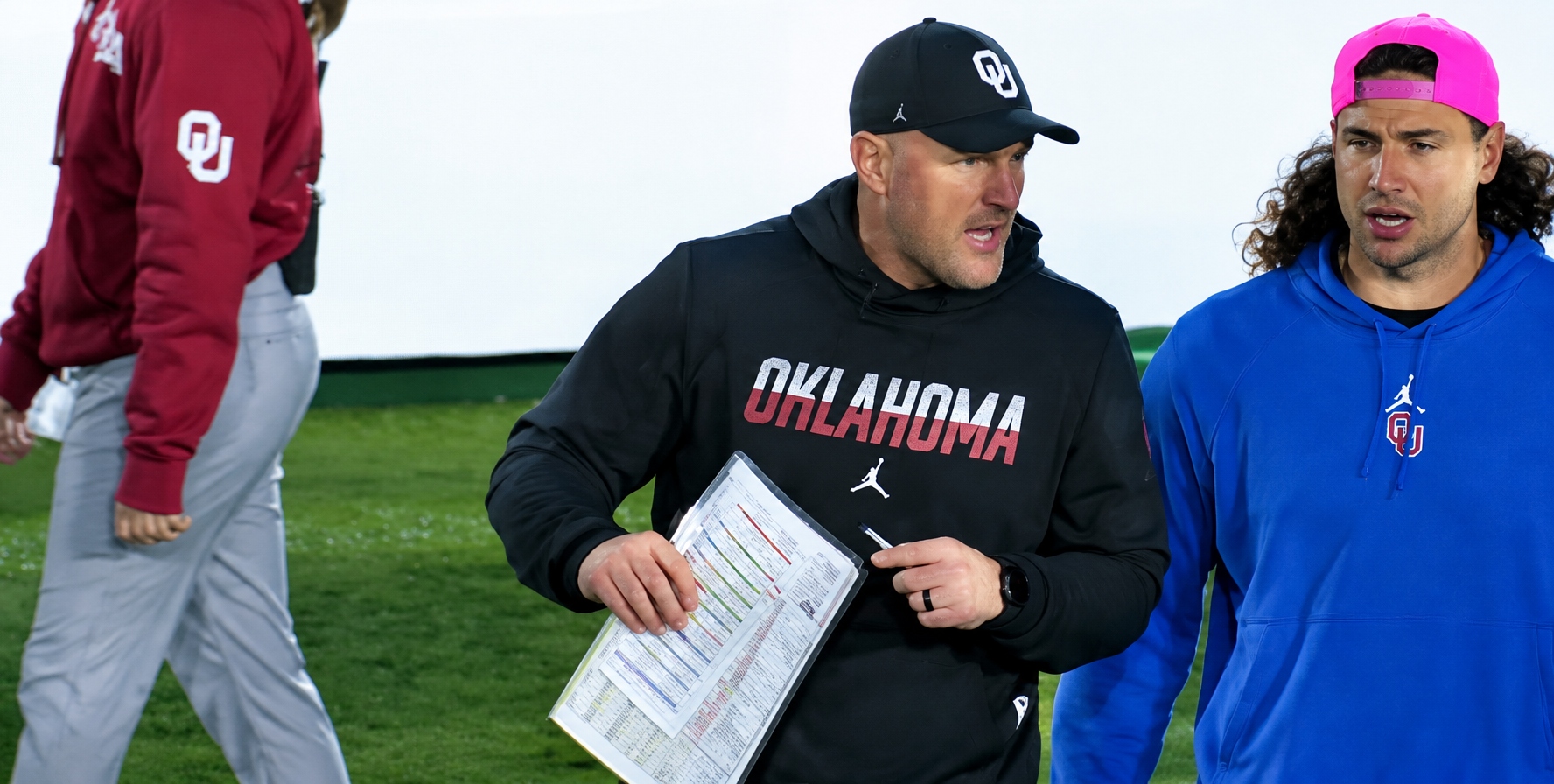
Jason Witten chose a different approach.
Rather than turn the game into a desperate search for explosive plays, Oklahoma began leaning into a more physical, deliberate offense. The tight ends became increasingly important. Mateer’s legs became a central part of the attack. The Sooners made Missouri defend the entire field, sustained possessions, and gradually took control of the game’s most important resource: time.
By the final whistle, Oklahoma had erased a 20-point deficit and escaped Columbia with a 34–31 victory. The Sooners finished with 38:02 of possession, compared with Missouri’s 21:58.
That number tells a significant part of the story.
Witten didn’t just help Oklahoma score enough points to survive. He changed the rhythm of the game, gave his offense a more sustainable path forward, and kept a dangerous Missouri passing attack watching from the sideline.
The comeback was spectacular. The adjustment was the real story.
The Disaster Start: When the Original Plan Wasn’t Working
Missouri didn’t need much time to expose Oklahoma’s early problems.
The Tigers attacked vertically, and Simmons quickly established himself as a difficult matchup. His connection with Naeshaun Montgomery produced two first-quarter touchdowns, including a devastating 92-yard strike that put the Sooners in an immediate hole.
Meanwhile, Mateer was having the kind of start that can derail an entire afternoon. Santana Banner intercepted him twice, and Oklahoma struggled to establish the offensive rhythm necessary to keep pace.
At 20–0, the Sooners had every reason to feel pressure.
The temptation in that situation is obvious. Start taking more chances. Push the ball downfield. Look for a quick score to create momentum. When you’re trailing by three possessions on the road, patience can feel like surrender.
But Oklahoma didn’t need to win the game in one possession. It needed to stop making the game easier for Missouri.
The early interceptions had already given the Tigers opportunities. Continuing to force the issue would only increase the chances of another mistake.
Witten’s response was to find a way to get the offense back on schedule. Oklahoma needed manageable situations, reliable targets, and a running game capable of making Missouri defend something other than Mateer’s arm.
The first evidence of that shift came just before halftime.
The Livingstone Drive: Six Points That Changed the Conversation
With 24 seconds remaining in the first half, Mateer found Parker Livingstone for a six-yard touchdown.
The score made it 20–7, but its significance extended beyond the scoreboard.
Oklahoma had put together an 11-play, 75-yard touchdown drive. After spending much of the first half reacting to Missouri’s pressure and dealing with the consequences of two interceptions, the Sooners finally had a possession that looked like the offense Witten wanted to build.
It was sustained. It was controlled. And it ended with points.
Livingstone’s touchdown also gave Mateer something important heading into halftime: a successful finish to a scoring drive after a difficult opening stretch.
That matters for a quarterback who has just thrown two interceptions. The next decision can become more difficult when every mistake feels magnified. A coordinator can either keep asking him to make increasingly aggressive throws or give him opportunities to regain his footing.
The touchdown didn’t erase the mistakes, but it offered a reset.
Oklahoma entered the locker room down 13 instead of 20. Missouri still had the lead, but the Sooners had finally established a little offensive momentum.
The second half would show just how much that possession mattered.
The Personnel Adjustment: Rocky Beers Becomes the Difference-Maker
If there was one Oklahoma offensive player who embodied the change in approach, it was Rocky Beers.
The tight end finished with a career-high 123 yards on eight catches, easily the biggest game of his career. More importantly, he gave Mateer a reliable safety valve, letting Oklahoma move the chains without forcing dangerous throws into tight windows.
Beers wasn’t simply a safety valve. He became a major component of the passing attack.
That distinction matters.
A tight end who can consistently produce meaningful gains changes the way a defense has to approach an offense. Linebackers and safeties have to account for him in the middle of the field. Defensive attention can’t be devoted exclusively to the outside receivers. And when the offense can establish a credible rushing threat, those intermediate opportunities become even more valuable.
Beers gave Oklahoma that presence.
His eight catches helped turn the passing game into something more manageable. Instead of relying entirely on perimeter throws and explosive plays, the Sooners could work through a player capable of making the difficult middle-of-the-field catches and keeping possessions alive.
The production was particularly important because Oklahoma needed more than a few quick scores. It needed to string together possessions.
Beers delivered.
His 123 receiving yards were a career high, but, more importantly, his performance gave Witten a reliable piece around which to build the second-half attack.
The lesson wasn’t complicated: Oklahoma had a tight end capable of changing the game, and Witten made sure he was involved.

Take A Deeper Dive Into Our Oklahoma Football Coverage On Our Facebook Subscription Hub
Notes & Quotes: Venables Calls Sooners ‘Hard to Kill Again’ After Historic Comeback at Missouri
The Next Blueprint: Taking Witten’s Balanced Attack on the Road to Faurot Field
Key Notes & Storylines: Oklahoma Looks To Extend Winning Streak Against Missouri In Regular-Season Finale
Help support Heartland Sports by Unlocking Exclusive, data-driven film room breakdowns, recruiting Update, high-leverage personnel matrix updates you won’t find anywhere else, and More by subscribing to our premium Oklahoma Sooners football coverage today.
Weaponizing Mateer’s Legs: A Different Way to Win
The other major adjustment involved the quarterback.
Mateer finished the afternoon with 19 carries for 59 yards and two touchdowns. Those numbers don’t fully capture how important his rushing production became after halftime.
He had managed just 18 rushing yards in the first half. After the break, he added 41.
Witten increasingly incorporated Mateer’s running ability into the offensive plan, giving Missouri another responsibility to account for. The Tigers couldn’t focus exclusively on the running backs or sit back and anticipate another passing attempt. Mateer himself had become a threat to keep the ball and move the chains.
That changed the math for the defense.
His 15-yard touchdown run gave Oklahoma a 21–20 lead with 8:26 remaining in the third quarter. Later, his one-yard touchdown pushed the advantage to 31–23 in the fourth.
Those weren’t incidental contributions from a quarterback scrambling to escape pressure. They were decisive scoring plays in a game Oklahoma had once trailed by 20.
The adjustment also gave Mateer a different way to impact the game after his early interceptions. Rather than asking him to solve every problem through the passing game, Witten allowed him to attack downhill and use his athleticism.
There is an important difference between a quarterback running because a play has broken down and a quarterback being incorporated into the rushing plan. The latter forces a defense to prepare for another legitimate dimension of the offense.
Against Missouri, that dimension became a major part of Oklahoma’s comeback.
Mateer still finished with 258 passing yards and a touchdown. He didn’t need to abandon the passing game. He needed a more balanced attack that didn’t place the entire burden of the offense on his arm.
Witten found that balance.
The 38-Minute Blueprint: Winning the Clock and Protecting the Defense
The most revealing number from Saturday’s game wasn’t Mateer’s passing total or Beers’ receiving yards.
It was 38:02.
Oklahoma possessed the football for 38 minutes and two seconds. Missouri had it for just 21:58.
That’s an enormous disparity, particularly against a team that had demonstrated its ability to produce explosive passing plays.
Simmons finished with 385 passing yards and three touchdowns. The 92-yard connection with Montgomery showed just how quickly Missouri could flip the field. The Tigers averaged 9.1 yards per play, compared with Oklahoma’s 5.5.
Missouri was more explosive on a per-play basis. Oklahoma was more effective at controlling the game.
The Sooners finished with 415 total yards on 76 plays. Missouri produced 402 yards on only 44 plays. Oklahoma ran 32 more offensive plays, and that difference was largely reflected in the possession clock.
The sustained drives were critical.
Oklahoma produced three possessions of at least 10 plays:
- An 11-play, 75-yard touchdown drive just before halftime.
- A 10-play, 61-yard possession that ended on downs.
- A 13-play, 62-yard drive that set up Sandell’s go-ahead field goal.
That final possession was particularly important. With the score tied 31–31, Oklahoma needed to move the ball into scoring position without giving Missouri another opportunity to take the lead. The Sooners methodically covered 62 yards in 13 plays, setting up Tate Sandell’s 30-yard field goal with 1:49 remaining.
It was the kind of possession that reflects confidence in an offensive identity.
Oklahoma didn’t need a spectacular play. It needed first downs, execution, and enough patience to put its kicker in position to win the game.
There was another benefit to the approach: Simmons couldn’t hurt Oklahoma while he was standing on the sideline.
The Tigers had shown they could create explosive plays, but their opportunities became increasingly limited as Oklahoma controlled possession. The offense gave Brent Venables’ defense time to regroup after a difficult first half and put the game in the hands of a unit that eventually delivered.
Missouri managed just 17 rushing yards on 17 carries. Oklahoma’s defense also came up with the critical takeaways that helped fuel the comeback.
The offensive approach and defensive turnaround weren’t separate stories. They worked together.
Oklahoma’s offense controlled the clock. The defense made the stops. And when Missouri finally had one last opportunity, the Sooners finished the job.
The Defensive Finish: The Other Half of the Adjustment
Witten’s offensive adjustments deserve the attention, but Oklahoma’s comeback would not have happened without a defense that eventually found answers.
The early portion of the game belonged to Simmons and the Missouri passing attack. The final portion belonged to a defense that made the necessary plays when the margin for error disappeared.
Owen Heinecke and Michael Boganowski each intercepted Simmons during the second half. Boganowski’s interception was particularly damaging, as he returned it 31 yards to the Missouri 3-yard line and helped create a short-field opportunity.
Then came the final possession.
David Stone sacked Simmons on the opening play, immediately putting Missouri behind schedule. Two plays later, Omarion Robertson forced a fumble from Shaun Terry II and recovered it at the Missouri 27-yard line.
Game over.
The defense had endured the 92-yard touchdown and a difficult first half. But Oklahoma ultimately held Missouri to a season-low 17 rushing yards and limited the Tigers to just two conversions on nine third-down attempts.
The offense’s ability to control possession helped create the opportunity. The defense made sure it wasn’t wasted.
The Adjustment Index: What Witten Actually Proved
One comeback doesn’t automatically settle the question of who should be Oklahoma’s permanent offensive coordinator. The Sooners still have work to do, and the first-half problems in Columbia shouldn’t be ignored.
Two interceptions and a 20-point deficit are not an ideal offensive blueprint.
But Witten’s response deserves real consideration.
He didn’t panic. Oklahoma could have abandoned the running game and turned the afternoon into a desperate passing contest. Instead, the Sooners found a way to establish a more controlled attack.
He identified his dependable pieces. Beers became a major part of the passing game, while Mateer’s rushing ability gave Missouri another problem to solve. The offense found production without relying on one player or one type of play.
He understood the importance of possession. Oklahoma didn’t simply need to score. It needed to limit Missouri’s opportunities. The 38:02 time-of-possession advantage was the product of an offense that could sustain drives and keep the opposing quarterback off the field.
Most importantly, Witten demonstrated that he could adjust when his original plan wasn’t producing results.
That’s a significant part of the job.
Oklahoma finished November undefeated at 4–0, closed the regular season at 8–4, and won four consecutive games. The offensive identity under Witten has become increasingly recognizable: establish the run, involve the tight ends, use Mateer’s mobility, and make the defense account for every part of the field.
Saturday’s comeback was the strongest evidence yet that the approach can work against quality SEC competition.
The Sooners were in serious trouble at Faurot Field. Their quarterback had thrown two interceptions, Missouri had built a 20-point lead, and Simmons was making explosive plays look routine.
Witten didn’t try to win the game all at once.
He slowed it down, leaned on his personnel, trusted his quarterback’s legs, and gave his defense a chance to finish the job.
Oklahoma left Columbia with a victory that will be remembered for the 20-point comeback. But the more important takeaway may be what happened between the first-half disaster and the final whistle.
The Sooners established their offensive identity when they needed one most.
And Jason Witten made sure they stayed with it long enough to win.