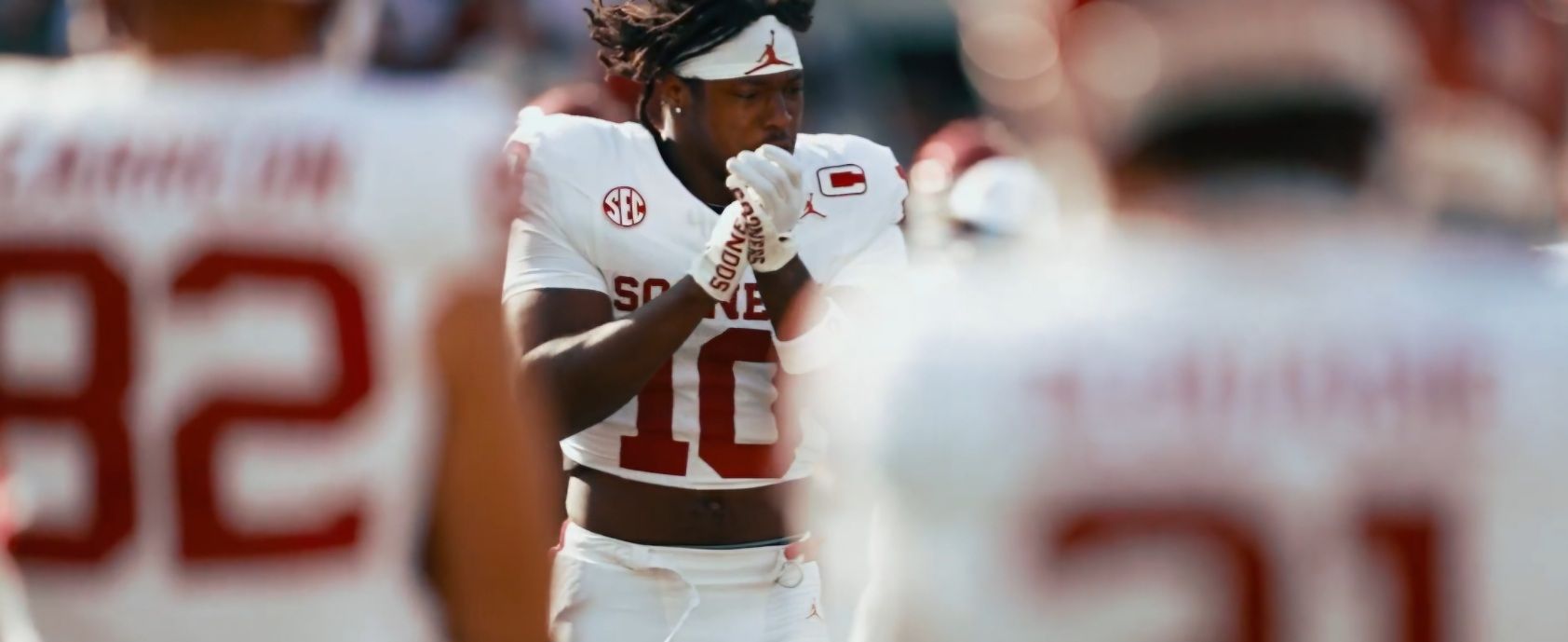
The Oklahoma X-Factors Who Could Decide the Rematch
In rematches at the highest level of college football, games aren’t decided by surprise. They’re decided by stress.
By the time Oklahoma and Alabama meet again on Friday night, there will be no mystery about formations, tendencies, or personnel. Both staffs will arrive with thick binders, trimmed tendencies, and answers to most of what they saw the first time.
What they won’t have answers for — at least not guaranteed ones — are people.
Because when two teams know each other this well, the margins shrink. And in those margins, individual players become leverage points. Not stars in the abstract. Not stat-line heroes. But specific problems that force opponents to choose between bad options.
Oklahoma already proved it could beat Alabama once — in Tuscaloosa, no less. The rematch won’t hinge on reinvention. It will hinge on whether the same pressure points still hold.
These are the three Sooners Alabama still hasn’t solved.
Offensive X-Factor: John Mateer — The Quarterback Who Breaks Structure
If Alabama’s defensive adjustments are built around discipline — fewer gambles, tighter windows, cleaner rush lanes — then Oklahoma quarterback John Mateer becomes even more central to the outcome.
Mateer didn’t light up the stat sheet in November. Oklahoma was outgained by nearly 200 yards. There were no explosive offensive avalanches. What Mateer did instead was far more valuable: he converted chaos into control.
Against Alabama, Mateer accounted for both of Oklahoma’s offensive touchdowns and repeatedly extended drives at moments when Alabama’s defense had done everything right — except finish the play.
Why Mateer Matters Against Alabama
Alabama will almost certainly defend differently this time. Expect:
- More conservative coverage shells
- Fewer all-out blitzes
- An emphasis on forcing Oklahoma to execute patiently
That plays directly into Mateer’s strengths.
Mateer is at his best when defenses win the chalkboard battle but lose the moment. He doesn’t force throws into danger. He doesn’t panic when first reads disappear. Instead, he:
- Steps up when rush lanes collapse
- Converts third-and-medium with timing throws
- Uses his legs just enough to punish over-discipline
In November, Alabama’s defense held Oklahoma scoreless over the Sooners’ final four offensive possessions — and still lost. That tells you how damaging Mateer had already been in high-leverage moments earlier in the game.
The Moment That Could Swing the Game
Early second quarter. Third-and-six. Alabama has the coverage right. The route combination is smothered.
Mateer doesn’t force it. He slides, resets, and finds a checkdown that turns into eight yards instead of a punt. The drive continues. Field position flips. Alabama’s sideline tightens.
In a rematch like this, extensions matter more than explosions. Mateer is built for that reality.
Defensive X-Factor: Kip Lewis — The Rhythm Killer
If Mateer represents controlled chaos on offense, Kip Lewis represents suffocation on defense.
Lewis doesn’t hunt highlights. He hunts timing.
In the first meeting, Lewis finished with multiple tackles for loss and sacks that arrived precisely when Alabama needed comfort — not panic. His pressure didn’t always result in immediate turnovers, but it did something just as damaging: it compressed time.
Why Lewis Still Matters
Alabama’s offensive adjustments will likely focus on:
- Faster tempo
- Quicker reads
- Safer throws
All of that depends on one thing: time in the pocket.
Lewis disrupts that without overcommitting. He diagnoses quickly, closes decisively, and forces quarterbacks to move before they want to. Against Alabama, that mattered because when the Tide stayed on schedule, they moved the ball. When they didn’t, they stalled — often suddenly.
Lewis is especially dangerous because he doesn’t announce himself. He arrives on second effort. On delayed pressure. On plays where the quarterback thinks the threat has passed.
The Moment That Could Turn Momentum
Mid-third quarter. Alabama trying to regain control after a stalled drive. Third-and-long near midfield.
Lewis doesn’t need a sack. He just needs to force the throw a half-second early. The ball sails. The drive ends. Oklahoma breathes.
In a rematch defined by adjustment, the defender who controls rhythm controls belief. Lewis does that quietly — and relentlessly.
Invisible X-Factor: Eli Bowen — The Field-Position Thief
The defining play of the November game didn’t come from Oklahoma’s offense or a blitz call.
It came from Eli Bowen.
Bowen’s 87-yard interception return for a touchdown didn’t just change the scoreboard — it changed the emotional geometry of the game. Alabama was driving. Momentum was real. One throw later, Oklahoma was celebrating, and Alabama was suddenly chasing.
That wasn’t luck. It was patience meeting preparation.
Why Eli Bowen Still Matters
Bowen’s value isn’t confined to one highlight. It lives in restraint.
Against Alabama’s layered route concepts — especially intermediate crossers and timing throws — Bowen showed advanced understanding of spacing and leverage. He didn’t gamble. He waited. And when the window appeared, he closed instantly.
Here’s the irony: Alabama’s likely adjustments — safer throws, quicker decisions — can actually increase Bowen’s influence. Conservative passing still requires precision. Timing still matters. And defensive backs who understand route depth punish hesitation.
Bowen doesn’t need another touchdown to matter. His presence:
- Shrinks throwing lanes
- Forces quarterbacks off first reads
- Alters play-calling tendencies
That’s invisible pressure — the kind that never shows up in box scores but dictates entire possessions.
The Quiet Moment That Could Decide the Rematch
Late second quarter. Alabama debating whether to press or protect before halftime. Third-and-long. Bowen’s coverage discourages the throw. The ball goes elsewhere — incomplete.
Alabama punts. Oklahoma survives the half without damage.
No celebration. No replay loop. Just one more possession erased.
Those are playoff plays.
Why These X-Factors Travel
These aren’t emotional advantages. They’re repeatable ones.
- Mateer’s poise doesn’t depend on opponent mistakes
- Lewis’s pressure doesn’t rely on risky calls
- Bowen’s instincts don’t fade with familiarity
Oklahoma doesn’t need career nights from any of them. It needs consistency — the same pressure applied over and over until something breaks.
That’s how rematches are won.
Pressure Finds the Unsolved
Alabama will adjust. They always do. They’ll be sharper, cleaner, and more deliberate than they were in November.
But adjustments don’t eliminate pressure — they redistribute it.
Oklahoma already knows where Alabama feels it.
Until the Crimson Tide prove otherwise, these three Sooners remain unanswered questions — not because they’re flashy, but because they stress the exact areas rematches expose most.
Discipline. Timing. Belief.
And in games like this, belief usually belongs to the team that already knows the answer works.
Follow us on Instagram & Facebook