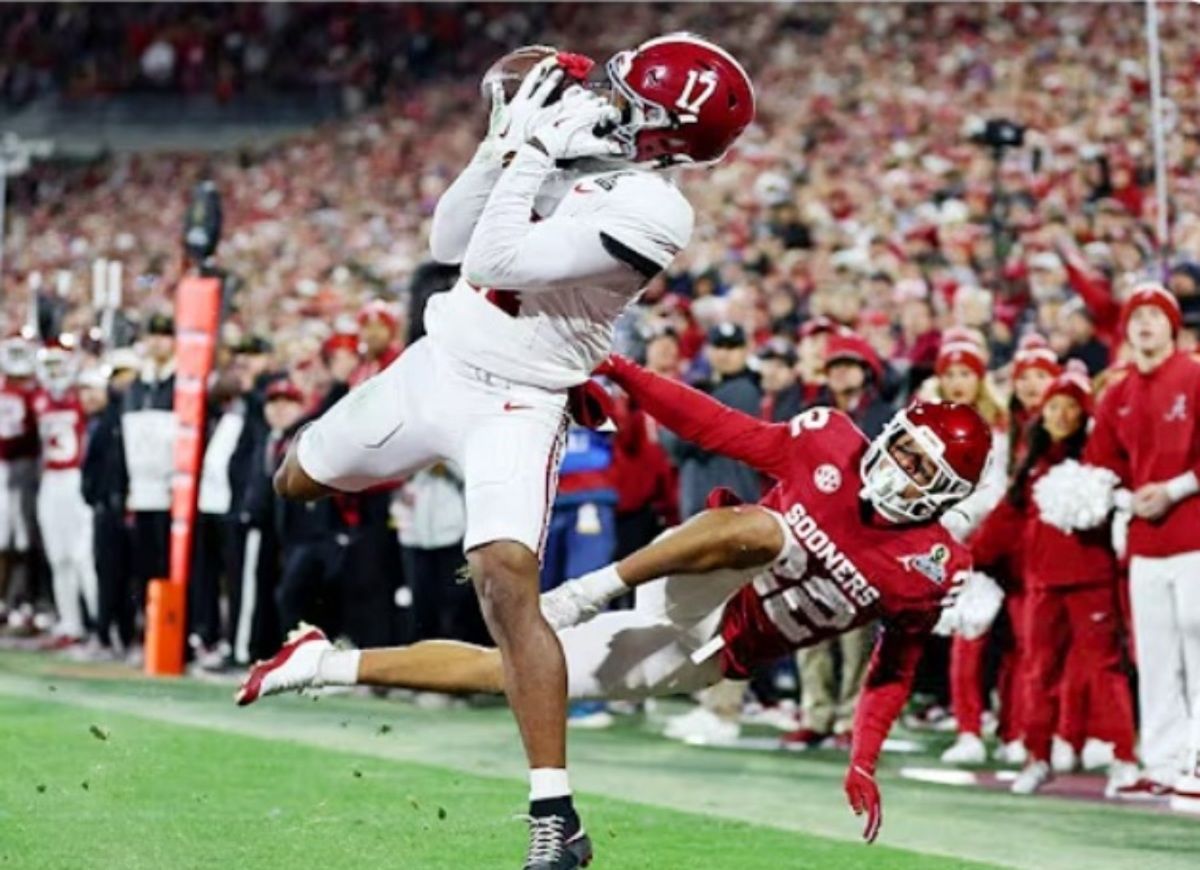
At the highest level of college football, games aren’t decided by playbooks. They’re decided by belief. By comfort under pressure. By which team understands who it is when momentum shifts — and which team doesn’t.
That’s the only way to fully understand Oklahoma’s 34–24 College Football Playoff loss to Alabama on Friday night. Because the more you examine it, the clearer it becomes that this game wasn’t about talent, scheme, or preparation. It was about mental leverage — and how quickly it changed hands.
The cruel irony is that Oklahoma had already written the manual for how to beat Alabama earlier this season. On November 15 in Tuscaloosa, the Sooners pulled off a win that defied conventional logic. They were outgained. They didn’t control the clock. They didn’t dominate offensively. Yet they won, because they controlled the emotional economy of the game.
They forced turnovers. Alabama made special teams mistakes. Oklahoma capitalized. Alabama pressed. Oklahoma stayed calm.
That game was a case study in psychological football.
Friday night was the same case study — just with the names flipped.
Early on, Oklahoma looked ready. A 17–0 lead didn’t feel fragile or lucky. It felt earned. The Sooners were sharp, aggressive, and decisive. They played like a team that knew exactly what it wanted to be. Alabama, for the first quarter and a half, looked like the team searching for answers.
Then the momentum shifted — not because of a single catastrophic event, but because of three plays that quietly altered Oklahoma’s emotional posture. A dropped pass that would have extended control. A special teams breakdown that invited chaos. An Alabama defensive touchdown that erased certainty.
Those plays matter, but not because of what they did on the scoreboard.
They mattered because of what they did to Oklahoma’s mindset.
Up until that point, the Sooners were hunting. They were dictating pace and emotion. Once Alabama tied the game, Oklahoma became reactive. Instead of leaning into aggression, it leaned into caution. Instead of playing to create disruption, it played to avoid mistakes.
That’s when the roles reversed completely.
In November, Oklahoma thrived in a game where it didn’t dominate statistically. The Sooners understood they didn’t need to win the box score; they needed to win the moments. Alabama, by contrast, grew impatient. The Tide pressed, forced issues, and made uncharacteristic errors — especially on special teams.
Oklahoma benefited because it stayed mentally steady.
On Friday night, the exact same dynamic reappeared — except Alabama was the steady one.
Consider the stat lines. In Norman, Oklahoma actually outgained Alabama. The Sooners moved the ball. They had opportunities. This was not a case of Alabama imposing overwhelming dominance. Yet Oklahoma never regained emotional footing once the game tightened.
That’s the key distinction.
Alabama has lived in tight games for decades. It knows how to survive stretches where it doesn’t play clean football. It understands that momentum is temporary and that patience often wins playoff games.
Oklahoma, historically, has not had that same postseason muscle memory.
That reality surfaced once the early lead disappeared.
From that point forward, Alabama played loose football. It didn’t chase points. It didn’t force throws. It let Oklahoma’s anxiety do the work for it. The Tide waited for mistakes, knowing they would come — because they always do when a team starts thinking about consequences instead of execution.
This is where the November comparison becomes unavoidable.
In Tuscaloosa, Alabama made special teams mistakes (missed a 36-yard field goal and allowed a 46-yard punt return that set up Oklahoma’s first score) and Oklahoma capitalized without panic. On Friday, Oklahoma made special teams mistakes — and Alabama immediately turned them into leverage.
In Tuscaloosa, Oklahoma forced turnovers that tilted the game emotionally. On Friday, Alabama forced the one turnover that mattered most — and it landed like a psychological hammer.
In Tuscaloosa, Oklahoma had fewer yards and still won because it understood how to manage pressure. On Friday, Oklahoma had more yards and still lost because pressure managed it.
Same formula. Different execution.
That tells us something important about where Oklahoma is as a program right now. The Sooners are good enough to build a lead on Alabama. They are good enough to dictate early terms. They are good enough to win games where the margins are thin.
What they are still learning is how to respond when the margins tilt against them on the sport’s biggest stage.
This isn’t about toughness or desire. It’s about experience and identity. Oklahoma has learned how to be the disruptor. It has not yet mastered how to be the favorite who absorbs disruption without flinching.
And that distinction matters in the College Football Playoff.
Because playoff games are rarely clean. They are messy, emotional, and volatile. Momentum swings are inevitable. The teams that win aren’t the ones that avoid mistakes entirely — they’re the ones that don’t let mistakes change who they are.
Alabama never stopped being Alabama on Friday night.
Oklahoma, briefly, stopped being Oklahoma.
That doesn’t negate the progress this program has made. If anything, it clarifies the next step. The Sooners don’t need to reinvent themselves. They don’t need to overhaul philosophy or chase a different identity. They need to harden the one they already have — especially when the game stops going according to plan.
The difference between November and December wasn’t preparation.
It was composure.
Until Oklahoma learns to carry the same confidence after momentum shifts as it does before them, these postseason games will continue to feel painfully familiar — even when the circumstances are flipped.
Friday night wasn’t about Alabama stealing something from Oklahoma.
It was about Alabama becoming Oklahoma — forcing mistakes, surviving chaos, and trusting that pressure would do the rest.
And in the end, the team that understood that truth walked off the field still playing.
Follow us on Instagram & Facebook