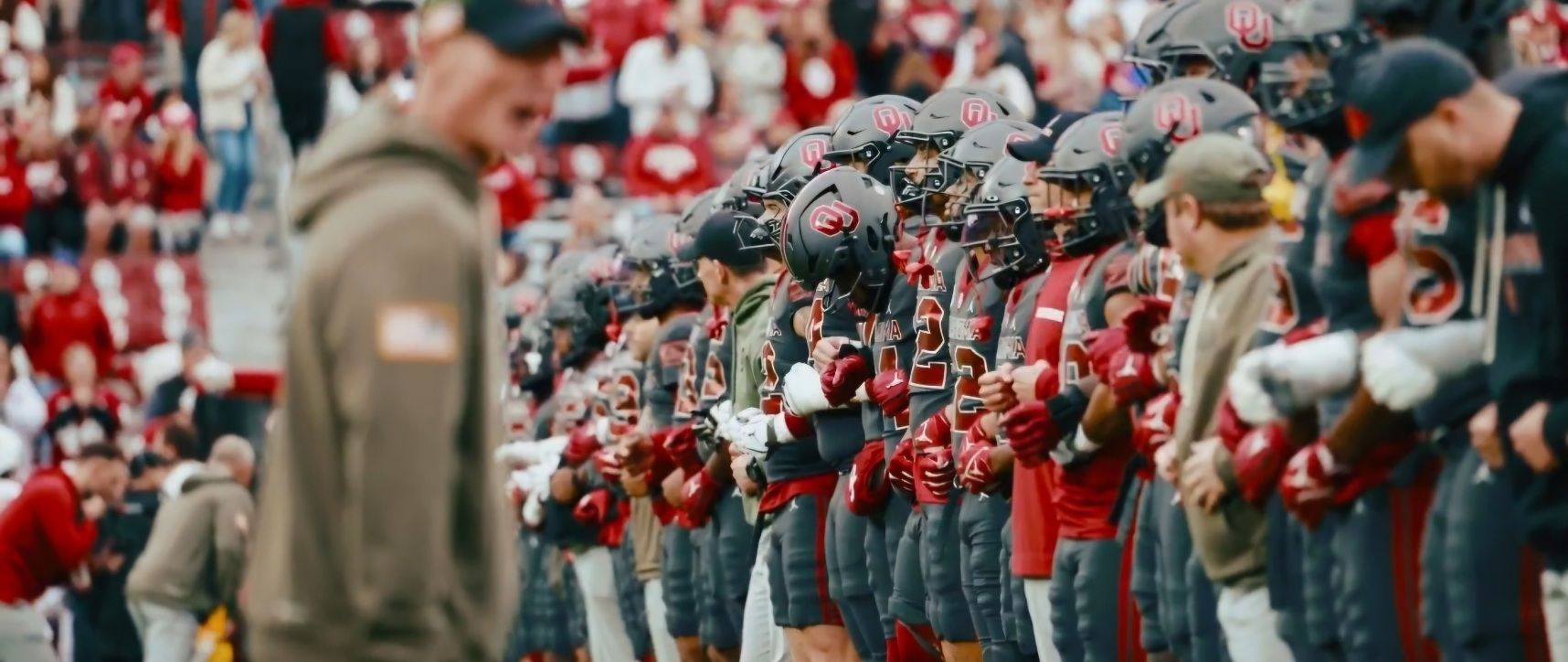
Put yourself in the shoes of an Oklahoma fan right now and try to separate emotion from reality. That’s the hardest part of the transfer portal era, especially in the aftermath of a College Football Playoff loss and an offseason that already feels louder, faster, and more transactional than any before it. Names scroll across social media feeds. Portal trackers refresh by the hour. And the instinctive reaction is panic: Why is Oklahoma losing so many players? Is this falling apart?
But the truth is more nuanced — and far more revealing about where Oklahoma football actually is in 2025.
This transfer portal cycle isn’t a crisis. It’s a mirror.
And what it’s reflecting back at Oklahoma is a program in the middle of a philosophical shift — one that will define the Brent Venables era far more than any single win or loss.
Start with the departures. Linebacker Kobie McKinzie, a veteran presence and emotional leader, enters the portal. Cornerback Kendel Dolby as well. Running back Jovantae Barnes, offensive linemen Jacob Sexton and Isaiah Autry-Dent, tight end Kaden Helms, wide receiver Jayden Gibson — each name carries its own context, but collectively they tell one story: Oklahoma is shedding experience, not because it lacks direction, but because it has chosen one.
This is roster compression. This is hard-choice football.
In the old era, losing this many contributors would feel catastrophic. In the portal era, it’s often intentional. Oklahoma is no longer trying to hoard depth for the sake of depth. The Sooners are chasing alignment — between NIL value, on-field role, development timelines, and championship windows.
And when those things don’t align, separation is inevitable.
Take McKinzie as an example. His portal entry doesn’t automatically signal dissatisfaction or abandonment. In fact, it may signal leverage, market exploration, or a final attempt to maximize value before his college clock runs out. We’ve already seen this movie in Norman. David Stone tested the waters, returned, and benefited. The portal is no longer a one-way exit; it’s a negotiation table.
But it’s also true that Oklahoma’s linebacker room is changing stylistically. Venables wants speed, flexibility, coverage ability. The margins are thin. If you’re not a schematic fit or a guaranteed every-down player, the math gets uncomfortable fast.
The same applies across the roster.
The offensive line departures? That’s a numbers game and a competition reality. Oklahoma is recruiting better offensive linemen than it has in years. Developmental players buried on the depth chart are no longer willing to wait — nor should they be. The portal gives them options. Oklahoma gives them honesty.
The skill positions tell an even clearer story. Wide receiver and tight end attrition isn’t surprising when production didn’t match expectation and competition is about to intensify. Oklahoma isn’t rebuilding at those spots — it’s retooling aggressively.
And that brings us to the more important question: what Oklahoma is about to do, not what it has lost.
Make no mistake — this portal cycle will define whether Oklahoma’s transition into the SEC contender tier accelerates or stalls. And the Sooners know exactly where they must strike.
Wide receiver tops the list. Not depth. Not potential. Immediate impact. Oklahoma needs route runners who can separate against SEC corners, finish through contact, and punish defenses that overplay the run. This isn’t about stats; it’s about stress. Alabama, Georgia, LSU — they stress you horizontally and vertically. Oklahoma must do the same.
The offensive line is next. Portal tackles and interior linemen with real Power Five starts matter more than ever. This season exposed that Oklahoma can scheme around weaknesses — but not forever. In the SEC, you don’t out-scheme dominant fronts for four quarters. You meet them head-on.
Linebacker and defensive back are where this portal cycle gets fascinating. Venables is betting on development internally — but he’s also smart enough to know one elite portal defender can stabilize an entire unit. Expect Oklahoma to be selective here. No volume shopping. Just difference-makers.
Here’s the uncomfortable truth for fans: some of the players leaving now were part of the previous version of Oklahoma football. Not the future one.
That doesn’t diminish their contributions. It contextualizes them.
Because what Alabama did to Oklahoma in the playoff — flipping momentum, imposing belief, capitalizing on mistakes — is exactly what Oklahoma did to Alabama in November. And that role reversal matters. It exposed the final gap Oklahoma must close: mental authority.
Roster turnover is part of building that authority.
This is the part of SEC football that doesn’t show up in recruiting rankings or portal grades. Alabama, Georgia, and LSU don’t just reload talent — they reload belief. They replace players without losing identity. Oklahoma is learning that lesson in real time, and the growing pains are loud because the stakes are higher than they’ve ever been.
But loud doesn’t mean wrong.
This portal season isn’t about Oklahoma falling behind. It’s about Oklahoma deciding who it wants to be when the noise fades. The Sooners are no longer chasing relevance. They’re chasing sustainability at the highest tier of college football.
That requires tough exits. Awkward goodbyes. And confidence in what comes next.
If Oklahoma nails this portal cycle — and history suggests they will be aggressive, calculated, and unapologetic — then this offseason will be remembered not as a loss of control, but as a turning point.
The portal didn’t weaken Oklahoma.
It exposed its ambition.
Follow us on Instagram & Facebook