Title: The Quarter That Matters: How Oklahoma City’s Third-Quarter Identity Defines a Champion
There are NBA games that tell you who a team is, and then there are quarters that tell you who a team has decided to become.
Oklahoma City’s 140–129 win over the Atlanta Hawks was entertaining, loud, and statistically impressive — but none of that is the point. The point lives in a narrow stretch of time after halftime, when the Thunder stopped reacting to the game in front of them and instead imposed the version of themselves that championship teams always reach for when the moment demands clarity.
The third quarter wasn’t just a run. It was a declaration.
For two quarters, Atlanta hung around. They shot the ball well, spaced the floor, and tested Oklahoma City’s discipline from the perimeter. The Hawks did what undermanned teams have to do: they fired early, fired often, and tried to steal rhythm before the favorite could settle in. And for a while, it worked. At halftime, Oklahoma City trailed 74–70, and the game felt closer than the rosters suggested it should be.
That’s the part that separates good teams from champions — not whether they face resistance, but how they respond when the game asks a question.
The Thunder answered in 12 minutes.
The 30–11 run that opened the third quarter wasn’t fueled by luck, hot shooting, or officiating breaks. It was fueled by something far more repeatable: structure, physicality, and an unshakable belief in where advantages actually live on an NBA floor.
Atlanta wanted to win from the outside. Oklahoma City wanted to win everywhere else.
This is where Shai Gilgeous-Alexander’s brilliance deserves context, not just applause. His 39 points were the headline, but the story lies in how he scored them. Shai didn’t chase threes to match Atlanta’s volume. He hunted space. He attacked mismatches. He forced help. And every time the Hawks bent their defense outward to respect shooters, Shai went straight through the middle of it.
That’s not just scoring. That’s quarterbacking an offense.
In that third quarter, Oklahoma City stopped allowing the game to exist on Atlanta’s terms. Possessions slowed just enough to let reads develop. Defensive rotations tightened. Closeouts became controlled rather than frantic. And suddenly, every Hawks three came with a tax — a body in the lane, a rebound contested, a sprint back on defense.
The Thunder didn’t outshoot Atlanta in the third quarter. They out-decided them.
That distinction matters.
Too many teams mistake shot-making for control. Oklahoma City understands that control is about pressure — the kind that accumulates quietly until opponents realize they’re operating inside a shrinking margin. When the Thunder went inside relentlessly, it wasn’t simply about points in the paint. It was about dictating what Atlanta couldn’t do next.
A team worried about rim protection doesn’t sprint as hard to shooters.
A defense collapsing inward doesn’t communicate as cleanly.
A roster missing stars doesn’t have extra solutions once the first option stops working.
Oklahoma City exploited all of that.
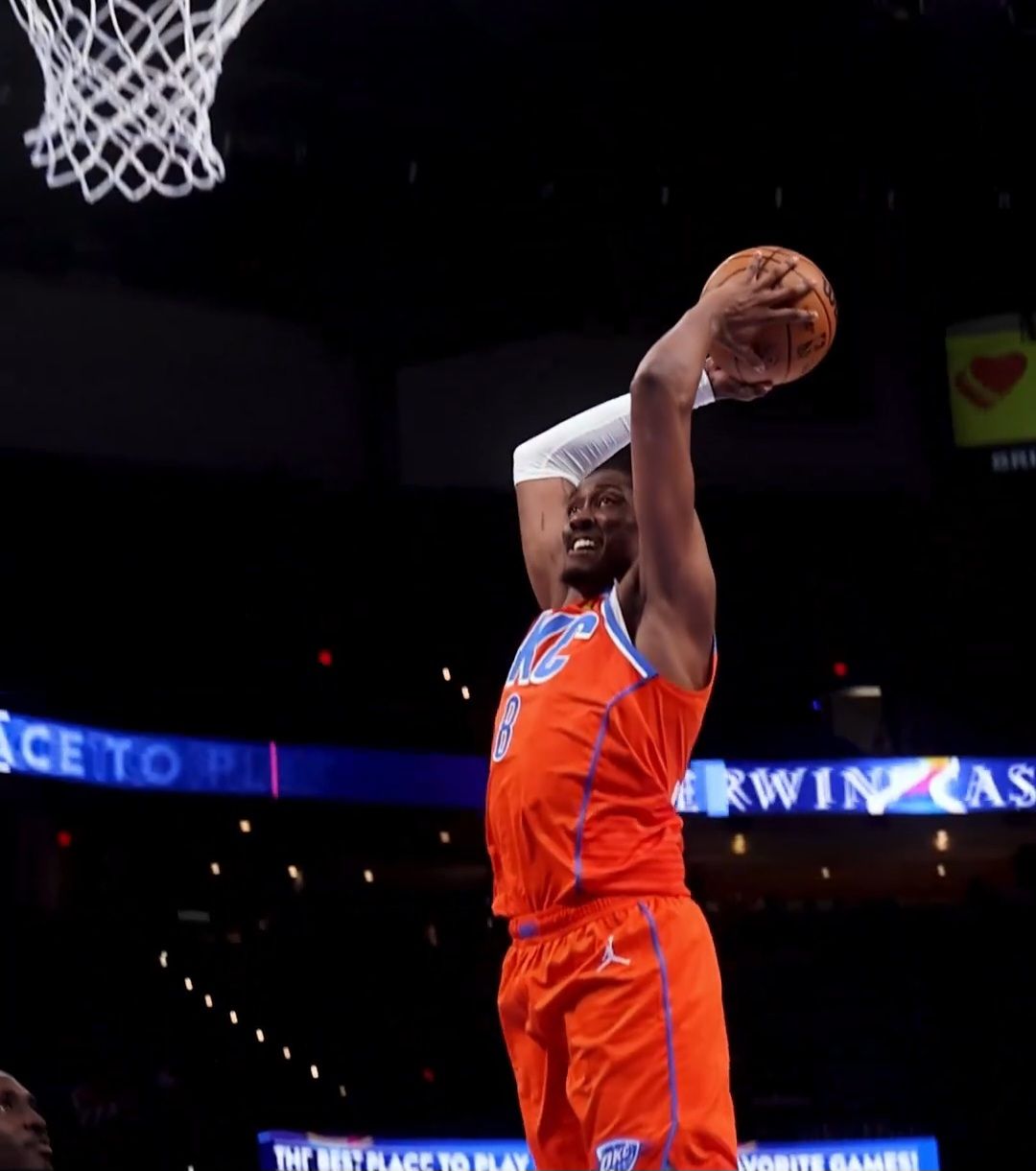
Chet Holmgren’s presence in the third quarter deserves more attention than it will get in box-score conversations. His 24 points and three blocks matter, but his timing mattered more. He didn’t chase contact unnecessarily. He didn’t overextend. He simply occupied space — vertical, horizontal, psychological — and forced Atlanta to reconsider where shots were safest.
That’s grown-man basketball, even from a player still early in his NBA life.
And then there’s Jalen Williams, who may quietly be the most important connective tissue on this roster. His third-quarter impact wasn’t explosive, but it was stabilizing. Rebounds secured. Secondary defenders drawn. Passing lanes punished. When the game threatened to drift toward chaos, Williams kept Oklahoma City operating on rails.
This is what championship depth looks like. Not bench scoring explosions or viral highlights, but trust. Trust that when the moment tightens, everyone knows where to stand, when to cut, and how to punish mistakes without forcing the issue.
The Thunder’s dominance in the paint — a 70–36 advantage overall — wasn’t accidental. It was philosophical. Against a team launching 54 threes, Oklahoma City refused to engage in a shooting contest. Instead, they treated every Hawks jumper as an opportunity to respond with something more demoralizing: a layup, a dunk, a free throw, or a defensive stop that turned into transition pressure.
By the time Atlanta cut the lead to 129–125 late, the game was already decided in spirit. The Thunder didn’t panic because they had already proven something to themselves earlier in the night. They knew where the answers were. They’d already gone there.
That’s the quiet confidence of a defending champion.
This win wasn’t about record padding or offensive fireworks. It was about identity maintenance. Oklahoma City is still young by NBA standards, but it no longer plays young when the game turns uncomfortable. The third quarter against Atlanta was a reminder that this team doesn’t need perfect conditions to dominate — it needs clarity.
And clarity, for this Thunder team, lives inside the arc.
The league will continue to chase spacing, shooting, and pace. Oklahoma City has those tools, too. But what separates them is their willingness to counter trends rather than obey them blindly. When opponents go small, the Thunder go strong. When teams spread the floor, Oklahoma City collapses it. When the moment demands patience, they slow just enough to make defenders uncomfortable.
That’s championship muscle memory forming in real time.
The Hawks gave them a test. Not a talent test — a stylistic one. And Oklahoma City didn’t just pass it. They turned it into a teaching moment, both for the opponent and for themselves.
The third quarter wasn’t loud. It didn’t scream for attention. But it told the truth.
And the truth is this: the Thunder don’t just win games anymore. They decide how games are allowed to be played.
That’s the mark of a team that understands exactly who it is — and exactly when to remind the rest of the league.
Follow us on Instagram & Facebook