The playoffs don’t reward stubbornness. They punish it.
Wednesday night was the reminder.
After a red-hot surge pushed the V3.0 model into elite territory, the board snapped back with a 3-6 performance—bringing the overall record to 60-56-1 (52%) through this point of the the first round. Not disastrous, but not the standard either. And more importantly, not random.
There were patterns in the misses.
The “Defensive Pivot” that had been so reliable got blown up by something the model didn’t fully weight: superstar volatility. When Cade Cunningham and Paolo Banchero combine for 90 points, you’re not losing because the read was bad—you’re losing because the ceiling shifted. When Cleveland and Toronto turn Game 5 into a three-point showcase, unders don’t survive. And when the Los Angeles Lakers cough up 15 turnovers in a closeout spot, even the sharpest edge collapses under execution.
That’s not failure. That’s information.
So the pivot is clear heading into Thursday’s Game 6 slate: elevate star-usage ceilings, incorporate turnover floors, and—above all—respect elimination basketball for what it is: volatile, emotional, and rarely aligned with the market’s comfort.
Let’s get into it.
Knicks at Hawks: The Closeout That Never Feels Comfortable
The New York Knicks walk into Atlanta with a 3-2 series lead and all the statistical indicators of control. They dominated the glass in Game 5. They’ve found a rhythm offensively. And Jalen Brunson just dropped 39 in a statement performance.
But Game 6 on the road isn’t about control—it’s about composure.
The V3.0 model classifies this as a “Momentum vs. Attrition” spot, with a critical variable hanging over everything: Josh Hart. His status (questionable with a back issue) matters more than the box score suggests. He’s New York’s connective tissue—the rebounder, the defender, the player who makes their physical identity real.
If he’s limited, that identity softens.
And that’s where the Atlanta Hawks come in.
Facing elimination at home, Atlanta becomes a different team. Not necessarily better—but more aggressive, more urgent, more willing to embrace chaos. The model builds that into the equation as a “Desperation Trap,” and historically, it matters. Home teams in elimination spots cover more often than not.
Still, New York’s rebounding edge is real. A 48-27 advantage in Game 5 isn’t a fluke—it’s a tone. Even if Atlanta adjusts, the Knicks should generate extra possessions.
That’s why the projection splits the difference:
Projected Score: Knicks 109, Hawks 107
Pick: Hawks +3.5, Knicks ML, Over 213.5
New York likely escapes. But it won’t be clean. It won’t be comfortable. And it probably won’t cover.
Celtics at 76ers: The Embiid Problem
There’s a moment in every playoff series when the matchup flips. Not gradually—suddenly.
That moment might have already happened.
The Philadelphia 76ers didn’t just win Game 5—they redefined the terms of the series. And it starts with Joel Embiid.
Fully unleashed, Embiid isn’t just a scorer—he’s a system. His 33-point, 8-assist performance wasn’t about volume; it was about control. He dictated pace, punished mismatches, and forced the Celtics into uncomfortable rotations.
That shifts the entire “Matchup Edge.”
Add in improved rebounding—Philadelphia effectively neutralized Boston’s earlier dominance on the glass—and suddenly the 76ers aren’t just competitive. They’re dangerous.
But here’s the nuance: the model still projects Boston to win.
Why?
Because this is also a “Survival Momentum” game for the Celtics. Teams with championship expectations don’t go quietly into Game 7 scenarios without pushing back. And while Boston’s shooting has been inconsistent (just 28% from three in Game 5), regression doesn’t always mean improvement—but it often means normalization.
So instead of picking a side outright, the model attacks the margin.
Projected Score: Celtics 108, 76ers 105
Pick: 76ers +6.5, Celtics ML, Under 213.5
Philadelphia has too much leverage—emotionally and structurally—to get blown out. Embiid ensures that. But Boston still has enough depth and shot creation to survive.
This is a coin flip disguised as a spread.
Nuggets at Timberwolves: When Attrition Becomes Destiny
This is the cleanest read on the board—and it’s not because the matchup is simple.
It’s because the injuries aren’t.
The Minnesota Timberwolves are running out of players. No Anthony Edwards. No Donte DiVincenzo. And now uncertainty around Ayo Dosunmu. That’s not just missing talent—it’s missing structure.
Ball-handling disappears. Shot creation collapses. Defensive assignments break down.
And that’s exactly the kind of void the Denver Nuggets are built to exploit.
Start with Nikola Jokić.
Game 5 was a reminder of what he does at his peak: 27 points, 12 rebounds, 16 assists. Not dominance in the traditional sense—but total orchestration. He doesn’t just beat you—he solves you.
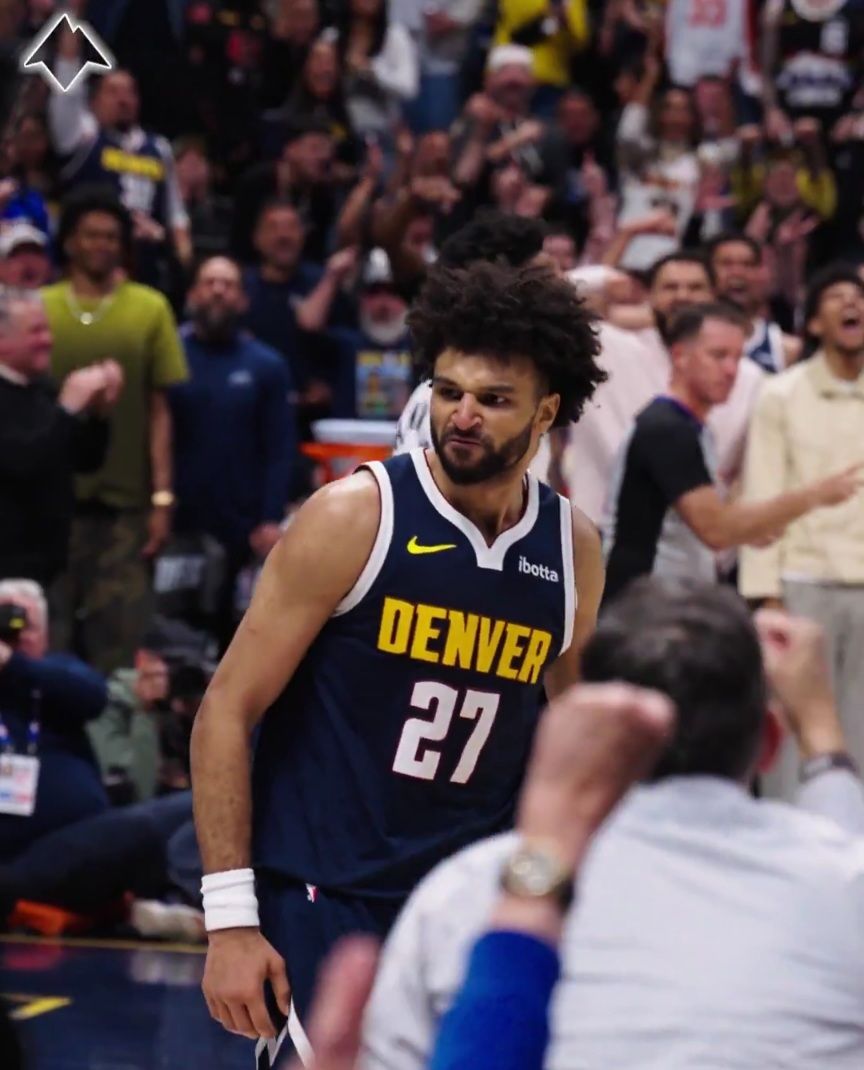
Then there’s Jamal Murray, who complements that control with scoring bursts that punish defensive lapses—something Minnesota can’t afford with a depleted roster.
The Timberwolves will fight. Julius Randle will absorb massive usage. But there’s a ceiling to that approach, especially against a defense that’s already held Minnesota under 100 points twice in this series.
The model calls this “Injury Gravity.” And gravity always wins.
Projected Score: Nuggets 116, Timberwolves 108
Pick: Nuggets -6.5, Nuggets ML, Over 224.5
This isn’t about trends. It’s about math. Minnesota simply doesn’t have enough.
Why the Confidence Holds
After a 3-6 night, confidence can feel misplaced. But this isn’t about blind faith—it’s about sharper calibration.
The V3.0 model has adjusted in three critical ways:
1. Star Ceiling Adjustment
What happened with Cunningham and Banchero won’t be ignored again. High-usage stars in elimination games now carry more weight in totals and spread projections.
2. Turnover Floor Integration
The Lakers’ collapse wasn’t random—it was structural. Aging cores under pressure are now evaluated not just for usage, but for ball security.
3. Closeout Resistance Filter
Game 6s are different. Home underdogs—like Atlanta and Philadelphia—cover at a historically high rate because desperation compresses margins.
And that’s the thread tying tonight together.
Not talent. Not even matchups.
Pressure.
The Knicks feel it.
The Celtics feel it.
The Timberwolves are buried under it.
And the teams that handle it best won’t just win—they’ll outperform the number.
That’s the edge.
Follow us on Instagram & Facebook