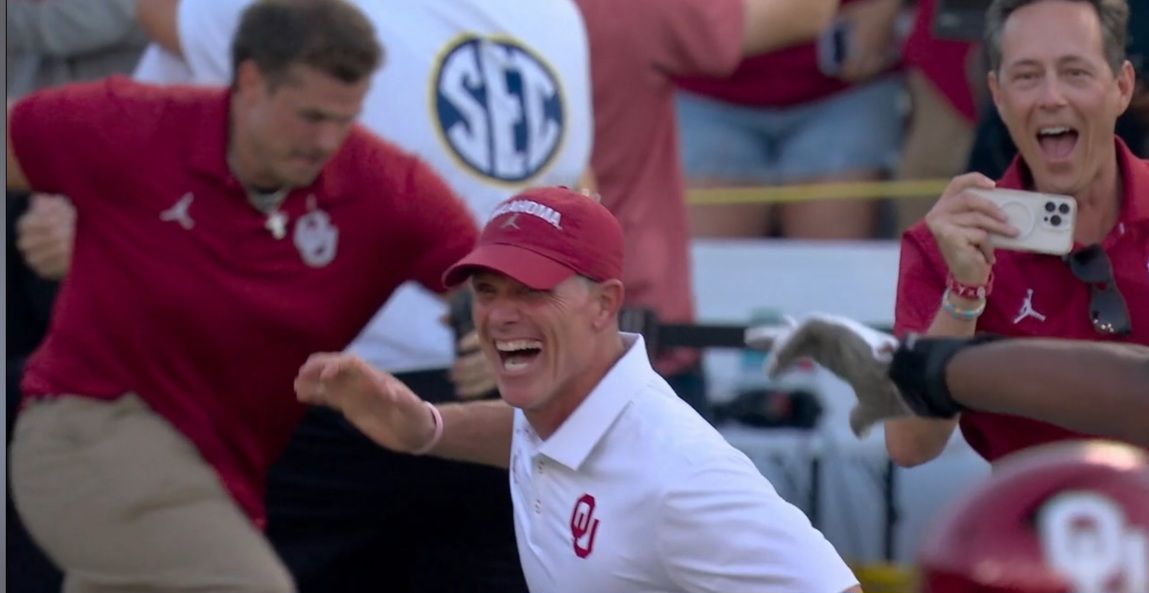
Oklahoma didn’t need four quarters of pretty football to pull off the upset. The Sooners needed resilience, timely execution, and a few game-changing plays when the pressure was at its highest.
They delivered all three.
Oklahoma stunned No. 1 Texas 27-24 on Saturday at the Cotton Bowl, with Tate Sandell drilling a 47-yard field goal as time expired to cap one of the most dramatic chapters in the Red River Rivalry. The Sooners entered Dallas at 2-2, looking to get their season back on track against an unbeaten, and top-ranked, Texas team. They left with a statement victory that could change the trajectory of their entire season.
The final score will be remembered for Sandell’s kick. The road to that moment, however, revealed three important things about this Oklahoma team.
1. Oklahoma Found the Perfect Recipe for an Upset
You don’t have to dominate every statistical category to beat the No. 1 team in the country. You have to win the moments that decide the game.
Oklahoma did exactly that.
The Sooners protected the football, forced Arch Manning into costly mistakes, and turned defense and special teams into offensive production when their offense needed help. Against a Texas team capable of making opponents pay for every mistake, that formula proved decisive.
The blocked punt was a massive momentum swing. Danny Okoye got through to block the kick, and Dakoda Fields recovered it for a touchdown, giving Oklahoma points without requiring the offense to navigate the length of the field.
Then came Peyton Bowen’s fourth-quarter interception return for a touchdown. Bowen took Manning’s mistake 42 yards to the end zone, putting the Sooners ahead 24-17 and delivering the kind of play that can change an entire rivalry game.
Those weren’t just highlights. They were the difference between Oklahoma hanging around and Oklahoma having a chance to win.
The Sooners also avoided giving Texas extra possessions through giveaways of their own. While Manning threw two interceptions, Oklahoma capitalized on the opportunities in front of it.
And the defense didn’t simply rely on turnovers. Texas converted just 3 of 14 third-down opportunities, forcing the Longhorns to work for their yards and limiting their ability to sustain drives.
That matters because Oklahoma’s offense wasn’t operating at full capacity. When the offense struggles to produce consistently, special teams touchdowns, takeaways, and third-down stops become essential.
Sandell’s game-winner completed the story. He had to put the earlier miss behind him, step onto the field with the game on the line, and deliver from 47 yards.
He did.
The takeaway: Oklahoma didn’t win because everything went right. It won because the Sooners made their biggest plays in the biggest moments. That’s how an underdog beats the No. 1 team in the country.
Take A Deeper Dive Into Our Oklahoma Football Coverage On Our Facebook Subscription Hub
Help support Heartland Sports by Unlocking Exclusive, data-driven film room breakdowns, recruiting Update, high-leverage personnel matrix updates you won’t find anywhere else, and More by subscribing to our premium Oklahoma Sooners football coverage today.
Red River Rivalry Key Notes & Storylines: Oklahoma Faces Its Biggest Test Yet
Oklahoma’s Running Game Has A Numbers Problem: How The Sooners Can Get Lloyd Avant Moving Forward
The 80% Problem: Why Oklahoma Still Has A Path To Shock No. 1 Texas
2. The Halftime Adjustments Finally Got the Running Game Moving
For much of the first half, Oklahoma’s offense struggled to find traction. Texas generated pressure, John Mateer took sacks, and the Sooners had difficulty establishing the running game.
That had to change if Oklahoma was going to stay in the game.
After halftime, the Sooners found a better rhythm on the ground, and Lloyd Avant became a key part of the turnaround.
Avant finished with 72 rushing yards on 10 carries, including a 42-yard burst that gave Oklahoma an explosive play it had struggled to generate consistently. He also powered in a two-yard touchdown run early in the fourth quarter to tie the game at 17.
That touchdown mattered beyond the scoreboard. It showed Oklahoma could move the ball with its offense instead of relying exclusively on defensive and special teams production.
The offensive line deserves attention here, too. Oklahoma made adjustments up front and the running game looked more effective after the break.
The key was finding a way to create better opportunities for Avant rather than repeatedly asking him to manufacture yards against a defense already disrupting the play.
The 42-yard run demonstrated what the offense could accomplish when a crease opened. The short touchdown showed the value of staying committed to the ground game when the situation demanded physical football.
That combination helped Oklahoma keep the game within reach and put pressure back on Texas.
There is an important distinction, though: one productive half doesn’t mean every problem with Oklahoma’s offensive line has disappeared. The Sooners still need greater consistency, especially against the defensive fronts they’ll face throughout the remainder of the schedule.
But this was an encouraging response to a problem that has followed the offense through the opening weeks.
The takeaway: Oklahoma showed it can adjust instead of stubbornly repeating what isn’t working. If the Sooners can build on the second-half rushing production, it could be one of the most important developments to emerge from this upset.
3. John Mateer Didn’t Complete His Redemption Story—but He Took a Big Step
John Mateer didn’t need to post a spectacular stat line to help Oklahoma beat Texas. He needed to take care of the football, keep fighting through pressure, and make the throws that mattered when the game was on the line.
He did enough to give the Sooners a chance—and then delivered when that chance arrived.
Mateer’s numbers were hardly dominant. He finished with 155 passing yards and no passing touchdowns, while Texas’s pass rush made life difficult for him. Two sacks from Colin Simmons were a reminder that Oklahoma still has work to do protecting its quarterback.
The Sooners also need more consistent production from the passing game. Beating Texas doesn’t erase the offensive struggles that preceded this afternoon, and Mateer hasn’t suddenly answered every question about his performance.
But this game was about more than the box score.
Mateer avoided the kind of costly mistake that could have handed Texas control. He stayed engaged despite the pressure, and he was ready when Oklahoma got one final opportunity.
Manning threw an interception to Omarion Robinson with 19 seconds remaining, giving Oklahoma the ball and an opportunity to steal the game.
Mateer and the offense had almost no margin for error.
Then came the throws to Isaiah Sategna III.
Mateer connected with Sategna for consecutive completions of 13 and 20 yards, moving Oklahoma into position for Sandell’s decisive kick. In a game where the passing attack had struggled to find consistency, those two completions were enormous.
They didn’t erase the difficult moments that came before them. They did, however, demonstrate that Mateer could respond when the Sooners needed him most.
That’s an important distinction.
Oklahoma doesn’t need Mateer to be declared fully redeemed after one afternoon. It needs him to build on this performance, improve his consistency, and regain the confidence that made him such an important piece of the offense.
Beating the No. 1 team in the country gives him a meaningful foundation to do that.
The takeaway: Mateer didn’t answer every question, but he delivered when the game was on the line. That final drive could prove to be a turning point—not because it erased his struggles, but because it showed what he can do when Oklahoma needs him to make a play.
The Bottom Line: Oklahoma Just Changed the Conversation
Oklahoma entered the Red River Rivalry at 2-2, facing a difficult road against an unbeaten Texas team ranked No. 1 in the country.
The Sooners leave Dallas with a 27-24 victory, a dramatic walk-off finish, and renewed momentum heading into the next phase of their season.
The defense created game-changing moments. Special teams delivered a touchdown and the winning kick. The offensive line and Avant helped establish a running game after halftime. And Mateer made the throws that mattered most at the end.
None of that means Oklahoma has suddenly become a finished product. The offense still needs consistency, and the Sooners cannot expect to win every week by relying on defensive scores and last-second field goals.
But this win should change how Oklahoma views itself.
The Sooners proved they can respond to adversity, make meaningful adjustments, and compete when the stakes are highest. More importantly, they showed they can beat the team sitting at the top of the rankings even when the path to victory isn’t pretty.
Next comes Kentucky in Norman.
The challenge now is to turn an unforgettable Saturday in Dallas into the beginning of something bigger.