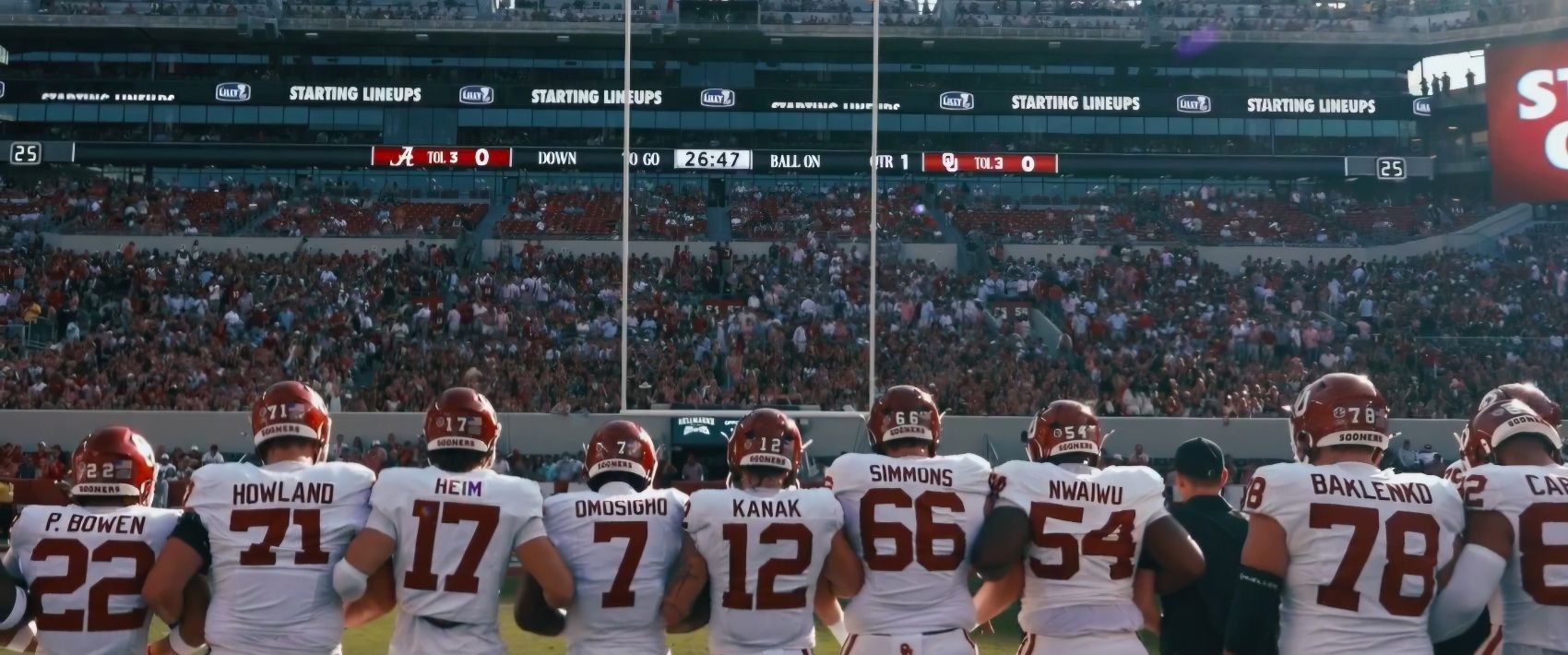
When Oklahoma walked out of Tuscaloosa with a 23–21 win in mid-November, the immediate reaction across much of the college football world was predictable. Alabama turned the ball over. The margin was thin. One or two plays flipped, and suddenly the narrative became that the Sooners escaped rather than controlled the outcome.
That reading misses the point entirely.
Because when you slow the tape down and strip away the emotional shorthand, what Oklahoma did that night was not accidental. It was intentional, disciplined, and built on principles that translate far beyond one afternoon. This wasn’t a game Oklahoma survived — it was a game Oklahoma designed to win, even if it didn’t look the way casual fans expect a “statement win” to look.
As the two teams prepare to meet again in the College Football Playoff, that film matters more than ever.
Discipline Over Chaos: The Foundation of the Win
The first thing that jumps out on film isn’t aggression. It’s restraint.
Oklahoma’s defensive approach against Alabama was rooted in assignment integrity — staying in lanes, maintaining leverage, and forcing Alabama to execute long drives without free yardage. There was no reckless selling out for sacks, no gambling in coverage, no attempt to win the game with one heroic moment.
That discipline matters against a team like Alabama, which thrives on defensive mistakes. Miss a gap, lose eye discipline, bite on motion — and suddenly a routine snap becomes an explosive play. Oklahoma refused to give the Tide those gifts.
Instead, the Sooners forced Alabama to snap the ball again and again, shrinking the margin for error. That patience frustrated Alabama’s timing and kept the game on Oklahoma’s terms. It’s not flashy defense, but it’s the kind that travels — and the kind that wins in December.
Turnovers Were Created, Not Gifted
The box score shows turnovers. The tape shows pressure with purpose.
Oklahoma didn’t stumble into takeaways. The Sooners targeted specific stress points in Alabama’s offense and applied pressure in ways designed to force mistakes rather than hope for them. Pass rush lanes were controlled, not reckless. Coverage behind it was sound, not desperate.
When the ball came loose or a throw went astray, it wasn’t because Alabama “just messed up.” It was because Oklahoma had spent the entire night tightening the screws.
That distinction matters, especially heading into a rematch. You can’t count on turnovers to repeat — but you can count on the behaviors that create them. Oklahoma’s defensive plan wasn’t about gambling; it was about increasing the odds that Alabama would eventually blink.
And blink they did.
Breaking Alabama’s Rhythm, Not Their Yardage
One of the laziest ways to evaluate football games is through total yards. Alabama outgained Oklahoma significantly in November, and that statistic has been used to dismiss the Sooners’ performance as unsustainable.
But rhythm matters more than raw numbers.
Oklahoma was deliberate about when Alabama gained yards. Early downs were contested. Third downs were uncomfortable. Red-zone snaps were contested like every blade of grass mattered — because it did.
Alabama was forced to work for everything. No cheap explosives. No sudden momentum shifts. Every drive felt heavier than the last, and that cumulative effect showed up late.
That’s not luck. That’s control.
Why the Score Stayed Low — By Design
There’s a tendency to assume low-scoring games indicate offensive failure. In reality, this one reflected intentional tempo and situational awareness.
Oklahoma never chased points. The Sooners didn’t feel the need to “answer” Alabama with urgency or abandon their plan. Possessions mattered. Field position mattered. Finishing drives mattered.
That approach limited Alabama’s opportunities just as much as Oklahoma’s defensive play did. Fewer possessions mean fewer chances for explosive teams to overwhelm you. It’s an old-school principle, but it’s especially effective against opponents who are built to avalanche points in short bursts.
Oklahoma understood the game they needed to play — and refused to deviate.
The Repeatable Elements
The most important question heading into the playoff rematch isn’t “Can Oklahoma get lucky again?” It’s “What parts of this performance can be reproduced?”
There are several.
1. Defensive Fundamentals
Gap integrity, leverage, tackling, and communication don’t depend on opponent mistakes. They depend on preparation and execution — and Oklahoma has shown it can deliver both.
2. Pressure Timing
Oklahoma’s pressure wasn’t constant, but it was strategic. That kind of restraint is harder to prepare for than an all-out blitz approach.
3. Situational Football
Third downs. Red zone snaps. Late-game discipline. These moments defined the November game, and Oklahoma handled them with maturity beyond its years.
4. Emotional Control
Perhaps most overlooked: the Sooners never looked rushed. They didn’t play like a team desperate for validation. They played like a team that trusted its plan.
Those traits don’t disappear in rematches.
What Was Situational — and What Must Be Better
That doesn’t mean everything from the first meeting translates cleanly.
Some things broke Oklahoma’s way:
• Short fields created by turnovers
• A game script that favored patience
• The emotional freedom of being doubted
A playoff rematch removes some of those advantages. Alabama will be sharper. Adjustments will come faster. The margin for error will shrink even more.
Oklahoma must improve in two key areas:
Offensive Consistency
Sustaining drives without relying on field position swings will be critical. Even modest improvements here could dramatically change the game’s flow.
Early-Down Efficiency
Winning first down keeps the defense fresh and limits Alabama’s ability to dictate tempo.
These aren’t massive overhauls. They’re refinements — the kind good teams make in December.
Why This Still Matters
The danger of rematches is overthinking the first result. The danger of dismissing it is worse.
Oklahoma didn’t beat Alabama because of randomness. They beat them because they played a controlled, intelligent brand of football that neutralized strengths instead of chasing headlines.
That matters now.
Because belief in a playoff setting doesn’t come from hope — it comes from evidence. And Oklahoma has that evidence on tape.
The first game wasn’t an accident.
And the second won’t be either.
Follow us on Instagram & Facebook