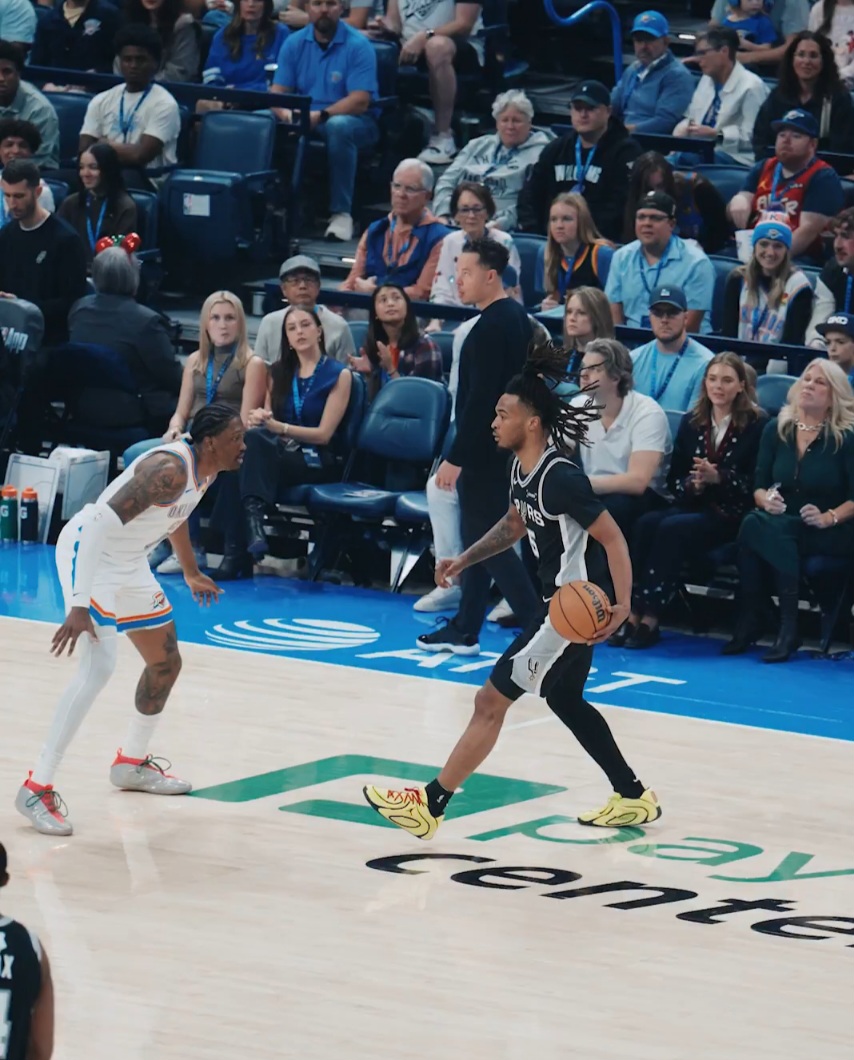
Christmas Day games are supposed to be statements. They’re supposed to be declarations — about who you are, what you’ve become, and where you’re headed. For the Oklahoma City Thunder, Wednesday afternoon at Paycom Center was supposed to reinforce the story they’ve been writing for two months: dominance, depth, discipline, and inevitability.
Instead, it delivered something far more uncomfortable — and far more useful.
Oklahoma City’s Christmas Day loss to the San Antonio Spurs wasn’t loud in the way blowouts often are. It didn’t come with humiliation or chaos. It came with clarity. A steady, methodical, 117–102 defeat that never truly felt within the Thunder’s control, even when the score suggested otherwise.
And that’s the part that should linger.
Because this wasn’t about effort. It wasn’t about energy. It wasn’t even about talent. It was about who dictated the terms of the game — and once again, San Antonio did.
The Pattern Is No Longer Ignorable
One loss can be dismissed. Two can be rationalized. Three in a short span becomes a pattern.
San Antonio has now beaten Oklahoma City repeatedly using the same formula: patience, spacing, size, and an unflinching commitment to playing through the Thunder’s pressure instead of reacting to it. The Spurs aren’t intimidated by OKC’s speed or rattled by its defensive chaos. They welcome it, absorb it, and then bend the game back in their favor.
On Christmas Day, they did it again.
The Thunder actually started well. They were sharp early, aggressive in transition, and active defensively. But as the game settled, so did San Antonio. By halftime, the Spurs had seized control not by outscoring Oklahoma City in flurries, but by out-executing them possession by possession.
That’s not accidental. That’s identity.
When the Game Slows, the Answers Matter
The most revealing moments of this loss came not during Spurs runs, but during Thunder stagnation.
When Oklahoma City needed answers — when shots stopped falling, when the Spurs clogged driving lanes, when the margin hovered just close enough to invite belief — the Thunder didn’t panic. But they didn’t adapt quickly enough either.
The ball stuck. Spacing tightened. Decisions slowed.
Shai Gilgeous-Alexander still found his way to points, because that’s what elite players do. But this game wasn’t about Shai’s greatness — it was about how thoroughly San Antonio was willing to live with it. The Spurs didn’t overreact to Shai. They trusted their structure, kept bodies in front, and dared the Thunder’s secondary options to tilt the game.
They didn’t.
And that’s the lesson Oklahoma City must absorb.
This Isn’t a Talent Problem
Let’s get this out of the way: the Thunder are not suddenly flawed. They are not overrated. They are not “figured out” in the fatal sense.
What they are is young contenders entering the second phase of relevance.
Phase one is surprise. Phase two is adjustment. Phase three is response.
Oklahoma City is now firmly in phase two.
The Spurs didn’t beat the Thunder because OKC lacks shooting, depth, or toughness. They beat them because they forced Oklahoma City into half-court precision battles — and won them. They executed cleaner actions. They maintained spacing under pressure. They punished small lapses without forcing anything.
That’s veteran basketball behavior, regardless of age.
And until Oklahoma City consistently proves it can dictate those moments, teams like San Antonio will remain dangerous.
Defense Still Travels — But It Must Finish
The Thunder’s defense remains elite. That hasn’t changed.
What has changed is the level of patience they’re facing. San Antonio didn’t rush into turnovers. They didn’t dribble into traps. They waited for the second and third action, knowing Oklahoma City’s system thrives on disruption.
Christmas Day exposed a small but important evolution the Thunder must make: defense that doesn’t just disrupt, but completes possessions.
That means rebounding. It means communication after the first breakdown. It means discipline when the initial advantage disappears.
These are thin margins — but thin margins decide championships.
Why This Loss Is Actually Valuable
Here’s the uncomfortable truth Oklahoma City fans may not want to hear on Christmas night: this loss might matter more than some of the Thunder’s early-season wins.
Why?
Because it reveals exactly what kind of team Oklahoma City still needs to become.
The Spurs didn’t surprise the Thunder. They challenged them structurally. They exposed no fatal flaw, but they did highlight the gap between being excellent and being inevitable.
That gap is where championships are decided.
The Thunder now have film that matters. Possessions that matter. Questions that matter.
How do they generate offense late against size?
Who becomes the secondary aggressor when Shai is contained?
Which lineups maintain spacing under playoff-level pressure?
How do they counter teams that refuse to speed up?
These aren’t problems — they’re prompts.
Perspective Is Everything
It’s December. Oklahoma City still sits among the West’s elite. They still defend at a championship level. They still have the league’s most reliable closer. They still have internal growth coming — not theoretical growth, but real, tangible development.
What’s happening now isn’t slippage. It’s calibration.
Every contender goes through it. The great ones don’t avoid it — they absorb it.
San Antonio, intentionally or not, has become Oklahoma City’s sharpest teacher. Not because the Spurs are unbeatable, but because they play the kind of basketball that forces clarity.
And clarity, even when it costs you a Christmas Day win, is a gift contenders can’t afford to ignore.
The Response Will Define the Season
The most important thing about Oklahoma City’s Christmas loss isn’t the score. It’s the response.
Do the Thunder refine their late-game counters?
Do they empower secondary creators earlier?
Do they adjust defensive coverage to finish possessions more cleanly?
Do they embrace the discomfort of being hunted instead of celebrated?
If they do, this loss becomes part of the foundation.
If they don’t, it becomes a warning.
But history — and this team’s DNA — suggests Oklahoma City will choose growth over denial.
And when April comes, the lessons learned on Christmas Day may matter far more than the presents ever did.
Follow us on Instagram & Facebook