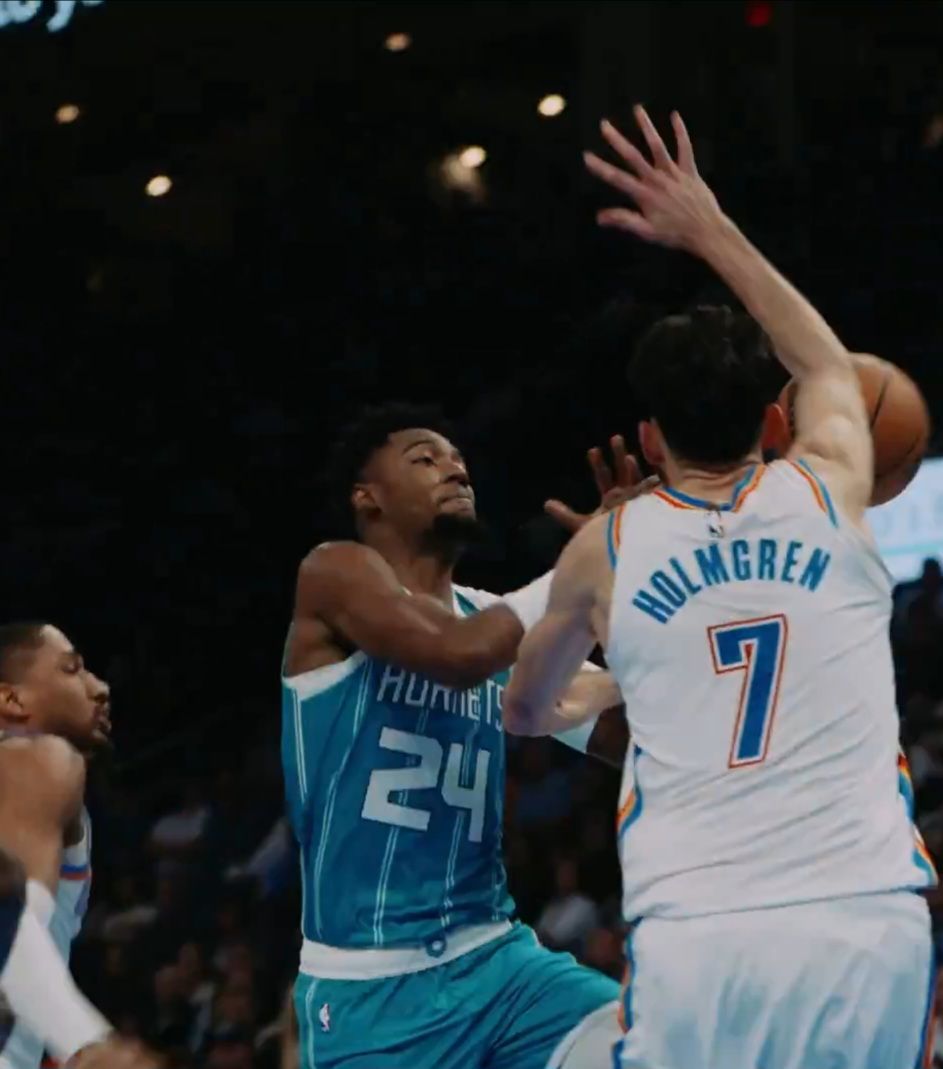
By the time the final buzzer sounded at Paycom Center, the score told a story that still felt jarring to read: Hornets 124, Thunder 97. A 27-point home loss. The worst of the season. Against Charlotte.
But the most troubling part of Oklahoma City’s collapse on Monday night wasn’t the margin, the opponent, or even the missed shots. It was something deeper and more unsettling.
For one long, decisive stretch in the second quarter, the Thunder didn’t just lose the game — they lost their identity.
That is the single aspect that should linger long after the film session ends.
This wasn’t a case of an undermanned team catching fire or a schedule loss you shrug off and move past. This was a game where Oklahoma City abandoned the very traits that have made it one of the NBA’s most compelling stories: pressure, pace, disruption, and resilience. And once those disappeared, there was nothing left to fall back on.
The Thunder didn’t lose because Charlotte was hot. They lost because they stopped being Oklahoma City.
Identity, Not Execution
Every team has off nights. Even great ones. Shots rim out. Rotations are a step slow. The legs feel heavier than usual. That happens over an 82-game season.
What separates elite teams from the rest is what they do when execution fails.
Oklahoma City’s rise has been built on an identity that travels. When shots aren’t falling, the Thunder swarm. They speed you up. They turn misses into fast breaks. They manufacture energy when the game tries to drain it.
None of that showed up when it mattered most.
Midway through the second quarter, with the game still within reach, Charlotte seized control — and Oklahoma City never responded. The Thunder went nearly five minutes without a made field goal, but that alone isn’t an indictment. Droughts happen.
What followed was the real issue.
There was no defensive spike. No uptick in ball pressure. No moment where Oklahoma City decided, “If we can’t score, you won’t either.”
Instead, the Thunder retreated into half-court possessions that felt hesitant and reactive. Late-clock isolations replaced quick decisions. Help defense arrived late. Closeouts were soft. Transition opportunities vanished because stops never came.
That is not who this team claims to be.
The Missing Pushback
Championship-caliber teams have a reflex. When momentum swings away from them, something snaps them back into place — a deflection, a hard foul, a 7–0 run fueled by defense alone.
That moment never arrived.
Charlotte built its lead not with knockout punches, but with steady, confident basketball. Early shot-clock attacks. Drive-and-kick reads. Poise. The Hornets played like a team that knew Oklahoma City wouldn’t speed them up.
That’s the most damning part.
The Thunder didn’t force Charlotte to play uncomfortable basketball. They let the Hornets dictate terms. Once that happened, the game stopped being about talent or matchups and became about control.
And Oklahoma City never reclaimed it.
By halftime, the scoreboard already felt final. By the middle of the third quarter, the arena felt it. This wasn’t tension; it was resignation. The kind that creeps in when a team realizes it no longer has leverage.
When the System Depends on Energy
Oklahoma City’s system is brilliant — but it is also demanding. It relies on constant movement, quick reads, and relentless pressure. When the energy dips, the margin for error disappears.
Against Charlotte, the Thunder tried to operate the system without the force behind it. The result was basketball that looked oddly ordinary. Possessions stalled. Spacing shrank. Defensive rotations felt half-committed.
That’s when identity matters most.
You can forgive missed shots. You can even forgive a poor shooting night from Shai Gilgeous-Alexander, who has earned that grace over and over again. What’s harder to overlook is a stretch where the team collectively fails to lean into its strengths.
This loss wasn’t about Shai’s efficiency. It wasn’t about Brandon Miller’s scoring or Charlotte’s balance.
It was about Oklahoma City failing to assert who they are when things started to slip.
A Warning, Not a Crisis
Context matters. The Thunder are still one of the league’s best teams. Their record, talent base, and long-term outlook remain exceptional. One blowout loss doesn’t erase months of dominance.
But certain losses deserve more scrutiny than others.
This one does.
Because it exposed a vulnerability that only shows itself in moments of stress: when Oklahoma City can’t rely on its offense, does it still trust its defensive edge enough to weaponize it?
On Monday night, the answer was no.
That doesn’t mean the Thunder are flawed beyond repair. It means they are still learning what it takes to sustain an identity across the grind of an NBA season — especially as expectations rise.
Young teams often discover this the hard way. They dominate when the rhythm is right, but struggle to manufacture momentum when it isn’t. The leap from “very good” to “truly dangerous” is learning how to impose your will even on nights when your best weapons aren’t sharp.
Charlotte didn’t just beat Oklahoma City. They challenged the Thunder’s self-image — and for one night, Oklahoma City didn’t have a response.
The Real Lesson
If this loss ends up mattering, it won’t be because of the standings. It will be because it forces Oklahoma City to confront an uncomfortable question:
Who are we when the game stops going our way?
The Thunder have answered that question brilliantly more often than not this season. But on Monday night, they hesitated — and hesitation is deadly at this level.
This wasn’t about effort. It was about assertion.
The Thunder didn’t assert themselves defensively. They didn’t assert their pace. They didn’t assert their presence.
They let the game happen to them.
If Oklahoma City wants this loss to mean something, it must become a reference point — a reminder that identity isn’t something you turn on when it’s convenient. It’s something you impose, especially when it’s uncomfortable.
Because the next time shots stop falling, the Thunder will need more than talent to respond.
They’ll need to remember exactly who they are.
Follow us on Instagram & Facebook
One Reply to “When the Thunder Lost Their Edge: The Night Oklahoma City Forgot Who It Was”