After a volatile stretch defined by outliers, injuries, and superstar eruptions, the model recalibrates for a high-stakes slate built on desperation, attrition, and closeout DNA.
There’s no sugarcoating it—the V3.0 Specialist Model took another punch on Thursday.
A 4-5 night pushed the overall record to 64-61-1 (51%), and while that keeps us marginally above water, it’s not where this model expects to live. Not with this level of data refinement. Not with this level of playoff specificity.
Thursday wasn’t just a losing night—it was a revealing one.
It exposed the fragile balance between predictive structure and playoff chaos. It showed how quickly a model built on logic can be disrupted by extreme variance—like a 47-point halftime lead by the New York Knicks or a career-defining explosion from Jaden McDaniels that flipped an entire series script.
But here’s the key: the foundation still held.
We correctly identified the defensive grind in Philadelphia 76ers vs. Boston Celtics. We hit the Knicks moneyline. We stayed aligned with core trends.
The issue isn’t the model’s structure—it’s its tolerance for volatility.
And that’s exactly what Friday night is about.
Three Game 6s. Three elimination scenarios. Three chances to force a Game 7.
This is where the postseason stops being about efficiency—and starts being about survival.
The Pivot: From Prediction to Pressure
The biggest adjustment heading into Friday is philosophical.
The V3.0 model is no longer just predicting outcomes—it’s pricing pressure.
Game 6s are unique. They don’t behave like Game 5s. They don’t mirror regular-season trends. They exist in a different ecosystem entirely—one where desperation compresses margins, rotations tighten, and possessions become currency.
That’s why tonight’s slate is built around a new emphasis:
- Usage Surge now includes volatility ceilings
- Matchup Edge prioritizes missing secondary stars
- Totals lean toward late-game stagnation (“Game 6 Grind”)
In simple terms: we’re betting on pressure, not pace.
Game 6: Detroit Pistons at Orlando Magic
(Magic lead series 3-2)
This is the cleanest read on the board—and the most deceptive.
On paper, Orlando Magic holds home court and momentum. But strip away the surface, and this game revolves around one absence: Franz Wagner.
Without Wagner, Orlando loses its connective tissue—the defender capable of slowing Cade Cunningham and the secondary creator who stabilizes half-court offense.
We saw the result in Game 5: Cunningham detonated for 45.
Now the question isn’t whether he repeats that performance—it’s whether Orlando can survive even a reduced version of it.
The model says no.
Detroit’s identity—top-tier defense, interior physicality, and controlled tempo—translates perfectly to elimination basketball. Add in a resurgent presence from Jalen Duren on the glass, and the Pistons regain the structural edge.
Meanwhile, Paolo Banchero is forced into a near-40% usage role. He can score—he proved that—but sustaining that efficiency under elimination pressure is a different challenge entirely.
Projection: Pistons 107, Magic 103
Picks:
- Pistons ML (-155)
- Pistons -3.5
- Under 210.5
The Under is the key adjustment here. With the projection sitting directly on the line, Game 6 dynamics—slower pace, tighter whistles, late-game half-court sets—tilt this toward a defensive finish.
Game 6: Cleveland Cavaliers at Toronto Raptors
(Cavaliers lead series 3-2)
If Detroit-Orlando is about one missing piece, this game is about a full-blown offensive collapse.
Toronto Raptors enter Game 6 without Immanuel Quickley—and likely without Brandon Ingram. That’s not just a depth issue. That’s a structural failure in shot creation.
Everything now runs through Scottie Barnes.
And while Barnes is capable of carrying usage, he’s not built to generate efficient offense against a defense anchored by Evan Mobley and Jarrett Allen for 48 minutes.
That’s where Cleveland Cavaliers gain separation.
This isn’t just about talent—it’s about stability.
With Donovan Mitchell and James Harden orchestrating, Cleveland has multiple pathways to offense. They can survive cold stretches. They can adapt late.
Toronto can’t.
And in a Game 6, that’s fatal.
Projection: Cavaliers 114, Raptors 104
Picks:
- Cavaliers ML (-186)
- Cavaliers -4.5
- Under 219.5
This is the strongest “anchor” on the slate. Even if Toronto rides home energy early, the lack of secondary scoring becomes overwhelming by the fourth quarter.
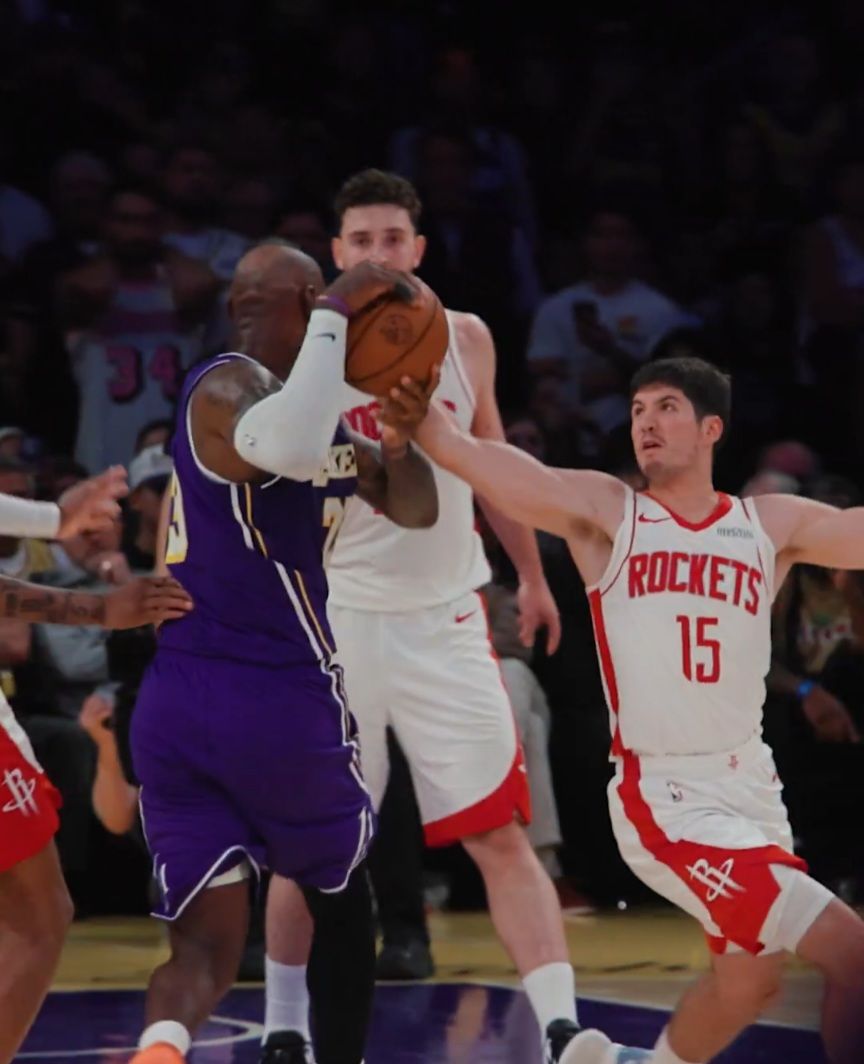
Game 6: Los Angeles Lakers at Houston Rockets
(Lakers lead series 3-2)
This is where things get interesting.
Because this game doesn’t follow logic—it tests legacy.
The Houston Rockets have momentum. They stole Game 5. They’re at home. They’re younger, faster, and freer.
But they’re also missing Kevin Durant—and that matters most when possessions tighten.
On the other side, the Los Angeles Lakers bring something Houston can’t replicate: control.
Even in losses, they’ve dictated pace. Even in chaos, they’ve remained structured.
And now they get a fully reintegrated Austin Reaves alongside LeBron James—who remains one of the most reliable closeout performers in league history.
This is where the model leans into something intangible—but historically consistent:
Veteran execution wins Game 6s.
Houston’s young core—Amen Thompson, Jabari Smith Jr.—can create runs. They can energize a building.
But can they execute in the final four minutes of a one-possession game?
That’s where this flips.
Projection: Lakers 104, Rockets 101
Picks:
- Lakers ML (+136)
- Lakers +3.5
- Under 205.5
This is the value play of the night. The line reflects Houston’s momentum—but the model sees a classic overcorrection.
Why We’re Confident Tonight
Let’s be clear: confidence doesn’t come from perfection—it comes from alignment.
And tonight, the model aligns with three critical playoff truths:
1. The “Second-Star” Rule
Teams missing their secondary creator—Orlando and Toronto—struggle to sustain offense under pressure. That’s the backbone of the Detroit and Cleveland picks.
2. Game 6 Compression
Elimination games shrink margins. Pace slows. Rotations tighten. That’s why all three totals lean Under.
3. Closeout DNA Matters
LeBron James, Mitchell, Harden—these are players who understand the mechanics of ending a series. That experience shows up late.
Final Word
At 64-61-1, the V3.0 model isn’t broken—it’s being tested.
Thursday proved that outliers exist. That chaos is real. That no algorithm is immune to a historic shooting night or a random 30-point breakout.
But Friday? Friday is different.
Friday is about pressure.
And pressure—more often than not—favors structure over chaos.
That’s where the value lives.
That’s where the model resets.
And that’s where we start climbing back toward that 16.1% ROI target.